Russia revives plan to charge for foreign mobile traffic above 50 GB on 5G
Russia's Ministry of Digital Development is again discussing with mobile operators a charge for international traffic, this time above 50 GB a month and only on 5G networks. Kommersant reported the talks on October 5, citing a market source. No decision has been made, and the technical side is unsolved: operators cannot yet measure 5G traffic separately. VPN users would be the first to pay, because their traffic goes through servers abroad and looks international to the operator.
What is on the table now
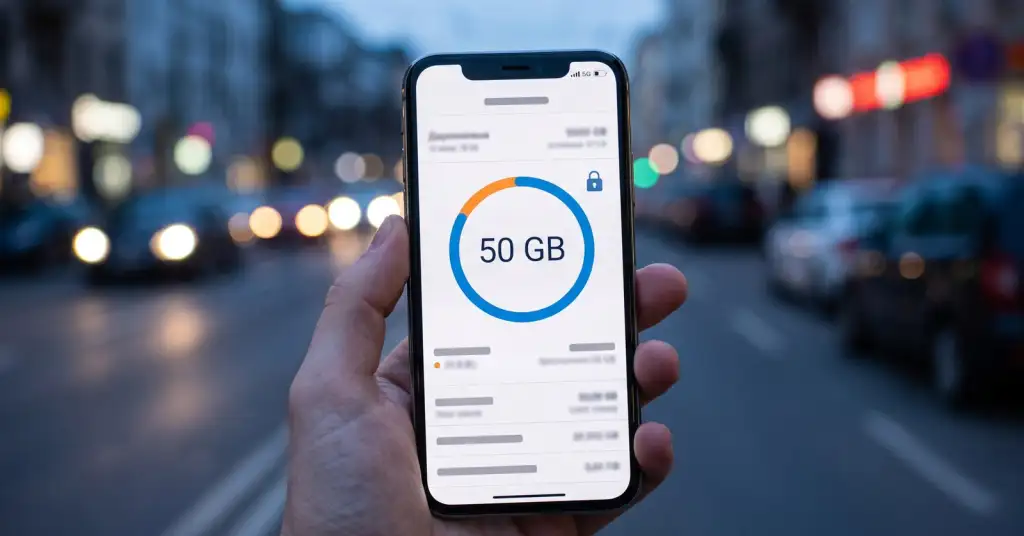
According to the newspaper, 5G subscribers would get 50 GB of international traffic a month for free, and anything above that would be paid. The source did not name a price per gigabyte. The ministry had hoped to launch the scheme in October, but the date is likely to slip. A market source told Kommersant it was "technically impossible": Russian 5G currently runs on top of LTE networks, so fifth-generation traffic cannot be billed separately from ordinary 4G.
VimpelCom, MegaFon, MTS and T2 declined to comment, and the ministry did not respond. The four largest operators launched 5G in September in 16 cities, with about 10 million subscribers. The 50 GB threshold is well above typical use: in 2025 the average subscriber used about 24 GB of mobile data a month, and 13.8% of users went over 50 GB, and that figure covers all mobile data, international and domestic.
How it got here
The spring version was tougher. In late April Kommersant reported that the ministry was working on a limit of 15 GB of international traffic a month, with about 150 rubles charged for every gigabyte above it, starting May 1. Operators asked for a delay to update their billing systems. Yaroslav Dubovikov, executive director of the Association of Communications Companies, warned at the time that treating international traffic as VPN traffic could add thousands or tens of thousands of rubles to bills.
On May 21 the newspaper wrote that mandatory charges had been postponed until after the autumn State Duma elections. On July 7, Deputy Minister Ivan Lebedev told a plenary session of the Duma: "A charge for foreign traffic is not being considered." The new 50 GB version tied to 5G shows the idea never left the agenda. At the same time, the draft budget for 2027 doubles the money for the ASBI blocking system.
Who would be affected
In the version now under discussion, the charge would apply only to 5G subscribers and only to international traffic above 50 GB a month. Ordinary 4G and home broadband are not mentioned. A VPN encrypts traffic and sends it through a server abroad, so the operator sees it as international even when the user is reading Russian websites. Operators also cannot tell VPN traffic from other foreign services, so, as the St. Petersburg outlet Fontanka points out, people who never turned on a VPN could end up paying too.
Using a VPN is not banned by Russian law; advertising VPNs and spreading ways to bypass blocks is. If the scheme is introduced, it would be billed by volume, so people who stream a lot through foreign servers on 5G should keep an eye on their usage in the operator's app.
• Минцифры обсуждает с операторами плату за 50 Гб международного трафика - Коммерсантъ
• Минцифры прорабатывает плату за международный трафик для борьбы с VPN - Коммерсантъ
• Власти не планируют обязывать мобильных операторов вводить плату за международный трафик - Коммерсантъ
• Минцифры: Введение платы за зарубежный трафик не рассматривается - Российская газета
• Минцифры и операторы обсуждают плату за международный интернет-трафик в сетях 5G - Фонтанка