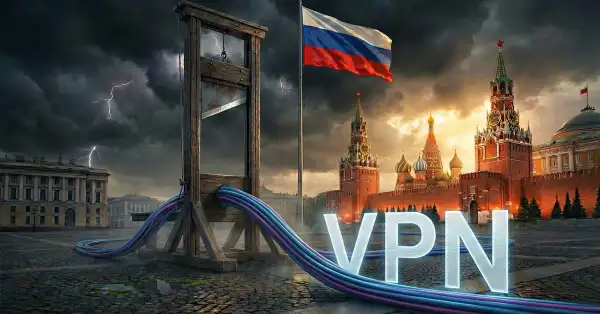
Russia doubles its budget for internet blocking and the fight against VPNs
Russia's government has doubled the money for its internet blocking system in the draft federal budget for 2027-2029, which it submitted to the State Duma on September 30. The Main Radio Frequency Centre (GRChTs), which reports to the censor Roskomnadzor, is set to receive 19.87 billion rubles in 2027 for the Automated System for Ensuring the Security of the Russian internet (ASBI). The outlet Verstka found the line in the budget documents, and Novaya Gazeta Europe and The Moscow Times reported it on October 1.
The current budget set aside 9.87 billion rubles for ASBI in 2027 and 9.84 billion in 2028. The new draft adds about 10 billion a year: 19.84 billion in 2028 and 19.87 billion in 2029, or 59.59 billion over three years. GRChTs will also get 1 billion rubles in 2027 for a backup data centre for the system that monitors and manages communication networks. By Verstka's count, total spending on GRChTs in 2027 will rise from about 20 billion to 31.8 billion rubles, an increase of 60%.
Where the money goes
ASBI is the infrastructure through which Roskomnadzor runs its "technical means of countering threats" (TSPU). This deep packet inspection equipment has sat inside telecom operators' networks since 2019 and lets the agency block sites, throttle services and recognise protocols. Earlier published Roskomnadzor documents allow the subsidy to be spent on installing and upgrading TSPU, the central management system, creating signatures for filtering traffic, buying equipment and software. In the summer a Rostelecom subsidiary bought 1.31 billion rubles' worth of servers for TSPU.
The system's goals are also written down. In a subsidy agreement dated January 13, 2025, which became public in May 2026, Roskomnadzor set GRChTs a target: by December 31, 2030, the "average effectiveness of restricting access to VPN circumvention tools using signatures" must reach 92%. The same document says 98% of Russian internet traffic should pass through TSPU and processing capacity should grow to 831 Tbit/s.
What this means for VPNs
The key word in the target is "signatures". The signature method looks for VPNs not by a list of addresses but by recognisable traits in the traffic itself: protocol headers, packet sizes, a characteristic handshake. That is why standard protocols such as OpenVPN and WireGuard are blocked first, while protocols that disguise traffic as ordinary HTTPS hold out longer. We cover them in our guide to VPNs for bypassing censorship and DPI.
A doubled budget means new signatures will appear faster, and protocols that work today will break more often. According to Verstka, at least 10 VPN services reported new blocks at the end of September. The State Duma still has to pass the draft budget.
• На блокировки и борьбу с VPN в 2027-м потратят 20 млрд руб - Вёрстка
• На систему блокировок в интернете власти потратят почти 60 млрд рублей на три года - Новая газета Европа
• Правительство внесло в Госдуму проект федерального бюджета на 2027-2029 годы - Коммерсантъ
• РКН хочет к 2030 году контролировать 98% трафика и блокировать 92% VPN - Anti-Malware.ru