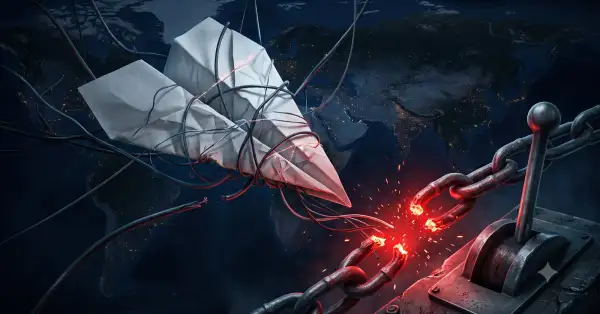
YouTube cut Belarus's state channel STV mid-broadcast and removed three state radio stations; Minsk tells viewers to switch to its own video host

YouTube switched off the account of the Belarusian state television channel STV on Sunday, 14 September, while it was streaming a live talk show, and within hours removed three radio channels of the same state broadcaster: Radyjo Stalitsa, Radio Kultura BY and the First Channel of Belarusian Radio, which had 461,000 subscribers and more than 400 million views. The platform's notice gave only a generic reason, a violation of YouTube's rules and removal "to protect the community". The show that went dark, "Po sushchestvu", was devoted to People's Unity Day, the 17 September holiday Minsk created in 2021 to mark the Red Army's entry into western Belarus in 1939, which official history calls reunification. On Monday the Information Ministry called the removals "the grossest manifestation of censorship and information segregation" and urged Belarusians to move to a domestic video platform instead.
In brief
- This is the second wave: on 3 April YouTube deleted the channels of the BelTA news agency and the ONT and STV television channels, citing sanctions. A replacement STV channel was deleted later on the same grounds. This time no sanctions were mentioned.
- Two of the four channels removed on Sunday were cultural: Radio Kultura BY covered theatre, music and literature, and Radyjo Stalitsa was largely a rock-music channel. All four belong to Belteleradiocompany, the state broadcaster.
- Minsk's answer is VIDEOBEL.BY, a state-run video host launched in September 2024 with servers in Belarus, which the ministry says has had 2.5 million visitors since January. After the April removals, state media said YouTube was taking "the final steps toward being recognised as an extremist platform and fully blocked in Belarus".
- For readers in Belarus the stakes are the opposite of what Minsk describes: independent outlets have long been reachable only through a VPN, and a retaliatory block on YouTube would put the country's main video platform behind the same wall, the way Russia's escalation against Telegram has gone.
What happened on Sunday evening
According to BelTA, the state news agency, the STV block landed "directly during the broadcast" of "Po sushchestvu", and the programme continued on other platforms. STV's own reaction, quoted by Kommersant, framed it as an attack on content: "What is the American host really closing access to? The answer is obvious: to the truth, to an alternative opinion and to quality Belarusian content that gathers millions of views." Aleh Haidukevich, deputy chairman of the parliament's international affairs commission, told TASS that "they are afraid of history. They banned our largest television channel STV because it tells the truth about the reunification of Western and Eastern Belarus." The radio channels went next. BelTA reported the removal of Radyjo Stalitsa, the First Channel of Belarusian Radio and Radio Kultura BY at 21:13 Minsk time, with the same wording from the platform: "violation of YouTube's rules", "removed to protect the community". Google has not published anything beyond that notice.
- 3 April 2026: YouTube deletes the channels of BelTA, ONT and STV. The platform cites sanctions; BelTA says the agency is not on any sanctions list and Google offered no explanation. The World Federation of Journalists condemns the move; the Foreign Ministry calls it a breach of UN principles and threatens a response "using all available means".
- The following months: STV opens a replacement channel; BelTA reports it deleted too, again "due to sanctions", and lists the official channels of the international radio station Belarus among those blocked.
- 14 September, evening: the STV account is cut mid-broadcast; the three radio channels follow. The stated basis is now a rules violation, with no clause named.
- 15 September, morning: the Information Ministry issues its statement and recommends "other, first of all national video platforms", naming VIDEOBEL.BY.
Sanctions in April, "rules" in September
The difference in wording matters. In April YouTube pointed to sanctions, a legal category Google can apply mechanically: it has removed the channels of sanctioned Russian companies and broadcasters, from RT and VGTRK to Rostec, on the same basis. Sunday's notices point to the platform's own rules instead, without saying which one, and to "the community", which is the language YouTube uses for content policies rather than for legal compliance. As Kommersant noted, that leaves open whether the trigger was what the channels published, who owns them, or both. Belteleradiocompany is the state broadcaster; two of the removed channels carried theatre reviews and rock concerts. Google is entitled to enforce its terms, and it has given the affected audience, which includes a large Belarusian diaspora that cannot receive these stations any other way, nothing to read. The ministry's statement fills the vacuum with its own reading, "information segregation", and a destination: a platform "with servers in Belarus, with clear and transparent rules", where "all leading media of Belarus" are represented and which the ministry says has drawn more than 600,000 viewers in recent months from 161 countries.
Why a platform fight in Minsk matters beyond Minsk
Belarus is a country of nine million where YouTube is the default video service and the domestic replacement is a ministry project with a fraction of the reach. Each time a state channel disappears from YouTube, the argument for cutting the whole platform grows louder in Minsk, and the people who would pay are not the broadcasters, who have VIDEOBEL.BY and terrestrial frequencies, but everyone else: students, small businesses, the diaspora watching from abroad and the readers of independent outlets that host their video on YouTube because nothing else reaches home. The Russian precedent is instructive, and not comfortable for either side: Moscow's throttling of YouTube in 2024 sent VPN downloads to record levels and did not bring the audience back to state television. Google, for its part, decides the fate of national broadcasters with a two-line notice and no appeal that the public can see, which is a power worth naming even when it lands on a state propaganda channel. For Belarusians, the practical conclusion is the one that has held since 2020: keep a VPN configured and tested before it is needed, because access in this region is switched off from both sides, and the notice, when it comes, is short.
Which channels did YouTube remove on 14 September?
What reason did YouTube give?
Are these channels under sanctions?
Has Belarus blocked YouTube in response?
What is VIDEOBEL.BY?
• YouTube заблокировал несколько белорусских государственных теле- и радиоканалов - Коммерсантъ
• YouTube заблокировал канал СТВ во время прямой трансляции - БЕЛТА
• YouTube заблокировал каналы Radio Kultura BY, «Радыё Сталіца» и Первый канал Белорусского радио - БЕЛТА
• Мининформ рекомендует отдавать предпочтение национальным видеоплатформам - БЕЛТА
• YouTube-каналы БЕЛТА, ОНТ, СТВ удалены администрацией видеохостинга - БЕЛТА (3 апреля 2026)
• YouTube Removes Channels Of BelTA, ONT And STV - Reform.news