Judge orders the White House to return press passes to CNN, MS NOW and Politico
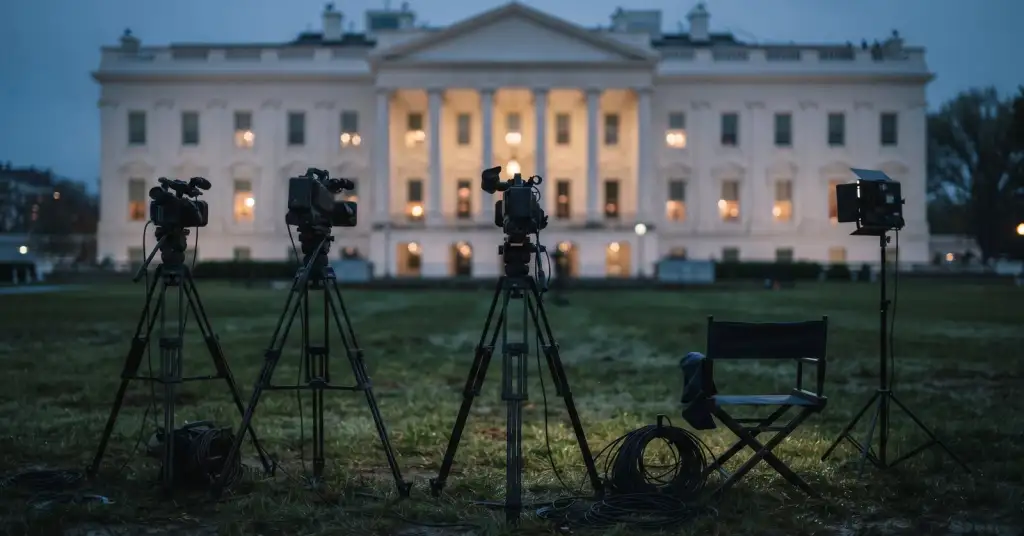
A federal judge ordered the White House to give CNN, MS NOW and Politico their press credentials back, six days after President Trump announced he was banning the three outlets from the building over what he called their constant reporting of fake news. The order came shortly after midnight on Thursday, 24 September, from US District Judge Timothy J. Kelly, whom Trump himself appointed in 2017.
Kelly did not rule on whether the ban was retaliation for coverage. He ruled on something narrower and harder to argue with: the three newsrooms lost credentials they had held for years without being told why in advance or given a chance to respond. The temporary restraining order runs for 14 days and tells White House officials to "immediately return, reinstate, and restore" the passes while the case continues.
In short
- Trump announced the ban on Friday 18 September; reporters were turned away and their passes taken the next day.
- The outlets sued on Monday. The case is Cable News Network, Inc. v. Trump in the DC federal court.
- The judge found they were likely to win on due process, and was openly sceptical of the national security justification.
- Meanwhile the TV pool suspended coverage of the president, and the White House launched its own 24/7 stream.
What the judge actually decided
A temporary restraining order is not a verdict. It says the plaintiffs are likely enough to win, and the harm immediate enough, that the situation should be frozen while the court works. Kelly wrote that the outlets were "likely to succeed in showing that their hard passes were revoked without constitutionally adequate due process", resting on the rule that "individuals must receive notice and an opportunity to be heard before the Government deprives them" of a protected interest. He also found "the record is bereft of any relevant formally articulated standards" that existed before the conduct the White House complained about, and called the standard the administration did offer "so vague it hardly does the trick".
On the government's central defence he was blunt. "The court is skeptical, at least on this record, that Defendants' interest in safeguarding national security is the actual motivation for, or is even advanced by, the revocation of Plaintiffs' hard passes," he wrote. He noted the administration produced no evidence that any story it named had damaged national security, that the reporters who wrote those stories did not hold hard passes in the first place, and that the coverage cited stretched back months or years. "The sorts of stories Defendants identify in the letters to Plaintiffs are routine."
How a press pass became a lever
Trump announced the ban in a post on his own platform on Friday 18 September, saying he was throwing the outlets out "as a result of their constant reporting FAKE NEWS". The following day their journalists were refused entry and their hard passes confiscated. Told later that week that nothing specific had triggered it, Trump described the reason as two years of unfair and negative coverage.
On Monday 21 September the three companies and three individual reporters, Akayla Gardner, Cheyenne Haslett and Betsy Klein, filed suit against the president, chief of staff Susan Wiles, communications director Steven Cheung and Secret Service director Sean Curran. They argued the ban punished them for their coverage under the First Amendment and stripped their credentials without due process under the Fifth. Their lawyer, Theodore Boutrous, told the court it was "probably the clearest case in history" of viewpoint discrimination. The Justice Department's Michael Velchik answered that White House access is a privilege rather than a right. Before the hearing, the Reporters Committee for Freedom of the Press, the White House Correspondents' Association and 49 media organisations asked to file a brief supporting the outlets, and neither side objected.
- Trump announces the ban on CNN, MS NOW and Politico.
- Reporters are turned away at the White House and their hard passes are taken.
- The outlets sue; the TV pool suspends coverage of the president; Trump TV starts streaming that night.
- The White House sends the outlets letters and the Justice Department files its response.
- Judge Kelly holds an emergency hearing by videoconference at 3:30 pm.
- Shortly after midnight the judge grants a 14-day restraining order.
The national security argument, and what the court did with it
Nobody mentioned national security in the first days. It appeared in letters the White House sent the three outlets on 22 September, filed as exhibits with the Justice Department's response, and it was the centre of the government's case at the hearing. The letters accused the outlets of publishing falsehoods about national security and putting out sensitive or classified material, pointing at coverage of a bunker under the White House ballroom, talks with Iran and the mood at a Republican convention in Dallas. Boutrous told the judge the first mention of national security came days after the ban: "I guess the light bulb went off and they all decided, start talking about national security."
White House letters to CNN, MS NOW and Politico, 22 September 2026, filed as exhibits by the Justice DepartmentThe outlets are accused of trafficking in verifiable falsehoods about national security and other issues, and of publishing sensitive or classified information.
- The judge found the administration offered no evidence that any story named in those letters actually damaged national security.
- The reporters who wrote the stories did not hold hard passes, so revoking passes hit people other than the ones the letters were about.
What the pool boycott exposed
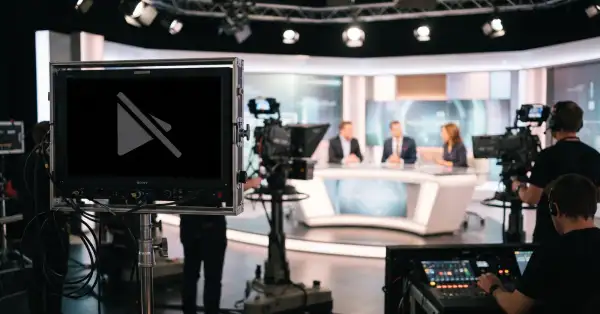
The practical damage showed up faster than the legal argument. The White House press pool is a nearly century-old arrangement in which five networks, ABC, CBS, CNN, Fox and NBC, take turns as the primary camera for presidential events, and the one on duty provides the video and audio feed everyone else broadcasts. CNN was on duty that week, including for Trump's address to the UN General Assembly, and the administration removed it. On Monday the pool's acting chair, Fox News Washington bureau chief Bryan Boughton, told members that the TV pool would stop covering presidential pool events altogether: "This follows the White House's position preventing CNN from fulfilling its assigned pool duties. There will be no replacement pool put in place."
By that afternoon the president spoke at a ribbon-cutting on the South Lawn and there was no audio, because there were no pool cameras. C-SPAN said it could not broadcast the event at all. The White House listed Real America's Voice, a small pro-Trump outlet, as a secondary travel pool, and the five networks said they would not use its feed. Print and radio pool coverage continued. In a joint statement the five networks said the public "has a vital interest in receiving accurate, independent information about its government" and that "no administration should restrict a news organization because it objects to its reporting".
The channel that filled the gap
On Monday night, with the pool cameras dark, the White House began streaming its own 24/7 YouTube channel under the name Trump TV, tagline "The Essentials Station", promising the administration's biggest moments in one place. Jane Kirtley, emerita professor of media ethics and law at the University of Minnesota, called the move unprecedented and warned that a government-run outlet can become a direct pipeline to the public in the way state television works elsewhere: "I think the public has a right to have information that has been subjected to scrutiny and that has been vetted by independent sources like the news media. And here we don't have that." She did not treat the timing as accidental either: "I cannot think that the timing is coincidental, that the decision to ban these media organizations from the White House on the eve of the launch of Trump TV just happened by coincidence."
That is the part which travels. A state broadcaster is only a problem when it has no competition in the room, which is why the interesting question is never the channel itself but what happened to everyone else. We wrote about the other end of the same pipe when YouTube pulled Belarus's state channel off the air mid-broadcast.
Why an American press-pass fight matters elsewhere
Governments rarely shut newsrooms down. They adjust access: accreditation, pool rotations, who gets into the room, who gets the feed. It is quieter than blocking a website and it works on exactly the outlets that do original reporting, because those are the ones that need to be physically present. The thing that stopped it here was not public outrage but a paper requirement, that a rule has to exist in writing before it is used against someone. Where that requirement is weak, the same move needs no letters at all, as when Turkey had 194 accounts of economists and journalists blocked in a week.
Are the journalists back in the building?
Did the judge say the ban was retaliation for coverage?
What was the national security claim about?
Why did television coverage of the president stop?
Can the administration try again?
• Cable News Network, Inc. v. Trump, 1:26-cv-03287 (D.D.C.), docket - CourtListener
• Judge orders Trump administration to restore journalists' access to White House - NPR
• DOJ defends White House media ban, urges court to reject lawsuit - NPR
• New Trump TV promises 24/7 coverage of White House events - NPR
• Judge orders Trump administration to immediately reinstate White House access to CNN, MS NOW and Politico - CNN
• White House faces mounting legal backlash after barring journalists from CNN, MS NOW and Politico - NBC News
• White House pool suspends TV coverage of Trump after CNN ban - MS NOW