Claude Code reportedly gets a hidden rule against cloning existing games
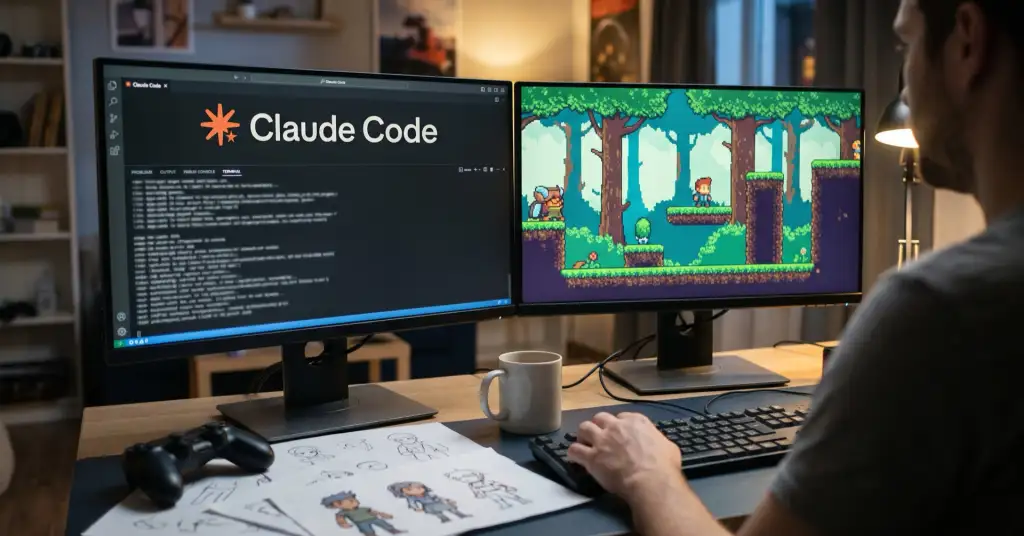
Users of Claude Code, Anthropic's AI coding agent, say it has started receiving a rule from Anthropic's servers that forbids recreating existing video games. The rule arrives through a server-side setting called tengu_heron_brook, which Claude Code inserts into the AI's own instructions. Anthropic has not announced the change or confirmed it, and on 30 October the company had not commented publicly.
What the game rule says
The text comes from a post on X published on 30 October, which had passed 1.2 million views by the evening. Its author shared a screenshot of a Claude Code configuration file and said the rule appeared around 27 October. It reads: "Do build original games, games in a genre, and games from the user's own designs and assets. Don't build a recreation of a specific existing game, even if it is renamed or called original."
So a platformer, a roguelike or a game built on the user's own art is still allowed. A copy of a specific title is not, and renaming it does not help. The post's author said there is no setting to turn the rule off. Habr and Crypto Briefing picked up the story the same day. Neither had a statement from Anthropic, and the rule does not appear in Anthropic's published usage policy.
The rule has not reached every user. A Claude Code installation that vpnlab.io checked on 30 October, version 2.1.310, had no tengu_heron_brook value among its locally cached server settings.
The channel behind it is not new
The mechanism itself is documented. In May, a developer reported on GitHub that Claude Code version 2.1.150 had started fetching a text string from Anthropic's servers at startup and adding it to the system prompt, the instructions the model follows. The changelog for that version described it only as "internal infrastructure improvements". Another researcher published a demonstration that someone intercepting the connection could replace that string with their own instructions.
An Anthropic employee answered in the same thread that the company sometimes tests changes to the system prompt on part of its users "so that we can evaluate how a change impacts quality before fully rolling it out to everyone". The employee added that users can opt out of these experiments with two environment variables, which contradicts the claim that the game rule cannot be switched off.
The channel has already caused trouble. In July, Claude Code users running the Opus 5 model found a line in their system prompt that told the model not to start sub-agents unless the user asked. It overrode project settings that required sub-agents, and developers filed several GitHub reports describing broken automation and wasted hours before they found the cause. According to a comment from 29 October, that line is gone in the latest releases.
How to check your own installation
- Look at the cached settings. Claude Code keeps server settings in
~/.claude.json. Runjq '.cachedGrowthBookFeatures.tengu_heron_brook' ~/.claude.json. If the result isnull, no such rule is cached on your machine. - Ask the agent. GitHub reporters got Claude Code to quote the extra section by asking it whether its system prompt contains instructions about a specific topic, such as games.
- Opt out if you need to. Setting
CLAUDE_CODE_DISABLE_NONESSENTIAL_TRAFFIC=1andDISABLE_GROWTHBOOK=1stops these experiments, according to Anthropic. The first variable also turns off telemetry, error reporting and automatic updates, so you may have to install updates yourself. - Clear the old copy. The researcher behind the demonstration notes that opting out does not delete a value already saved on disk, so after closing Claude Code, search the
~/.claudefolder (it sits next to the~/.claude.jsonfile) fortengu_heron_brook.
Opting out only closes this delivery channel. It does not change Anthropic's usage policy or any checks the company runs on its own servers.
• ANTHROPIC IS CRACKING DOWN ON VIDEO GAME REWRITES - chasm on X
• Claude Code получил новое правило «не создавать копии уже существующих игр» - Хабр
• Anthropic quietly blocks Claude Code from recreating existing video games - Crypto Briefing
• v2.1.150 adds server-side system prompt injection via tengu_heron_brook feature flag - GitHub
• heron-brook-poc: remote system-prompt injection PoC for Claude Code v2.1.150 - GitHub
• heron_brook prompt section injects "Do not call the AgentTool unless the user requested it" - GitHub