US embassy hauls in British officials over the Online Safety Act and the under-16 social media ban, calling both unfair to American companies
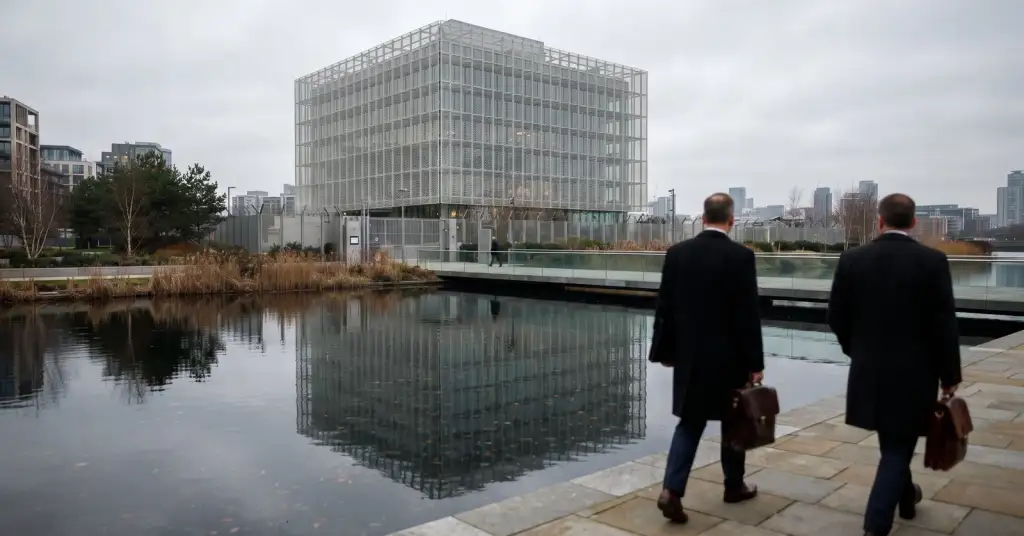
British civil servants were called to the US embassy in London on Monday 14 September and told, over the course of a private meeting, that three of their government's internet policies are a problem for Washington: the Online Safety Act, the ban on social media for under-16s announced in June, and the plan to make the BBC and ITV more prominent in platform feeds. PoliticsHome, which broke the story on Tuesday citing people familiar with the discussion, reports that officials from the Department for Culture, Media and Sport and the Foreign Office heard the embassy's deputy chief of mission argue that the under-16 ban discriminates against American technology companies, that the Act's levy on platforms is unfair because it is charged on global rather than British revenue, and that algorithm changes favouring "trusted" British broadcasters could affect US citizens. The embassy declined to comment. A DCMS source called it "routine engagement".
In brief
- The meeting took place on 14 September; the complaints were the under-16 ban, the Online Safety Act fee regime and the "trusted media" prominence plan, the same plan Washington formally called a route to censorship on 2 September.
- The American case against the ban rests on Australia: US officials pointed to small drops in use by under-16s there and said parental controls would work better. Australia's own regulator measured the drop at four points in three months.
- The levy the US calls unfair is Ofcom's fee on "qualifying worldwide revenue" above £250 million; Meta took the same objection to the High Court in May, and the first invoices are due this month.
- Britain's ban is not yet law: regulations were promised to Parliament before Christmas and are due to take effect in spring 2027, following the Australian model already tracked in our list of countries banning social media for minors.
What was said in the room
According to PoliticsHome the meeting was framed as non-adversarial but used to raise, in the site's words, "a litany of criticisms across a number of ministerial portfolios". The deputy chief of mission's central point was that a ban on under-16s using social media would discriminate against US companies. The government's June announcement named the services the ban would cover: Snapchat, TikTok, YouTube, Instagram, Facebook and X, with WhatsApp and Signal left out. Five of the six are American, which is the market rather than the drafting; any law about large social platforms in Britain is a law about American companies, with TikTok the exception. US officials also argued that Australia's ban, in force since 10 December 2025, had failed, citing small falls in usage, and that parental controls were the better tool. Emily Darlington, a Labour MP who campaigned for the ban, gave PoliticsHome the domestic answer: "The first duty of the government is to protect its citizens. Digital security is national security. It would be great to work with our allies on this, but if the UK has to, it will proceed alone." PoliticsHome places the meeting against a bad week for the relationship, after it emerged that the United States had quietly flown a diplomat accused of possessing child abuse images out of Britain to face charges at home.
The three complaints, checked
The Australia point is the strongest and the numbers are public. On 31 July the eSafety Commissioner published the first results of a two-year study following more than 4,000 children: the share of under-16s with a social media account fell from 52.4 percent before the law to 42.1 percent three months after it, and the share using social media at all fell from 85.9 to 81.5 percent. The regulator's own explanation was that most children who had accounts kept them or made new ones because platforms had not put effective age checks in place. Britain's answer, written into the June announcement, is to require "highly effective age assurance" from the start and to have Ofcom study what works for proving someone is over 16. American officials did not dwell on what that fix means. A leaky ban is repaired with a stricter identity check, applied to everyone who wants an account, and parental controls do not avoid it either, since a device has to know whose it is. The levy complaint is more technical. Ofcom charges the companies it regulates a fee of roughly 0.02 to 0.03 percent of their qualifying worldwide revenue, the global income attached to the regulated service, with a £250 million threshold and a £10 million floor on UK revenue; fines under the Act are also capped at 10 percent of that worldwide figure. Meta filed for judicial review of the methodology in May, arguing the bill should follow the country doing the regulating, and Ofcom told the court the first invoices would go out around September. The embassy is repeating Meta's argument in the week the invoices arrive. The third complaint, about prominence for public service broadcasters, is a rerun of the formal US response to the media green paper two weeks earlier, which called a government-curated list of trustworthy outlets a template for censorship; the new element is the claim that reordering British feeds could touch American users, which the US has not explained.
Where the user ends up
Strip away the diplomacy and the two governments agree on more than they admit. Both want platforms to know how old their users are; they differ on who pays and who is blamed when the check fails. For a person in Britain the outcome is the same in either version: an account that requires proof of age, a feed whose order is set by regulation, and a regulator whose reach stops at the border, as Ofcom itself conceded when a foreign site simply geoblocked the UK. When the Act's age checks switched on in July 2025, British VPN downloads doubled within days, and a year later the government decided not to restrict VPNs, calling them a legitimate privacy tool. An under-16 ban enforced through age assurance will produce the same reflex among adults who do not want to hand a passport to a social network, and among teenagers who have already read the Australian numbers. The American objection, that the ban hurts US firms, is the one argument in the room that has nothing to do with them.
What happened at the US embassy?
Is the UK ban already in force?
Did Australia's ban fail, as the US says?
What is the levy the US objects to?
Does any of this restrict VPNs in Britain?
• UK Reprimanded Over Social Media Laws By US Diplomats At Confidential Embassy Summit - PoliticsHome
• Social media to be banned for under-16s in landmark government move to give kids their childhood back - GOV.UK
• Early insights from eSafety's comprehensive evaluation project - eSafety Commissioner
• Meta takes Ofcom to the High Court over how the UK calculates Online Safety Act bills - The Next Web