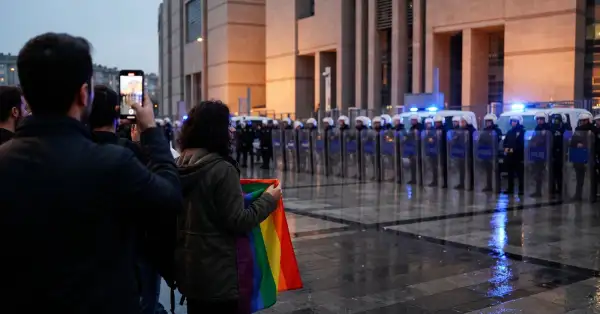
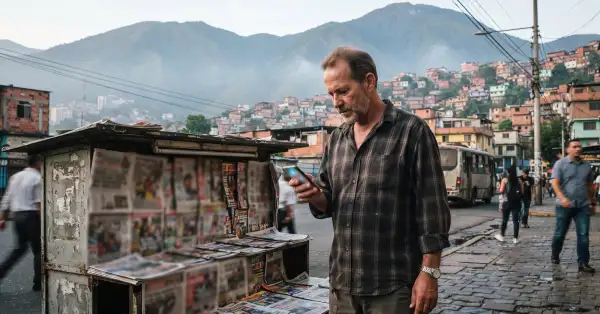
Turkey blocks 194 X accounts of economists and journalists during a fund crisis
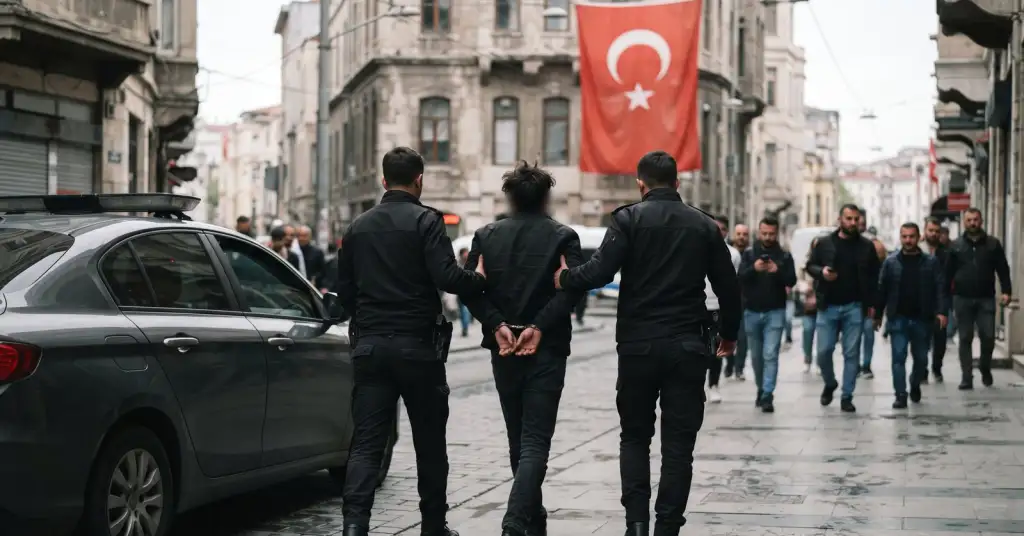
On 23 September Turkey's Capital Markets Board asked the public to take into account "only the statements made by official sources" about the 131 investment funds it had ordered liquidated. By then a large part of the people who had been explaining those funds to a Turkish audience could no longer be read inside Turkey.
Over the previous week prosecutors in İstanbul and Ankara had access blocked to 194 accounts on X, among them economists, finance professors, market commentators and journalists. The Freedom of Expression Association (İFÖD), which runs the EngelliWeb archive of Turkish blocking orders, counted roughly 12 million followers behind those accounts. The stated ground was Article 8/A of Law No. 5651: national security and public order.
In short
- 194 X accounts were blocked in a week over posts about capital markets, with about 12 million followers between them.
- The justice minister gave a higher figure, 246 accounts, and said courts had jailed 16 people pending trial over such posts.
- The trigger was a fund collapse: 131 funds were ordered into liquidation, with 455,758 investors in them.
- The blocks are carried out by Turkish access providers and by X hiding the accounts from Turkey, so they work inside the country and not outside it.
What the prosecutors ordered
İFÖD published the list on 22 September. The accounts were blocked in investigations run by the İstanbul and Ankara chief public prosecutors over posts said to be "speculative in nature, capable of causing fear and panic among investors" about capital market instruments.
The names on the list are not anonymous trolls. They include the economist and columnist Uğur Gürses, Prof. Veysel Ulusoy, finance professor Bilge Yılmaz, the crypto analyst known as Ted Pillows, the investment adviser Emre Şirin, the journalists Naz Yavuzarslan and Dinçer Gökçe, and the actor Orhan Aydın. Several accounts near the top of the list have more than 300,000 followers each. Many of them were also hidden from Turkey by X itself, the country withholding measure the platform applies when it accepts a local legal demand.
Justice Minister Akın Gürlek gave the official count four days earlier, on 18 September: a court had ordered 246 social media accounts blocked over posts that could cause fear and panic among investors, and in a separate investigation run by the Bakırköy prosecutors, courts had jailed 16 people pending trial over social media posts. In the main market manipulation case 20 people were jailed pending trial and 51 were barred from leaving the country.
Why this happened now
On 17 September the Capital Markets Board (SPK) decided to liquidate 131 funds run by seven portfolio management companies. Some of those funds had stopped meeting redemption requests, the selling spread to the wider market, and Borsa İstanbul's main index ended that week more than 8 percent lower. On 23 September the regulator confirmed the number of people caught in it: 455,758 individual investors, according to the central securities depository.
Criminal investigations ran alongside the regulatory ones, and the posts came under scrutiny at the same time as the trades. Uğur Gürses had written on 21 September that the people who profited from the system deserved as much attention as the fund managers themselves, and that "the public officials chasing access blocks on posts that say investigate and audit should go after this fund scandal instead". His account was blocked.
- SPK orders the liquidation of 131 funds run by seven portfolio management companies.
- Justice minister: 20 jailed pending trial in the manipulation case, 16 jailed over social media posts, 246 accounts ordered blocked.
- Borsa İstanbul's main index closes the week more than 8 percent down.
- SPK extends the liquidation window from three months to six.
- Gürses publishes the post about who profited. It is blocked shortly afterwards.
- İFÖD publishes its list: 194 accounts, about 12 million followers.
- SPK confirms 455,758 investors and asks the public to rely on official statements only.
How Article 8/A works
Article 8/A was added to Law No. 5651 in 2015. It lets a judge, or in urgent cases the head of the telecoms regulator BTK at the request of the presidency or a ministry, order content removed or access blocked on grounds that include national security and public order. Access providers have four hours to carry it out. The decision then goes to a criminal judgeship of peace within 24 hours, and the judge has 48 hours to rule, after which the order lapses by itself.
The same article says the block should target the specific page or post, and that a whole site may be blocked only where that is technically impossible or does not stop the violation. Blocking an entire account is the broad version of the measure: it takes down years of posts to deal with one of them. İFÖD made exactly that objection here, and its EngelliWeb 2025 report, written by Prof. Yaman Akdeniz and Ozan Güven, found that most 8/A orders come with template wording and no reasoning, and that the underlying judicial decisions are often not attached when the block is notified.
Who else blocks websites in Turkey
Blocking in Turkey is not concentrated in the courts. By the end of 2025, İFÖD counted 1,505,484 websites and domains blocked from Turkey through 1,284,464 separate decisions taken by 875 different institutions and judgeships. The Capital Markets Board, the regulator at the centre of this month's crisis, is itself on that list.
| Who ordered the block | Sites and domains | Usual subject |
|---|---|---|
| Head of the BTK telecoms regulator | 1 155 206 | Administrative measures under Article 8 |
| TİB, the predecessor body, until it was abolished | 130 717 | Administrative measures under Article 8 |
| Turkish Football Federation | 122 638 | Unlicensed betting |
| Criminal judgeships of peace, prosecutors, courts | 48 676 | Court and prosecution orders of all kinds |
| National Lottery Administration | 20 080 | Games of chance |
| Capital Markets Board (SPK) | 10 668 | Unauthorised investment services |
Numbers are cumulative to the end of 2025, from the EngelliWeb 2025 report. We keep a country-by-country guide to the same practice elsewhere: where websites get blocked without a judge.
How many websites and domains had been blocked from Turkey by the end of 2025?
İFÖD has been counting since 2008. The annual figure passed 100,000 in 2021 and 300,000 in 2024.
Why the posts are still readable abroad
Both mechanisms in use here are geographic. A 5651 order is served on Turkish access providers and enforced on their networks, so it reaches people whose traffic leaves through a Turkish operator. Country withholding on X works the same way: the platform hides the account from users it places in Turkey and shows it everywhere else. Neither one deletes anything. The posts are still on X, and a reader outside Turkey, or one whose connection exits outside Turkey, sees the accounts as usual.
That is the whole point of this kind of order, and also its limit. It is aimed at the domestic audience during the weeks when the domestic audience is looking for answers. It does not stop the information from existing, and it does nothing about the fund losses that started the story. The journalist Dinçer Gökçe, whose account was blocked, put it plainly: they did not prevent a 20 billion dollar fund debacle, he wrote, so they went for the easy thing instead, and blocking accounts does not end the debacle.
What a different exit point does not do is protect the person posting. The 16 people jailed pending trial were not blocked, they were prosecuted, and that happens regardless of how anyone reads them. Nor does it restore reach: Emre Şirin said a fresh account he opened the same evening was blocked too, the fifth time. Turkey has done this at scale before, including with 419 accounts of activists and journalists earlier this year.
What to do if an account you follow goes quiet
The practical problem for a reader is telling the three cases apart, because they look identical in a feed: the account was blocked in your country, the author deleted the post, or the platform suspended the account everywhere.
- Check the notice. X shows a withheld-in-country message on accounts it hides for a specific country. A globally suspended account shows a different page, and a deleted post simply disappears.
- Look for the person elsewhere. Most of the blocked economists and journalists in this case also publish columns, newsletters, YouTube or Bluesky accounts that no Turkish order touches.
- Do not read a block as a verdict. An 8/A order is an administrative measure taken in hours. It says nothing about whether the post was accurate.
- Keep a copy of what matters to you. Archive services hold pages that later vanish, and İFÖD archives the blocked material precisely because it tends to disappear from search.
- If you are the author, hold a backup channel. Şirin's experience shows that new accounts get blocked as fast as they are opened, while a mailing list or a site of your own does not depend on one platform's compliance desk.
Does a VPN restore access to these accounts?
Is using a VPN legal in Turkey?
Why block economists rather than the funds?
Are the accounts gone for good?
How reliable is the number 194?
• Spekülasyon amaçlı paylaşımlar iddiasıyla çok sayıda X hesabına erişim engeli - İfade Özgürlüğü Derneği
• Takipçi sayısı 12 milyon olan 194 hesaba erişim engeli getirildi - Medyascope
• Turkey jails 20 in market manipulation probes, orders 246 accounts blocked - Turkish Minute
• Economists, journalists among 194 X accounts blocked in Turkey amid fund-market turmoil - Stockholm Center for Freedom
• Tasfiye Konusu Fonlardaki Yatırımcı Sayısına İlişkin Açıklama - Sermaye Piyasası Kurulu
• Tasfiye Konusu Fonlara İlişkin Süre Düzenlemesi - Sermaye Piyasası Kurulu
• 5651 sayılı Kanun, madde 8/A - Mevzuat Bilgi Sistemi
• EngelliWeb 2025: Dijital Sıkıyönetim - İfade Özgürlüğü Derneği
• İFÖD 2025'teki sansürü raporladı: Dijital sıkıyönetim - Diken