Venezuela unblocks 17 censored news sites, but 188 websites stay blocked
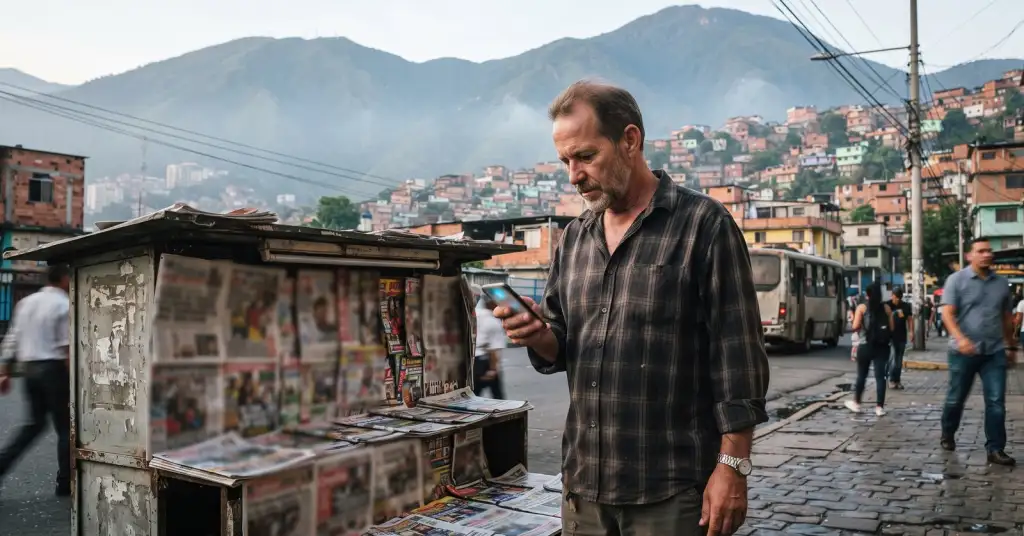
Venezuela's telecom regulator CONATEL told internet providers on Thursday, 17 September, to restore access to a group of news websites that the state had kept blocked for years. The digital rights group VE sin Filtro verified that 17 news sites opened again on several providers, among them Efecto Cocuyo, El Pitazo, Runrunes, Crónica Uno, El Estímulo, Caraota Digital, Monitoreamos, Alberto News, the Spanish agency EFE and the Colombian magazine Semana. The same monitoring shows that at least 188 websites remain blocked, 79 of them news outlets. The order came the night after the Programme for Peace and Democratic Coexistence asked acting president Delcy Rodríguez to lift restrictions on media domains, and a day before the second round of US-backed transition talks in Caracas, which are partly about freedom of expression. For readers in Venezuela the practical picture is unchanged for most of the list: the censored sites still open only through a VPN or a foreign DNS resolver.
In brief
- CONATEL announced the "formal restoration of access to various national and international digital platforms and media outlets" and sent a technical notice to providers. The state operator Cantv unblocked first; Digitel, Inter, Net Uno and Movistar followed during the day.
- No court or administrative ruling was needed to lift the blocks, because none had been needed to impose them. "They had censored them basically because they wanted to; there was no administrative ruling, no court order requiring it," Runrunes editorial director Luis Ernesto Blanco told AFP.
- VE sin Filtro counted 206 blocked sites in April, 65 of them media, plus X, Reddit, SoundCloud, Signal, Zello, VPN services and the Tor network. After Thursday the group still lists 188 blocked sites. Its founder Andrés Azpúrua wrote that CONATEL had "confirmed its role as the censor" and shown that Maduro and Rodríguez "could always have removed the blocks whenever they wanted".
- The measure is the opposite of what Equatorial Guinea did two weeks ago with Facebook and TikTok, but it works by the same switch: a regulator's letter to the providers. What one letter opened, another can close, and 188 domains show how narrow the opening is.
What opened and what did not
The unblocking became visible on Thursday morning. VE sin Filtro, which has tested Venezuelan providers for a decade, first confirmed ten news portals on Cantv, Movistar and Digitel, then raised the count to 17 news sites as the private operators caught up. AFP journalists in Caracas found El Nacional, Efecto Cocuyo and El Pitazo reachable; El Nacional itself wrote in the evening that its own address was still restricted, and the Colombian channel NTN24 reported that access came back and then turned intermittent. That is typical of how Venezuelan blocks are built: each provider filters by DNS, by HTTP and HTTPS host, or by IP address, and each removes the filters at its own pace, so a site can be open on one network and dead on the next. The larger number matters more than the list. VE sin Filtro's count of 188 blocked sites includes 79 news outlets, plus human rights organisations, political initiatives and the tools people use to get around censorship. In April the group told CONATEL that most of those blocks were "administrative, discretionary and without transparency", imposed without a judge and therefore removable the same way, and that residual blocks stayed in place even after the original orders were lifted or the domains had ceased to exist. The information request it filed on 13 March with more than 30 organisations never received an answer.
| Status | Sites |
|---|---|
| Unblocked on 17 September | 17 |
| News outlets still blocked | 79 |
| Other sites and services still blocked | 109 |
Why now
The timing is political. Nicolás Maduro was captured by US forces in January and replaced by Delcy Rodríguez as interim leader; eight months later Washington is sponsoring a dialogue between her government and part of the opposition, while President Trump has ruled out early elections. The second round of those talks was due to resume in Caracas the next day with freedom of expression on the agenda, and on Wednesday night the Programme for Peace and Democratic Coexistence, the body running the process, publicly asked Rodríguez to remove the restrictions on media domains. CONATEL's notice went out the next morning. Deputy communications minister Gustavo Villapol presented it on state television as a break with polarisation: "We can never again vilify people without having proof in hand; we cannot use communication for interests that are external to the vital meaning of our nation." The opposition's chief negotiator Dinorah Figuera called the decision "a first step" and wrote on X that "many outlets are still missing, and they all have to come back, fully and permanently". The same Thursday, agents of the Sebin intelligence service detained Javier Oropeza, a former opposition mayor who had returned from two years of exile days earlier, after he gave an interview to a local paper; he was released hours later after Figuera protested. Víctor Amaya, whose site TalCual has been blocked since July 2024, was cautious: "Hopefully it doesn't turn out like it does with some prisoner releases, where they announce 100, but 60 or 70 are confirmed."
What changes for readers in Venezuela
For most of the country's independent press, nothing yet. The 79 news outlets still on the list, including TalCual and, by its own account, El Nacional, remain reachable only the way they have been since 2024: through a VPN, through a DNS resolver outside the provider's control, or through Tor, all of which are themselves on the same blocklist and work with varying success depending on the operator. VE sin Filtro's own guides still recommend changing DNS servers first, because DNS blocking is the cheapest kind and the most common on Cantv, and moving to a VPN or Tor when a provider filters by host name or IP. Tor's VPN for Android, which routes every app through its own circuit, is one of the few circumvention tools designed for exactly this kind of per-provider filtering. The 17 sites that reopened will also need watching: Venezuelan blocks have come back before after being lifted, and Thursday's order arrived without any legal act that would make reversing it harder than issuing it. The journalists' union SNTP demanded the same day that the measure be extended to every blocked outlet and organisation; Azpúrua's point stands until it is: the regulator has proven it can open the internet in a morning, and has chosen to open a small part of it.
Which sites were unblocked in Venezuela?
How many sites remain blocked?
Who ordered the unblocking?
Why could the blocks be lifted so quickly?
Do Venezuelans still need a VPN?
• Venezuela unblocks some censored news sites - France 24 (AFP)
• Conatel restablece acceso a varios portales web, pero la mayoría de los bloqueos continúa - Efecto Cocuyo
• Conatel ordenó a proveedores de Internet desbloquear portales de medios informativos - El Nacional
• VE sin Filtro exige a CONATEL levantar bloqueos en internet y responder solicitud de información - VE sin Filtro