Mexico's Congress pushes ISPs to cut off repeat pirates, no court order needed
Mexico's Senate voted 72 to 37 on 3 November for a copyright reform that makes home internet providers such as Telmex and Izzi publish a policy for cutting off "repeat infringers" if they want to keep their legal protection. The Chamber of Deputies had passed the same text on 7 October, so it now goes to President Claudia Sheinbaum's government for publication. The law does not say who counts as a repeat infringer, and it does not require a court order.
In short
- A provider without such a policy loses its legal shield, and fines can reach about 4.7 million pesos, roughly $250,000.
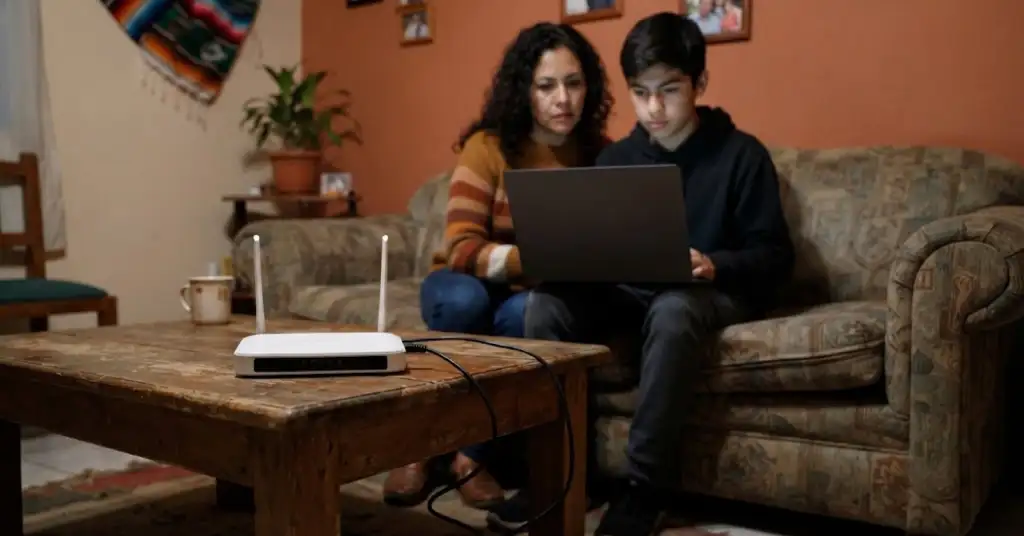
- What gets cut is the whole connection, so one person's downloads can take a household offline.
- Each provider sets its own threshold. A proposal to require a judge's order was not adopted.
- The rules start 180 days after publication in the official gazette.
What the text says
The amendment adds a condition to article 114 Octies of the Federal Copyright Law. To stay protected, a provider must have "a policy for terminating the provision of service to repeat infringers". The policy has to sit permanently on the provider's website and in its terms of service, and it must contain "minimum mechanisms" for notifying the user.
Strictly, this is a condition for protection and not a direct order to disconnect anyone. Under the new article 114 Nonies, a provider without a policy is still only liable if it also knowingly contributes to, induces or causes the infringement, or if it can control the user and profits directly from the activity. In those cases new article 232 Septies lets the Mexican Institute of Industrial Property fine it up to 40,000 times the UMA reference unit, which is about 4.7 million pesos at the 2026 rate.
Since 2020 Mexico has applied this kind of rule to hosting platforms and search engines, which can close accounts. TorrentFreak notes that the new text reaches consumer access providers, so the thing being terminated is the internet line.
Who decides
The text gives no number of complaints and no definition. "The bill leaves each provider to decide who is a repeat infringer," Aurora López-Portillo, director of legal services at IP firm ClarkeModet, told EL CEO. She said providers should check whether an infringement was actually shown, not just count notices, and should give the user a chance to respond. That is her advice, she added, and not something the law requires.
The opposition asked the same thing in the Senate. PRI senator Carolina Viggiano questioned who determines that an infringement happened and when someone counts as a repeat infringer. Senator Gabriel Elizondo warned that families share a connection. An earlier opposition proposal to require a court order before suspension was not adopted. Copyright lawyer José Roberto Bonilla Bahena says affected users could challenge a cut-off in court through Mexico's amparo procedure.
The ruling Morena party rejects the "anti-meme law" label that critics use, which also attaches to a separate reform on misuse of official logos. Senator Manuel Huerta said it was an exaggeration, and Senator Martha Lucía Micher said the gap in the law had left thousands of creators defenceless.
Mexico goes the other way from the US
The government proposed the change in May to align with the USMCA trade deal, and US rightsholders had pressed for it. In March the US Supreme Court threw out the $1 billion verdict against the provider Cox. "A company is not liable as a copyright infringer for merely providing a service to the general public with knowledge that it will be used by some to infringe copyrights," Justice Thomas wrote. In Mexico, missing the safe harbor conditions is now the first step towards liability.
The clock has not started. As of 6 November TorrentFreak had not seen the decree in the official gazette. Once it appears, providers have 180 days, and their published policies will show how many accusations it takes to lose a connection. Mexico would add a new tool to the wider trend of online enforcement without a judge, this time aimed at subscribers and not sites.
• Minuta: reforma a la Ley Federal del Derecho de Autor - Cámara de Diputados (PDF)
• Mexico's Senate Approves ISP Rules to Disconnect Persistent Online Pirates - TorrentFreak
• Senado avala suspender Internet a reincidentes en violaciones a derechos de autor - La Jornada San Luis
• Avanza en el Senado reforma a la Ley de Derechos de Autor sobre contenidos en Internet - La Jornada
• Ley 'antimemes': advierten falta de claridad para cancelar internet a usuarios reincidentes - EL CEO
• Cox v. Sony opinion - US Supreme Court (PDF)