MPA Wants US Site Blocking After a Record Raid Failed to Move the Numbers
The largest sports piracy crackdown ever run during a single event ended with a number nobody in Hollywood wanted to see. Operation Offsides seized more than a thousand domains around the 2026 World Cup, and the seized sites still collected over 156 million visits in July alone. The Motion Picture Association has drawn its own conclusion: the United States needs judicial site blocking, the one enforcement tool it still does not have.
What the operation actually achieved
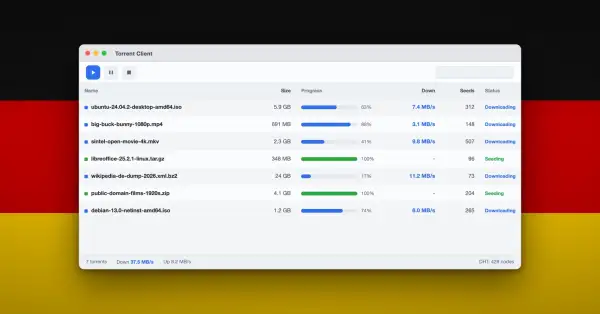
US authorities and their partners took more than 1,000 domains offline, and close to 2,000 more were blocked across Latin America. On paper that is a record. In practice the audience did not disappear with the domains: traffic to the seized properties still added up to more than 156 million visits during July, and one Spanish-language stream aggregator running on the Russian .su registry reportedly drew over 200 million visits in the same month.
The operators moved rather than closed. Buffstreams, Footybite, Totalsportek and Nflbite reappeared on Iran's .ir country-code domain, a zone where American takedown requests carry no weight, while others stayed on .su. Seizing a domain removes an address, not a business.
The MPA's argument
MPA chairman Charles Rivkin and IPR Center director Ivan Arvelo made the case plainly: taking domains "does not dismantle the business", and the response needs every available tool, "chief among them" judicial site blocking inside the United States. Their supporting figure is that blocking already operates in nearly 60 countries, which turns the American position from principled holdout into statistical outlier.
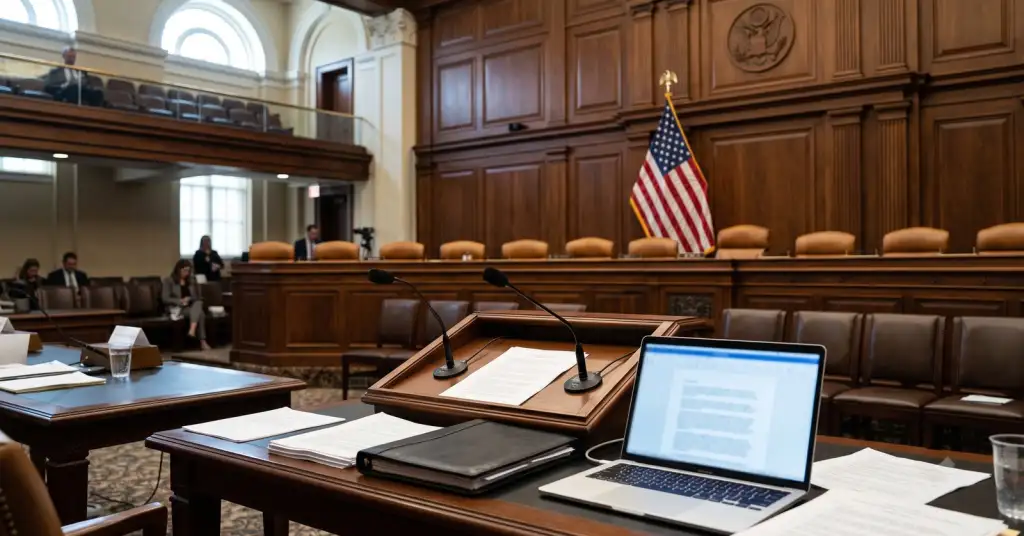
Congress is closer to that than it has been for years. Representative Darrell Issa, who chairs the House intellectual property subcommittee, said at the end of June that a bipartisan, bicameral agreement was near, merging earlier blocking proposals into a single bill. Nothing unified has been introduced yet, but the direction of travel is no longer in doubt.
Why a blocking law does not stop at pirate sites
Site blocking is never only about the first list of domains. The European track record is the argument against treating it as a narrow tool, and we have covered each step of it:
- France legalised real-time blocking of live sports streams, so an address can be cut off while a match is being played, before any court sees the site. How real-time blocking works in France.
- Canada extended a blocking order to sites that do not exist yet: the list updates itself as new mirrors appear. The order that covers future domains.
- Belgium ordered Cloudflare and Google to enforce blocks, moving the obligation from access providers to infrastructure companies. What Belgium asked of Cloudflare and Google.
- Bulgaria is the counter-example: its Supreme Court found that blocking as written was legally impossible, which is exactly the kind of judicial check the American debate is now trying to design in advance. Why Bulgaria's court refused.
The pattern across those cases is consistent. A blocking regime starts with domains, moves to DNS resolvers, and ends up asking what to do about the tools people use to reach a blocked address anyway. That is where VPN traffic enters a copyright conversation it never asked to join.
What this means for ordinary users in the US
A judicial blocking regime does not read the contents of your traffic and does not target individuals. What it does change is the shape of the network you use. Blocks are usually implemented at the DNS level first, which is why the practical effects show up as failed lookups, redirects to a notice page, and an internet that quietly behaves differently depending on which resolver your provider hands you.
Where encryption fits, honestly
An encrypted tunnel changes which resolver answers your queries and which network sees your requests, so DNS-level blocks stop applying to you. That is a technical fact, not an endorsement of piracy: the same mechanism protects a traveller whose hotel network hijacks DNS and a reader in a country where a news site is blocked. It is also why blocking laws drift toward tunnels over time, and why the wording of the American bill will matter more than its headline.