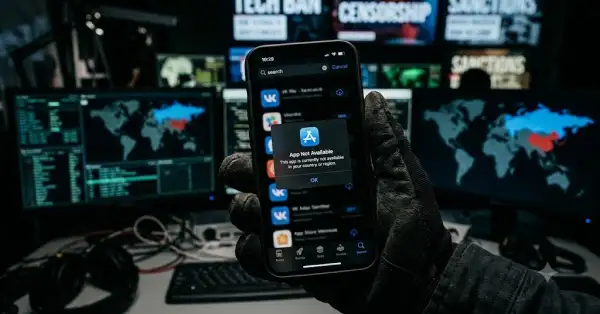
India ordered 195,000 takedowns in five months. X now shows censorship - but not there
Between March and July 2026 the Indian government sent Instagram, Facebook and YouTube roughly 195,000 orders to remove content - about one blocking order every 68 seconds, day and night, for five months. India passed no new censorship law to do this. It simply ran the machine it already had at a scale that turns a takedown from an exception into background noise. In the same weeks Elon Musk announced that X would start showing users when a government demands a removal. The catch: in India, the country generating the orders, the law forbids exactly that kind of disclosure.
The takedown became automatic
The orders run through the government's Sahyog portal, where an agency can file a removal notice directly, without a court. What changed this year is speed. Meta has connected its own systems to the portal through an API, so content flagged by a government notice can be pulled from Instagram and Facebook automatically, with no separate human review on Meta's side. A senior official told the press that a considerable share of the latest orders landed during student protests, as they gained momentum online. The same tools have already been aimed at individual critics; the news now is the industrial scale.
For contrast, the same report puts the whole previous year at a few thousand orders. Five months of 2026 produced roughly a hundred times more. This is not a spike around one event - it is a new baseline.
X decided to show the censorship
On 15 August Musk posted that "any censorship required by governments is now clearly visible" on X. In practice the platform says it will mark a restricted post or account with a notice that names the government body behind the demand and the legal ground, where one is given. Where Meta and YouTube comply in silence - a removed post simply becomes a blank space - X is trying to turn the takedown itself into something you can see.
Except in India, where the law forbids it
India's answer was immediate. On 19 August a senior IT Ministry official said transparency changes nothing about the duty to obey: "X will have to follow the law of the land." And the law is the whole problem. Blocking orders issued under Section 69A of the IT Act carry a confidentiality rule - Rule 16 of the 2009 Blocking Rules - under which the order, and often the fact that it exists at all, must stay secret. Publishing "this was removed by agency X under order Y" would itself break that rule. So the country with the most censorship to show is the one place X's new label cannot legally appear. Indian users keep meeting content that is simply gone, with no public account of who ordered it or why.
Why this is bigger than one country. Two models are now on the table. One makes state censorship visible and argues about it in the open; the other makes it invisible and legally unspeakable. Whichever spreads sets the default for everyone, because the same platforms serve all of us. A rule written for Delhi shapes what a user in Lisbon or Sao Paulo is allowed to know about their own feed.
How to tell what is being hidden from you
- Read the labels where they exist. On X, a notice that a post or account is "withheld in response to a legal demand" is not noise - it is the platform telling you that you are looking at censorship, and increasingly at who asked for it. Treat a blank or a "not available" as information, not a glitch.
- Cross-check public archives. Takedown notices are logged by projects like the Lumen database and reported by press and rights groups. If a post vanished without a label, its absence is the only trace - and a search there sometimes recovers what was removed and why.
- Keep more than one path to a source. When something is pulled from one platform, it often survives on another, on a mirror, or on the author's own site. Communities around blocked apps and channels usually publish working mirrors within hours.
- Separate two kinds of blocking. A post deleted from a platform is gone for everyone. A site blocked by your internet provider is only blocked on that network - a different, network-level barrier with its own workarounds.
That last distinction is where a VPN belongs. If access is blocked at the network level by an internet provider, routing around that provider can restore the connection, which is why demand for VPNs and mirrors climbs in India every time blocking widens. But a VPN does nothing about a post a platform has already deleted at the source - that content is gone from the service itself, not just from your route to it. Know which wall you are hitting before you pick a tool.
In India, can I see who ordered a post removed?
Does a VPN bring back a deleted post?
Is 195,000 orders the same as 195,000 posts?
What is the Sahyog portal?
• India issued nearly 1,275 takedown orders a day for five months - Scroll.in
• One blocking order every 68 seconds: takedowns surge - Greater Kashmir
• India among countries where Meta can auto-restrict content - The Wire
• India tells X to 'follow the law of the land' after visibility push - IBTimes UK
• 'They'll have to comply with Indian law': govt on X - Business Standard