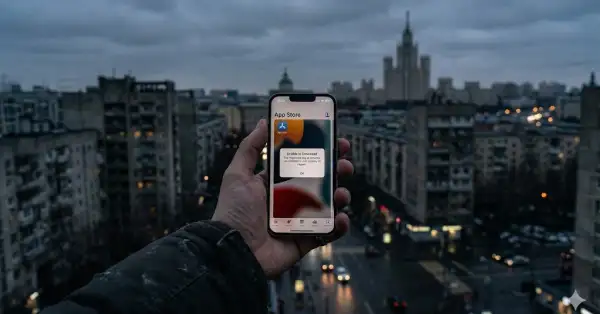
Apple Removes VK Globally: App Store Censorship & VPNs
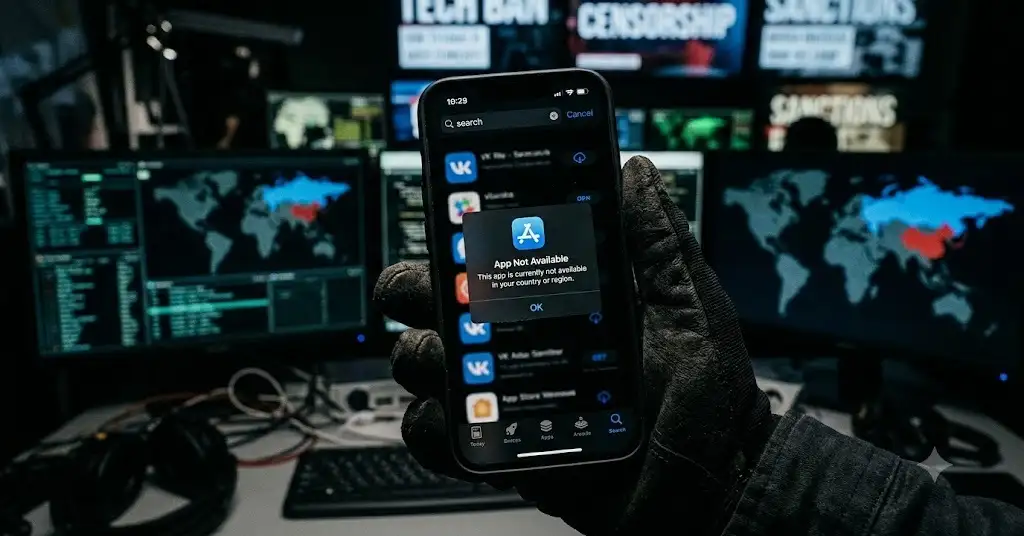
Apple removed all VK ecosystem apps from its global App Store on June 26, 2026, including VKontakte, VK Music, VK Messenger, VK Video, Odnoklassniki, and Mail.ru - the core social media and communication platforms used by hundreds of millions of Russian-speaking users worldwide. The removal came without advance notice to the companies or to users, triggering accusations of censorship and an immediate diplomatic incident. For VPN users and digital rights observers, the move carries a particular irony: Apple previously purged dozens of VPN applications from the Russian App Store at Roskomnadzor's direct demand - and now the same platform control mechanism is operating in reverse, against Russian-developed apps.
What was removed and who is affected
The purge covered the entire VK Group portfolio distributed globally through Apple's App Store. Several major platforms became unavailable for download or update simultaneously:
- VKontakte: Russia's dominant social network with over 100 million monthly active users.
- Odnoklassniki: The second major Russian social network, popular with older demographics and the Russian diaspora.
- Mail.ru: One of Russia's largest and most widely used email services.
- Ecosystem apps: VK Music, VK Messenger, and VK Video.
The impact falls most directly on Russian-speaking communities outside Russia. Within Russia, where Apple's App Store already operates under heavy restrictions following Roskomnadzor enforcement actions, the practical effect is limited - Russian users have long been accustomed to sideloading or accessing these services through browsers. But for Russian diaspora communities in Europe, North America, Israel, and Central Asia - who rely on VK and Mail.ru to maintain family connections and access Russian-language content - the removal creates an immediate barrier.
The Kremlin's reaction
Russian authorities responded with unusual speed and force. Kremlin spokesman Dmitry Peskov called the removal "a cynical act of political censorship" and demanded that Apple provide an official explanation. The Russian Ministry of Digital Development issued a formal statement accusing Apple of violating Russian users' rights and threatening to escalate through regulatory channels. VK Group itself published a statement calling the removal "discriminatory and politically motivated."
Russian state media framed the removal as confirmation of Western technology platforms' role as geopolitical instruments - a narrative the Kremlin has been building since 2022 and that the VK removal handed them on a silver platter. State broadcaster RT ran the story as its top technology news item, and Russian politicians called for accelerated development of domestic alternatives to Apple's ecosystem.
Apple's history of platform censorship in Russia
The removal of VK apps sits within a longer and increasingly uncomfortable history of Apple's compliance with government censorship demands in Russia. Between 2021 and 2023, Apple removed more than 60 VPN applications from the Russian App Store at the direct request of Roskomnadzor, Russia's internet regulator. Among those removed were major providers including ExpressVPN, NordVPN, IPVanish, and others - apps used by millions of Russian users trying to circumvent domestic censorship.
Apple's public rationale at the time was that it must comply with local laws in countries where it operates. The company removed the apps while simultaneously facing criticism from digital rights organizations including EFF and Access Now, who argued that Apple was actively facilitating Russian censorship by removing tools that allowed citizens to access blocked information.
The VK removal demonstrates that the same compliance infrastructure Apple built to satisfy Russian censorship demands can operate in both directions. Platform control that governments once used to demand removal of privacy tools is now the same mechanism being used against Russian-state-affiliated applications.
The VPN angle: platform control as geopolitical tool
For anyone tracking the relationship between internet platforms, VPN services, and geopolitics, the Apple-VK situation illustrates a structural problem that goes beyond any single corporate decision. App stores operated by Apple and Google have become critical chokepoints in global internet access - and both companies have demonstrated willingness to remove applications at government request, regardless of the political direction of that pressure.
When Apple removed VPN apps from the Russian App Store in 2021-2023, it was following Russian government instructions to prevent citizens from bypassing domestic censorship. When it now removes VK apps globally, it is following a different political logic - but using exactly the same mechanism of centralized platform control. The common thread is that app store monopolies give a single corporate entity veto power over what communications and privacy tools users can access.
This dynamic has direct implications for how users think about digital resilience. Dependence on a single distribution channel - whether it is a national app store restricted by one government, or a global app store restricted by another - creates structural vulnerability. The communities most affected by the VK removal are precisely those who might have considered Apple's App Store a reliable, Western-controlled alternative to Russian-restricted platforms.
What comes next
Apple has not issued a public statement explaining the removal as of publication. The company's silence is consistent with its approach to previous app store enforcement actions, where it typically avoids public explanation of specific removal decisions. VK Group has indicated it is pursuing legal and diplomatic channels, though the leverage available to a Russian company against Apple's App Store decisions is limited.
The Russian government's response is likely to include pressure on Apple's remaining business operations in Russia - the company still sells hardware through authorized retailers and maintains a developer ecosystem in the country. Russian lawmakers have already discussed legislation that would require app stores operating in Russia to carry Russian-developed applications, a mirror-image version of the platform control disputes playing out globally.