Activists and VPN providers hold a second day of action against bans

Today, 25 September, the digital rights group Fight for the Future is running the second Defend VPNs Day of Action. The ask is narrow and unusually concrete for an advocacy campaign: sign an open letter telling world leaders not to ban VPNs, and, if you are in the United States, call your lawmaker. Last year about 20,000 people signed, and we went through what that first action actually achieved.
The reason the campaign exists a second time is that the year between the two was a bad one for the tool. Since the first day of action, one US state has ordered websites to block traffic that looks like a VPN, another has a total ban still on the table, Brazil turned VPN use into an aggravating factor in criminal cases, and the UK government has openly discussed restricting VPNs to stop people stepping around age checks.
In short
- Fight for the Future is holding the second annual Defend VPNs Day of Action today, through defendvpns.com.
- The organisation leads a coalition of more than 100 human rights, LGBTQ and digital rights groups against mandatory online ID checks.
- Windscribe is emailing its users about it; the VPN Trust Initiative, which includes NordVPN, Surfshark and ExpressVPN, and the VPN Guild are taking part.
- The petition is amplification, not law: 20,000 signatures last year did not stop Utah.
What changed in the year between the two actions
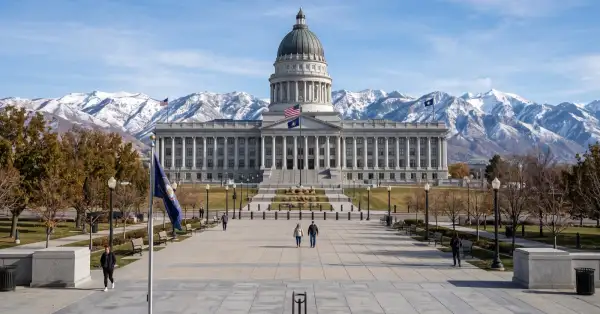
Fight for the Future's own advisory lists what moved, and the list is worth reading as a map rather than a complaint. Utah became the first US state to require websites to surveil or block all suspected VPN traffic. Wisconsin came close to passing a VPN ban attached to an age verification bill and did not. Michigan's proposed total ban is still live. Australian lawmakers talked about "closing the VPN loophole" after young people walked around the world's first social media ban for under-16s. Brazil made VPN use an aggravating factor in crimes. The UK seriously considered a ban and is still considering restricting VPN use for bypassing age gates. Social media bans for minors took effect in Indonesia, Malaysia and the UAE, and were proposed in France, Massachusetts and dozens of other places.
| Where | What happened to VPNs in the past year |
|---|---|
| Utah | First US state to make sites surveil or block suspected VPN traffic |
| Michigan | Proposed total VPN ban still in play |
| Wisconsin | VPN ban narrowly avoided in an age verification bill |
| Brazil | VPN use became an aggravating factor in crimes |
| United Kingdom | Ban considered; restricting VPNs to enforce age checks still discussed |
| Australia | Lawmakers floated "closing the VPN loophole" after the under-16 ban |
| Indonesia, Malaysia, UAE | Social media bans for minors came into force |
The pattern is the same everywhere, and it is not really about VPNs. A government introduces an identity check to keep minors off something, people decline to hand a passport scan to a third party, traffic moves to tools that make the check moot, and the tool becomes the next target. We keep the running list of the first half of that sequence in our guide to countries banning social media for minors, and the Utah mechanics in the story of the state's paused VPN law.
Who is taking part
The interesting part of this year's line-up is that the industry showed up. Windscribe is emailing its own users and putting notices in its app, and says it rarely asks users to support anything other than its product, which is a fair measure of how seriously it is treating the campaign. Its framing is blunt: bans "take away one of the few tools people have to protect themselves online", and "banning VPNs does not make the internet safer. It just makes it smaller, more controlled, and a whole lot scarier for the people who need it most."
The VPN Trust Initiative, whose members include NordVPN, Surfshark and ExpressVPN, is participating, as is the VPN Guild, which includes Amnezia VPN. That is worth naming plainly: these are commercial companies with an obvious interest in not being banned. It does not make the argument wrong, and it does mean the campaign reaches past the usual circle of activists.
What the letter actually asks for
The text on defendvpns.com is an open letter to world leaders saying that using the internet safely and privately is a human right and that VPNs should not be banned. Signing takes a name, an email and a country. For people in the US there is a second step: give a phone number and a postal code, and the campaign connects you to your representative's office with a suggested script.
Lia Holland, campaigns and communications director at Fight for the Future, puts the case this way: "VPNs are a crucial online privacy and safety tool that allow people living under authoritarian regimes and with 19th-century privacy laws to circumvent censorship and surveillance." Campaign director Sarah Philips is more specific about who pays when the tool disappears, listing people seeking healthcare, contacting family, or simply avoiding the upload of a government ID "to a sketchy third party service we know could be hacked".
Why banning the tool is the wrong end of the problem
There is a real problem underneath all of this, and it is not VPNs. Age verification laws require someone to hold proof of who you are, and that someone is usually a third-party vendor with a worse security record than the platform. The reason traffic moves to VPNs is not that people want to break the law; it is that the alternative is handing a document scan to a company you have never heard of. Ban the tool and the underlying choice does not improve, it just gets removed.
It is also worth being precise about what a VPN does not do, because the campaign's opponents will not be. A tunnel does not verify anyone's age, does not protect a child from anything, and does not make a data leak at a verification vendor less likely. It moves the question of where your traffic appears to come from. That is a narrow function, which is exactly why treating it as a crime scene looks disproportionate.
What you can do today, if anything
Participation is cheap and the effect is modest; both of those are true at once.
- Sign the open letter at defendvpns.com; it needs a name, an email and a country
- If you are in the US, use the call tool: it supplies a script and connects you to your representative's office
- Check what is actually proposed where you live, because the bills differ wildly and most coverage describes only the American ones
- If your provider sent you a message about this, read what it is asking for rather than just clicking through
- Share the specific case that matters to you rather than the campaign slogan; local examples move local lawmakers
Is anyone actually trying to ban VPNs?
Does signing a petition do anything?
Why are VPN companies involved?
Is using a VPN legal where I am?
Does a VPN get around age verification?
• Advisory: Second Annual Defend VPNs Day of Action 9/25 - Fight for the Future
• Defend VPNs from government bans - DefendVPNs.com
• VPN Day of Action: Providers and activists call on politicians to "leave VPNs alone" - Tom's Guide
• Advocates are stepping in to defend VPNs, and they need your help - TechRadar