Pavel Durov Questioned a Fourth Time in France - Still No Evidence, Says Telegram
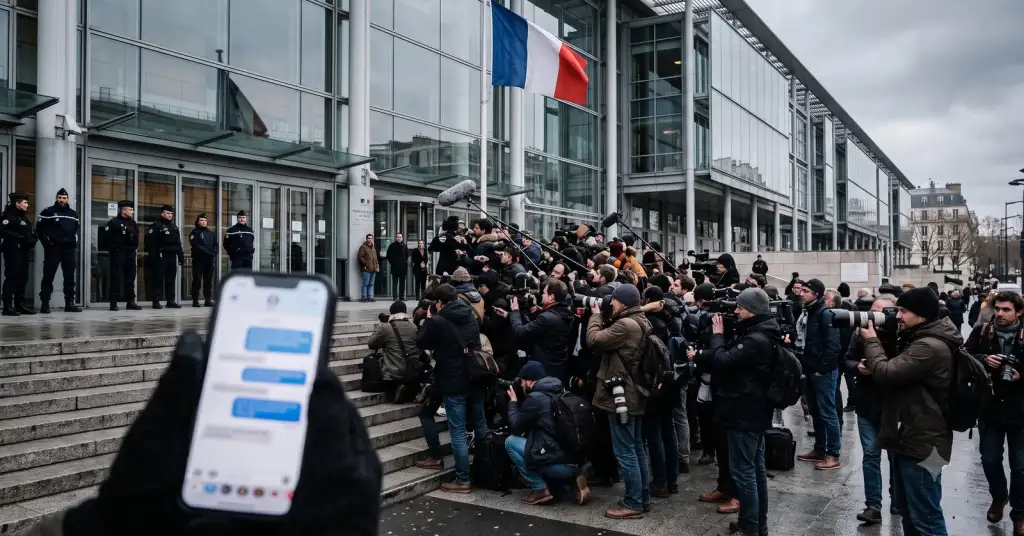
Telegram founder Pavel Durov was questioned by French investigators for a fourth time on July 9, 2026, spending more than six hours at the Paris Judicial Tribunal in a criminal probe that has now dragged into its second year. His defense team says the case still rests on no evidence, and Telegram frames the repeated summons as pressure on a platform built around encryption and free expression rather than a genuine search for proof.
A fourth round of questioning
The July 9 session marks the fourth time Durov has been interrogated since French authorities detained him at Le Bourget Airport near Paris on August 24, 2024. The investigation centers on allegations that Telegram's platform was used to facilitate criminal activity, and that the company failed to cooperate with law enforcement requests.
Durov has never been held in custody beyond his initial detention. He remains free under judicial supervision: he can travel internationally and live at his home in Dubai, but he must return to France whenever the court summons him. July 9 was one of those summons.
'Still no evidence,' say the lawyers
After the session, Durov's legal team told AFP that "almost two years after the indictment of Pavel Durov, there is still no evidence to establish the validity of the charges." Telegram went further in its own statement, saying the only real change since the 2024 detention is procedural: "French authorities have started properly drafting requests to Telegram."
The implication is pointed. According to the company, the platform was always reachable through legal channels - and the case, in its telling, has produced process rather than proof.
A case rooted in France's clash with platforms
The questioning is the latest chapter in a long standoff between Durov and the French state. Earlier in 2026, tensions escalated to the point where Durov threatened to pull Telegram out of France entirely, citing pressure over user data and a wave of crypto-related kidnappings that exposed the risks of handing personal information to the state.
France has taken an aggressive posture toward foreign platforms more broadly. In a separate dispute, the country sought help investigating Elon Musk's X, only for the US Department of Justice to refuse to cooperate - a clash that underscored how platform regulation has become a geopolitical fault line.
Free speech and encryption at the core
For Durov's supporters, the case is not really about Telegram's moderation record - it is about who controls private communication. Durov has repeatedly argued that "child safety" and "criminal facilitation" are used as covers to justify broader surveillance, a theme he laid out when he described the EU and UK censorship playbook of invoking child protection to weaken encryption.
That argument lands at a sensitive moment. Across Europe, lawmakers are pushing measures that would scan or weaken encrypted messaging, and a prosecution that targets the founder of an encryption-friendly platform reads, to privacy advocates, as part of the same trend.
Cases like this are why demand for privacy tools tends to rise whenever a messaging platform ends up in a courtroom. A VPN does not shield anyone from a criminal investigation, but it does encrypt a user's connection and hide their location and browsing from an internet provider - a reminder that, for ordinary users, the value of a private channel does not disappear just because a founder is under legal pressure.