US DOJ Refuses to Help France Investigate Elon Musk's X: What This Political Clash Over Platform Regulation Means for Digital Rights and VPN Users

The US Department of Justice on April 18, 2026 formally refused to assist a French criminal investigation into Elon Musk's social media platform X, telling Paris prosecutors that the probe is an attempt to "use the criminal legal system in France to regulate a public square for the free expression of ideas" in a way "contrary to the First Amendment of the United States Constitution." The letter - sent by the DOJ's Office of International Affairs - is one of the clearest public breaks between Washington and Paris over the regulation of American internet platforms, and it lands in the middle of a wider conflict in which Telegram founder Pavel Durov remains under separate French investigation with up to a dozen charges against him.
What the DOJ Letter Actually Says
The letter, first reported by The Wall Street Journal, was addressed to French authorities pursuing a criminal case against X and its executives. The DOJ called the French requests an "effort to entangle the United States in a politically charged criminal proceeding aimed at wrongfully regulating through prosecution the business activities of a social media platform." In other words: the United States will not help another government prosecute an American platform for the content it hosts or the algorithms it runs.
The refusal is unusual. US-France mutual legal assistance requests are typically routine and granted. An explicit written refusal on First Amendment grounds signals that the Trump administration's DOJ now treats foreign content-moderation investigations of US platforms as a political matter, not a law-enforcement one.
What France Is Actually Investigating
French prosecutors opened the X probe in 2025 and, in February 2026, raided the platform's Paris offices. The case centers on allegations of "abuse of algorithms" and "fraudulent data extraction" - a legal theory that treats X's recommendation engine and data-access practices as potential criminal offenses. Musk has been ordered to appear for questioning in Paris; he has not attended.
The investigation draws on a French legal architecture in which the prosecutor's office is not institutionally independent from the executive branch. French prosecutors are appointed, promoted, and can be reassigned by the government. The judicial police who gather evidence for investigating judges also answer up the executive chain. Critics - including Durov himself in a public statement this weekend - argue that this structural dependency is what allows politically sensitive investigations to move forward without the kind of firewall an independent prosecutor would provide.
The Durov Parallel
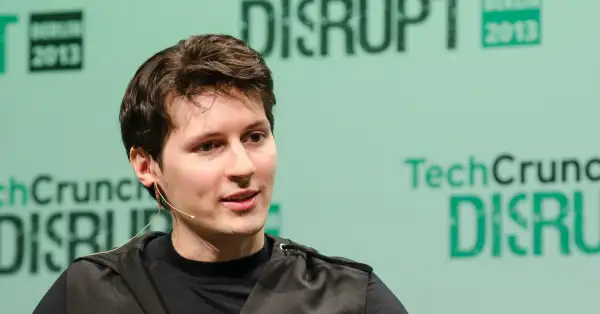
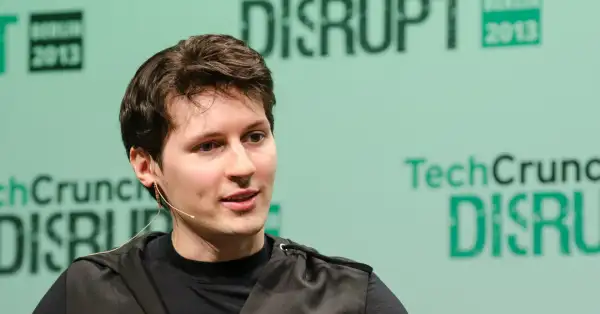
Pavel Durov knows the inside of the French criminal system better than any other tech founder. Arrested in Paris in August 2024 and initially held for 96 hours, he remains under formal investigation on twelve separate charges - including illegal transactions, enabling child-abuse material, fraud, and refusing to cooperate with authorities - each carrying up to ten years in prison. He was released on five million euros bail and has since received judicial permission to return to Dubai, where Telegram is headquartered.
In a statement referring to the DOJ refusal, Durov framed the Macron-era investigations as a broader campaign against digital rights. "In Macron's France," he wrote, "being investigated is the new Legion d'honneur." It is a cutting summary of a view increasingly shared by privacy advocates and technology executives: that the French state has begun to treat criminal investigation as a regulatory tool against platforms whose speech policies it disagrees with.
The First Amendment vs European Platform Law
The conflict is not just political. It is constitutional. The United States and France operate under fundamentally different theories of online speech. In the US, platforms are protected by the First Amendment and Section 230 of the Communications Decency Act, which shields them from most liability for user-generated content. In France and across the EU, platforms are regulated under the Digital Services Act and national laws that impose content-moderation duties backed by criminal penalties when regulators believe those duties have been violated.
When a French prosecutor demands access to a US platform's recommendation-algorithm code or user-data records under those laws, the DOJ position is that cooperating would mean helping a foreign government apply content rules that an American platform could never lawfully be held to at home.
What This Means for Privacy, VPNs, and Ordinary Users
Two practical consequences follow. First, the ground beneath cross-border platforms is becoming legally unstable - the same service can be a protected free-speech forum in one jurisdiction and a suspected criminal enterprise in another. When a platform like X or Telegram is cornered by a criminal investigation, it can be pressured to hand over content, metadata, or logs about users who live nowhere near the courtroom.
Second, the people most exposed are not tech CEOs; they are ordinary users who post about politically sensitive topics, journalists who source stories through encrypted channels, and activists whose online identities are tied to real-world risk. For all of them, technical privacy layers matter more than ever. A no-logs VPN breaks the straight-line link between a user's IP address and their posts, making blanket IP-level subpoenas far less effective. End-to-end encrypted messaging keeps conversation content out of content-moderation dragnets in the first place. Decentralized, open-source networks are gaining traction precisely because they cannot be served a single criminal summons at a Paris office.
What Happens Next
French prosecutors can continue their case without US cooperation, but doing so without DOJ-provided evidence will slow it down and likely narrow the scope of what they can prove. Durov's case, meanwhile, remains open - he is abroad, but the charges have not been dropped. Expect more friction: the DOJ letter, in effect, signals that future US administrations are likely to push back harder whenever European criminal law is used against American tech platforms in ways that conflict with the First Amendment.
Related Coverage on vpnlab.io
This story builds on several earlier pieces we have published on the same tangled thread of FISA reauthorization, platform prosecution, and Pavel Durov's ongoing fight with the French state. Recommended background reading:
- FISA Section 702 and VPN: How Your Privacy Tool Could Strip You of Legal Protection - our deep dive on the constitutional paradox that happens when a VPN user is on the other end of a Section 702 target.
- US Senators Warn VPN Users May Lose Constitutional Protections Under FISA - the March 2026 letter from a Congressional group that framed the current reauthorization fight.
- Musk and Durov vs EU: Censorship, Chat Control, and VPN Benefits - prior context on the two founders pushing back against Brussels rules.
- EU Age Verification App Hacked in 2 Minutes - Durov Warns of Surveillance Risk - Durov's most recent warning on EU digital-ID overreach.
- Pavel Durov Warns: We Are Losing the Free Internet - the broader statement that set the tone for his current posture toward European regulators.
Conclusion
• Justice Department refuses to assist French probe into Musk's X - CNBC
• US Justice Department Refuses to Assist France in Probe of X - Barlaman Today
• US Justice Department Declines French Probe on Musk's X - Global Banking and Finance
• Telegram's founder accuses Macron of creating a digital gulag - Anadolu Agency
• Macron defends giving citizenship to Telegram CEO Pavel Durov - Al Jazeera