ACLU and Coalition Oppose Surveillance in Digital ID
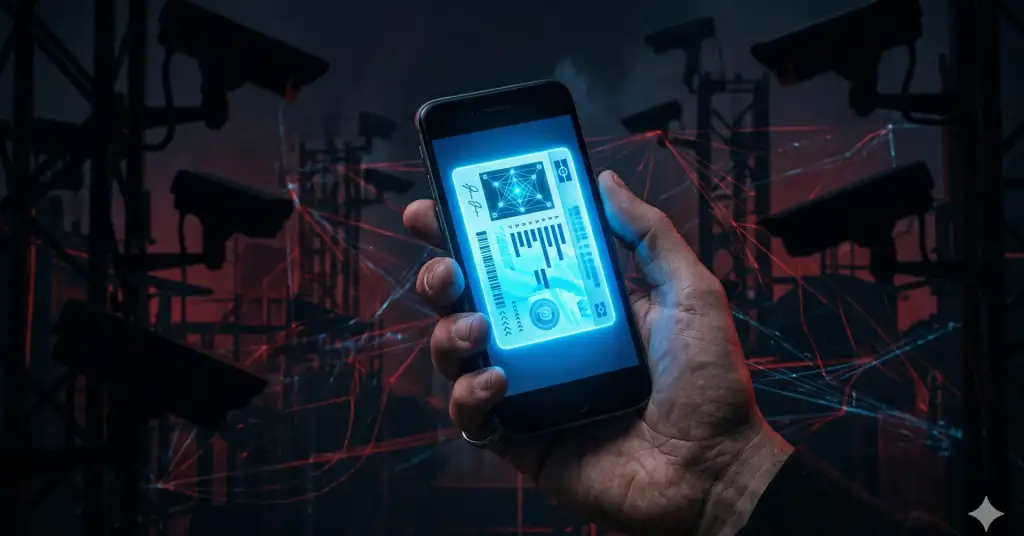
In a significant stand for civil liberties, a coalition of over 80 prominent organizations, including the ACLU and the Electronic Frontier Foundation, has formally issued a joint letter opposing the mandatory "phone home" tracking features embedded within mobile driver's licenses and other digital ID frameworks. The coalition argues that the current technical architecture of these systems allows government servers to receive a notification, or "ping," every time an individual presents their credentials, creating a permanent and searchable log of a citizen's physical movements and interactions.
The Surveillance Risks of the "Phone Home" Feature
At the heart of the controversy is a mechanism often referred to as "online verification." Unlike traditional plastic IDs that can be inspected visually or scanned locally, many current mobile driver's license (mDL) implementations are designed to communicate with a central government server during the verification process. When a user presents their digital ID at an airport, a liquor store, or a pharmacy, the system sends a request to the issuing authority to confirm the ID's validity. While this ensures the credential has not been revoked, it simultaneously transmits the exact time, the location of the request, and the identity of the person presenting the document.
Privacy advocates warn that this creates a "transactional record" of daily life that has never existed before. In a traditional society, showing an ID to prove one's age or identity is a localized, private event. By digitizing this process without strict privacy guardrails, the government gains the ability to track where people go, who they associate with, and how frequently they access certain services. The coalition emphasizes that this data is ripe for abuse, potentially allowing law enforcement or administrative agencies to reconstruct an individual's life story through a digital paper trail of ID presentations.
The Coalition's Demands for Digital ID Standards
The coalition letter, addressed to both federal regulators and state departments of motor vehicles, demands a shift toward decentralized and offline verification methods. The organizations argue that the technology already exists to verify a digital ID without alerting a central server. By using public-key cryptography and local device-to-device communication, a verifier could confirm the authenticity of an mDL without any data leaving the immediate vicinity of the transaction. The ACLU specifically points out that the "phone home" requirement is a policy choice, not a technical necessity, and should be treated as a major privacy flaw rather than a security feature.
Furthermore, the signatories are calling for strict legal prohibitions against the secondary use of any data collected during ID verification. Without these protections, there is a high risk that "verification logs" could be sold to third-party data brokers or shared across government agencies for purposes unrelated to the original identification check. The letter underscores that for digital credentials to be a viable alternative to physical cards, they must offer at least the same level of "privacy by default" that a piece of plastic provides, rather than becoming a tool for persistent state surveillance.
Technical Flaws in Current mDL Frameworks
The technical standards governing mDLs, primarily the ISO 18013-5 standard, allow for both "offline" and "online" modes. However, many state-led implementations have prioritized the online mode because it gives the issuing authority more control over the credential. From a technical perspective, the "phone home" mechanism is often justified as a way to prevent the use of stolen or revoked IDs in real-time. Yet, the coalition argues that this marginal security gain does not justify the total loss of anonymity in public and private spaces. They propose that revocation lists can be distributed to verifiers periodically, similar to how credit card "hotlists" functioned, to avoid real-time tracking.
Another technical concern raised by the coalition is the risk of "function creep." Once a centralized infrastructure for identity verification is established, it becomes trivial to add new layers of data. A system designed to check a driver's license today could easily be expanded to track health records, professional certifications, or even political affiliations. The coalition insists that any digital identity framework must be "minimalist" by design, ensuring that only the specific piece of information required (such as "is over 21") is shared, rather than the entire identity profile and its associated metadata.
Legislative Resistance and the Role of Digital Privacy
As more states rush to adopt digital identities to meet federal REAL ID requirements, legislative resistance is beginning to mount. Lawmakers in several jurisdictions are introducing "Privacy First" digital ID bills that would mandate offline verification and prohibit the storage of presentation logs. These legislative efforts align with the coalition's goals, aiming to ensure that the convenience of a mobile wallet does not come at the cost of fundamental constitutional rights. The debate is no longer about whether we will use digital IDs, but about who will control the data generated by them.
For individuals concerned about their digital footprint, the move toward tracked IDs represents a new frontier of data protection. While a reliable VPN can protect your IP address and encrypt your internet traffic from your ISP and hackers, it cannot stop a state-issued ID from "phoning home" if the software is hardcoded to do so at the system level. This highlights why the coalition's focus is on the core architecture of the ID systems themselves; when the surveillance is baked into the government-issued software, standard consumer privacy tools are limited in their effectiveness. Protecting privacy in the age of the digital ID requires systemic changes to how these credentials communicate with the world.
Related Coverage on vpnlab.io
- Google Silently Handed Activist's Bank Data to ICE, Violating Its Own Privacy Promise
- Apple Builds UK Age Verification Into iOS 26.4: Apple ID Becomes an Identity Document
- Sony Forces Age Verification on PlayStation UK: No ID, No Voice Chat, No Streams