Apple Just Made the Apple ID an ID: iOS 26.4 Ships Mandatory UK Age Verification on the iPhone

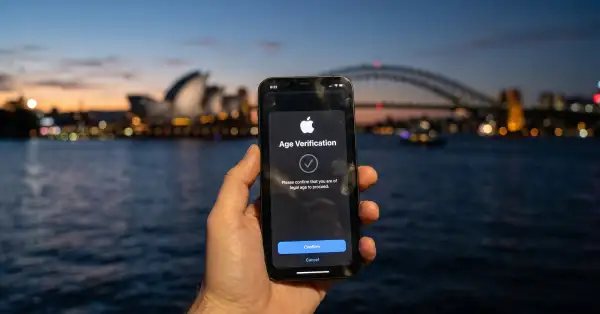
Apple has quietly rolled out mandatory age verification inside iOS 26.4 and iPadOS 26.4 for users in the United Kingdom. After the update installs, the device presents a "Confirm You Are 18+" screen that has to be satisfied before content restrictions on the Apple ID are lifted. The system accepts credit card scans or photo IDs, and for long-standing accounts Apple quietly infers age from payment methods and Apple ID history. No separate announcement, no opt-in, no choice to decline: a software update turned a consumer account into an identity document.
What iOS 26.4 Is Actually Checking
According to user reports and reporting by OSXDaily, 9to5Mac and TechRadar, the verification flow added in iOS 26.4 and iPadOS 26.4 runs automatically for UK Apple IDs. Users who already have a credit card on file, or whose Apple account is more than eighteen years old, are typically marked as adult without manual input. Everyone else sees the "Confirm You Are 18+" prompt. Apple supports two manual verification methods: a live scan of a physical credit card (debit cards are not accepted) and a live scan of a photo driving licence. Apple Wallet payment data can also feed the check. On a successful pass the Apple ID is flagged as adult and the device stops blocking content. On failure, the Apple ID remains in a restricted state.
Apple has not published a dedicated public explanation for the rollout. The legal driver is the UK Online Safety Act, which requires platforms that serve content to UK users to operate highly effective age assurance in front of material aimed at or accessible to minors. Regulator Ofcom welcomed the move. Apple's own marketing cycle stayed quiet about it - the check was shipped as part of a routine point release.
Why the Rollout Is Failing for Long-Term Users
The most striking thing about the first weeks of the iOS 26.4 rollout is not the policy itself but its reliability. OSXDaily documents UK users in their 30s, 40s, 60s and 80s, some with Apple accounts going back twenty years, who cannot pass the verification screen. A scan of a UK driving licence in poor lighting or with worn print fails. Credit card scans fail for cards with glossy surfaces, embossed type or weak CVV contrast. Some users report attempting the process more than a dozen times without success, leaving their devices stuck with content restrictions they cannot override. TechRadar calls the rollout "a disaster for some users" and documents cases where a 9to5Mac workaround - restarting the phone, re-adding a credit card in Wallet, waiting the full 10 seconds for the scan - is the difference between a working iPhone and a crippled one.
The failure modes hit exactly the population that any reasonable age check should have no difficulty with: older adults who have been Apple customers for decades. If the system cannot confidently mark an 80-year-old as 18+, it is not an age check in any normal sense. It is a mandatory identity-capture step with a high tolerance for false negatives.
Apple ID as a De Facto Identity Document
The more important shift is what iOS 26.4 does to the Apple account itself. Historically, an Apple ID was an email address plus a password and, optionally, a payment method. After iOS 26.4, a UK Apple ID carries an age attribute that was derived from verified credit card details, a scanned photo ID, or a multi-year payment history with Apple. That attribute can in principle be queried by any Apple subsystem, any first-party service (App Store, iMessage, FaceTime, Apple Music, Safari) and eventually by third-party apps that request age assurance through Apple's platform APIs.
Privacy groups including the Open Rights Group and Big Brother Watch have been warning since 2023 that the UK Online Safety Act would push platform accounts into this role. iOS 26.4 is the first rollout at device-OS scale that actually does it. For comparison, Sony's PlayStation UK and Ireland age-verification rollout, which is scheduled to cut off voice chat, Discord and streaming in June 2026 for unverified accounts, uses third-party provider Yoti. Apple has gone a step further: the verification lives inside the operating system and inside the core account, rather than inside a gated feature.
Sony, Apple, and the UK Consumer Device Squeeze
Within the same week, two of the largest consumer electronics companies in the world shipped UK age-verification flows. Sony turned age verification into a precondition for the social features of PlayStation 5. Apple bolted age verification onto the iPhone and iPad operating systems. Steam, Xbox Live and Discord went through the same pipeline earlier this year. Nintendo is widely expected to follow on Switch Online. The convergence is no accident. The UK Online Safety Act was written to force exactly this outcome - identity at the device and service layer, not at the website layer - and Ofcom is actively publishing guidance to make "highly effective age assurance" the default across consumer tech. For users in the UK, the identity-free default setting of a modern iPhone has quietly ended.
Privacy Exposure of Scanned IDs and Payment Data
Unlike Sony, Apple is performing the verification inside its own account infrastructure. That means the scanned driving licence and the credit card details captured for the age check sit in the same identity stack that already holds iCloud backups, Find My, health data, Apple Wallet and Apple Pay. Apple has a stronger first-party privacy record than most platforms, but the attack surface is still a single large target. A breach that exposed "UK age verification artefacts" would in practice expose a linkable set of government IDs, payment cards, and Apple IDs. Retention and access policies for that data have not been published by Apple in a standalone form.
This pattern has failed under stress elsewhere. The European Commission's own Age Verification App was announced as "ready to deploy" in April 2026 and was bypassed by a researcher within two minutes through a local shared-preferences edit. Verification systems tend to degrade fast the moment real users and real adversaries start poking at them.
Options Apple Currently Leaves Open
For the moment, Apple allows the prompt to be dismissed once per session, and the check can be deferred through Settings. Users who prefer not to install iOS 26.4 at all can turn off Automatic Updates in Settings, General, Software Update - Apple still permits this, at the cost of not receiving future security patches either. In the UK gaming and privacy press, a second point has been noted: the check is keyed to the Apple ID region and to the physical location data the device already reports, so older Apple IDs registered outside the UK do not currently trigger the same prompt. Apple has not publicly committed to closing that gap. Privacy-focused households and adults who simply do not want to hand a driving licence scan to a consumer platform have been raising these facts in UK forums rather than treating them as an invitation.
What Happens Next
The iOS 26.4 rollout will be the first large-scale production test of whether a Big Tech platform can perform age verification at OS scale without accumulating a long tail of angry, locked-out long-term customers. The open questions are concrete. Will Apple publish a retention and access policy for the scanned IDs? Will the "Apple ID over 18 years old" auto-adult heuristic be extended to other jurisdictions as the UK Online Safety Act spreads in spirit to the EU Digital Services Act and to parallel bills in Australia and Canada? Will Ofcom require Apple to expose the age-bit to third-party apps? And when the inevitable PSN-style adult-only region-hopping gains visibility, will Apple tighten the region logic or leave it alone? The answers will not come from a press release. They will come from the next Settings update.
Conclusion
UK PM Starmer Gives Apple and Google a 3-Month Ultimatum on Child Safety
• PSA: iOS 26.4 Age Verification in UK Fails for Some, Leading to Device Restrictions - OSXDaily
• iOS 26.4 age verification is proving a disaster for some users - TechRadar
• Online Safety Act 2023 - explainer, UK Government
• Age assurance and children's access - Ofcom regulatory guidance
• Age verification privacy concerns - Open Rights Group