Former French PM Attal wants power to block social media in riot areas
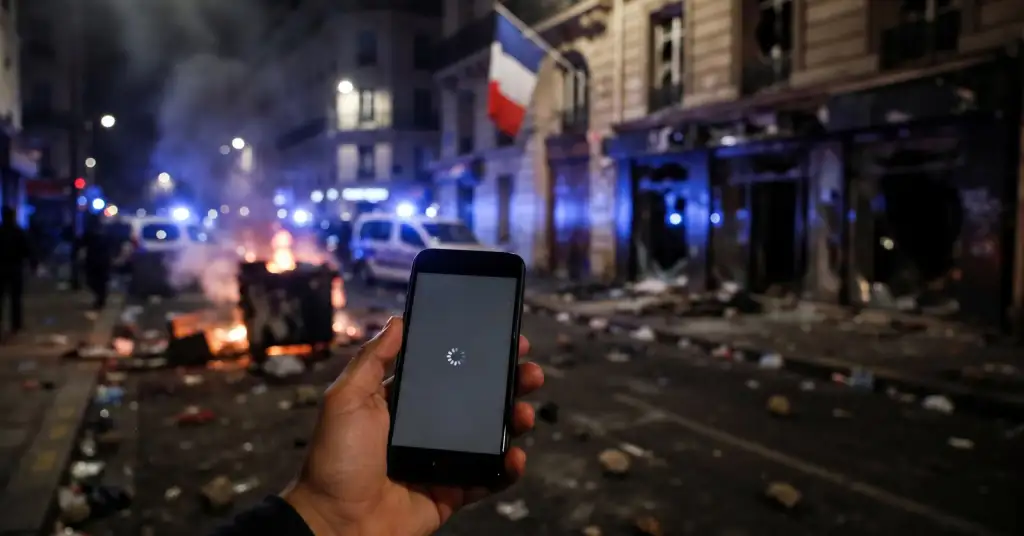
Gabriel Attal, the former French prime minister who now leads Emmanuel Macron's party and is running for president, wants the government to be able to switch off social networks in areas hit by riots. Speaking on RTL radio on Monday 19 October, he said the block "must be temporary and targeted at the areas where the riots are taking place". On X he wrote that the state "must be able to temporarily and selectively block access to certain platforms", which he called "the rallying point for rioters". The government has not announced any block of X, TikTok or Snapchat.
What happened
On Saturday 17 October, nationwide protests against the cost of living and poor conditions in schools turned violent in several cities. Groups attacked police, looted shops and set fires. The interior ministry said nearly 2,400 people were arrested over the weekend and nearly 1,000 police officers and gendarmes were injured, France 24 reports. On Monday Prime Minister Sébastien Lecornu asked prefects to impose "partial" and "localised" curfews, and Marseille banned demonstrations for the day.
Attal argues that meeting points are organised on social networks and that videos of looting push others to copy it. He also said peaceful protesters have legitimate demands that must be heard: "We cannot accept that there can no longer be demonstrations in France."
Brussels: platforms must act, no word on blocking
The European Commission, which oversees large platforms under the Digital Services Act, said the same day that it is in "close contact" with France's media regulator Arcom. "When online platforms are becoming aware or have a suspicion of a criminal offence that may occur, they have to proactively enforce and inform national authorities," Commission spokesperson Thomas Regnier said. Brussels did not comment on Attal's idea of cutting off whole services. Another EU spokesperson said peaceful protesters "must not be conflated with those who commit violence".
France has done this before
Attal is not proposing something new. As prime minister in May 2024 he had TikTok blocked in New Caledonia during deadly riots. The block lasted from 15 to 29 May. La Quadrature du Net, the Human Rights League and several residents took the case to the Conseil d'État, France's top administrative court.
On 1 April 2025 the court ruled the block illegal. It said that, without a specific law, the government may cut off a social network only in exceptional circumstances, and only:
- if the block is indispensable and no less intrusive technical measure can be used immediately;
- on a provisional basis;
- for no longer than it takes to find and put those alternatives in place.
The 2024 block had no end date and was not tied to the lack of alternatives, so the court found it a "disproportionate" infringement of rights. Critics noted that the ruling also accepted the principle that such blocks can be lawful. Lawyer Alexandre Archambault told Cryptoast that a block in mainland France could only follow a court procedure.
Why it matters
Shutting down social networks during protests is usually associated with countries such as Iran, India or Equatorial Guinea. Now a leading candidate for president in an EU country is proposing it openly, after his own government has already used it once. Such blocks are carried out by mobile and home internet providers, so they also cut off people who live in the area and have nothing to do with the riots, while a VPN connection routes around them. How European countries block sites and services without a judge is covered in our country-by-country guide.
For now this is a proposal from a candidate, not a government decision. The presidential election is in 2027.
• Gabriel Attal veut pouvoir bloquer les réseaux sociaux là où ont lieu les émeutes - Capital
• Violences du 17 octobre : Attal veut pouvoir couper les réseaux sociaux - Cryptoast
• French PM Lecornu calls for 'partial curfews' in cities hit by riots and looting - France 24
• TikTok en Nouvelle-Calédonie - Conseil d'État
• La suspension de TikTok en Nouvelle-Calédonie jugée illégale, mais pas impossible - Next