US judge rules warrantless Flock license plate search was unconstitutional
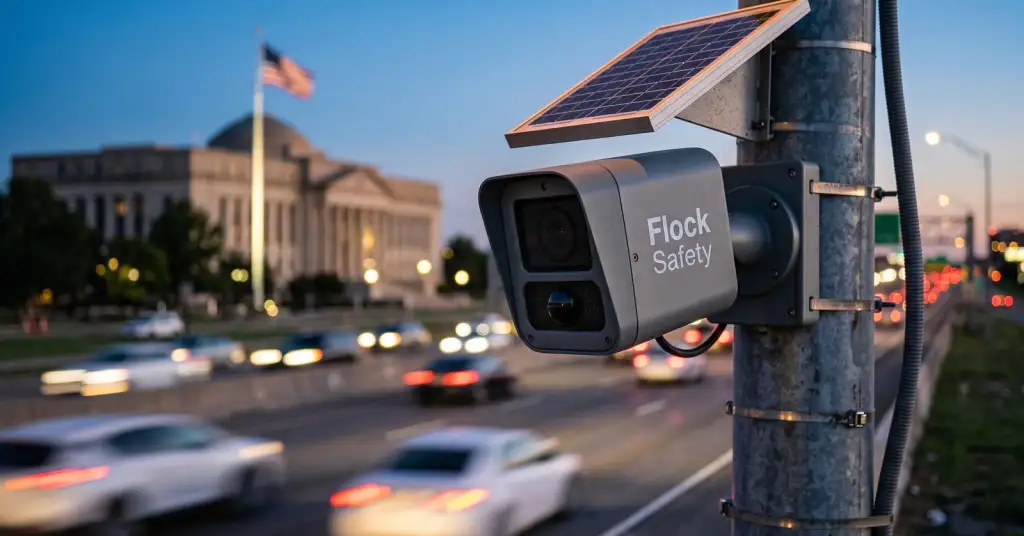
A federal judge in Oklahoma has ruled that a police search of the Flock license plate reader network without a warrant violated the Fourth Amendment of the US Constitution. On October 1, Judge Sara Hill of the Northern District of Oklahoma called the technology "a type of indiscriminate mass surveillance" and threw out the evidence it produced. 404 Media describes the decision as one of the first in which a federal judge has found a Flock search unconstitutional.
The case is United States v. Kyle. In May 2026, Freddie Alaniz, a Tulsa County sheriff's deputy who also served on a DEA task force, began following a Mazda SUV on Interstate 44 for one reason: it had California plates. While driving behind it, he ran the plate through Flock and other license plate reader systems. The search returned more than 50 records covering about a month of travel, from Oklahoma to the California-Arizona border and back towards Missouri.
Alaniz then pulled the car over, citing a lane change without signaling. In the SUV deputies found about 91 pounds of methamphetamine, marijuana and $7,000 in cash. The driver, 46-year-old Melisa Kyle of Crane, Missouri, is charged with possession of methamphetamine with intent to distribute. The judge suppressed both the Flock records and everything found in the car.
Why the judge called it mass surveillance
The prosecution relied on United States v. Knotts, a 1983 Supreme Court case that found no expectation of privacy in a car's movements on public roads. In Knotts, police followed one car on one trip with a radio beeper. Hill drew a distinction: Flock cameras record every passing car in advance, so an officer can pull up the travel history of a driver nobody suspected of anything at the time the data was collected. According to the ruling, the systems "intruded on her reasonable expectation of privacy," and the practice is "approaching dragnet-type law enforcement practice." "The Fourth Amendment requires courts to draw a line when the cost is too great," Hill wrote.
The scale matters here. According to 404 Media, police across the US run more than 100,000 Flock searches a month without a warrant. In September hackers who took apart a Flock camera showed that one unit captured 1.6 million frames in 21 days.
Courts disagree
The ruling is not binding on other courts, and appeals courts have gone the other way. On March 17, 2026, the Fifth Circuit held in United States v. Porter that a license plate reader search was not a search under the Fourth Amendment. Its reasoning was that the system gives only periodic location hits on public streets and cannot track "the whole" of a person's movements the way a phone can.
The question of location data has changed since then. On June 29, the Supreme Court ruled in Chatrie v. United States that police conducted a search when they obtained a suspect's location history from Google. Whether the same logic covers roadside cameras is now up to the appeals courts.
Flock, which was not a party to the case, said the decision "goes against the overwhelming weight of authority" in similar cases, including recent ones in Oklahoma, and that it expects the ruling to be appealed and overturned. An appeal would go to the Tenth Circuit.
• Federal Judge Rules a Flock Search Was 'Indiscriminate Mass Surveillance' and Unconstitutional - 404 Media
• Federal Judge Rules Flock License Plate Search Unconstitutional After Cop Followed Woman Over California Plate - Law Commentary
• United States v. Porter, No. 25-60163 - US Court of Appeals for the Fifth Circuit