Flock CEO tells police chiefs the backlash against his cameras isn't real
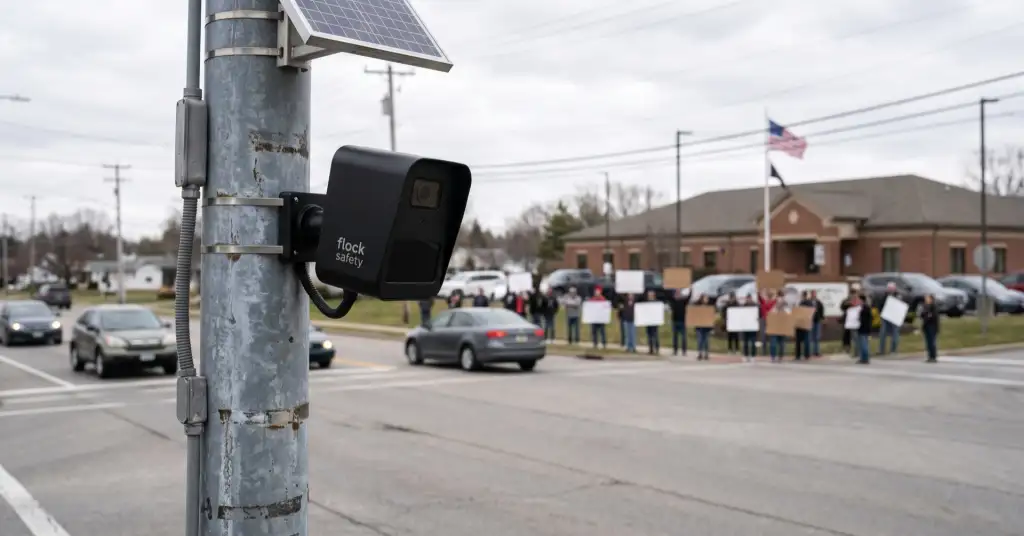
Garrett Langley, the CEO of license plate reader maker Flock Safety, told police chiefs at a private session on Sunday, 25 October, that protests against his company's cameras are not real. Leaked audio from the International Association of Chiefs of Police (IACP) conference in Orlando was published by 404 Media on 26 October. In it, Langley says the online criticism of Flock is mostly driven by paid bots.
"It's anonymous bots, and so it is not real," Langley said. "Inorganic activity has led to organic activity, but when I look at protests across the country, it is the same people with the same signs and the same message. That's not normal. That's not organic at all."
What Langley said about bots
According to Langley, someone was paying for the viral posts and then stopped. "Social media chatter on Flock is down about 95 percent from July," he said. "It went down 50 percent last week when Ukraine bombed a Russian data center with a drone. Literally 50 percent overnight." He offered no evidence. 404 Media notes that the idea that Ukrainian strikes on Russian data centers noticeably cut bot activity has been disproven.
The session was billed as a fireside chat with IACP president David Rausch, the director of the Tennessee Bureau of Investigation, on privacy, transparency and community trust. Langley also said his wife told him he "should never apologize" and that he would like to "never do media again". As the backlash grew, he had publicly apologized for calling DeFlock, a volunteer project that maps Flock cameras, a "terroristic organization". Flock did not respond to 404 Media's request for comment.
The backlash Flock is dismissing
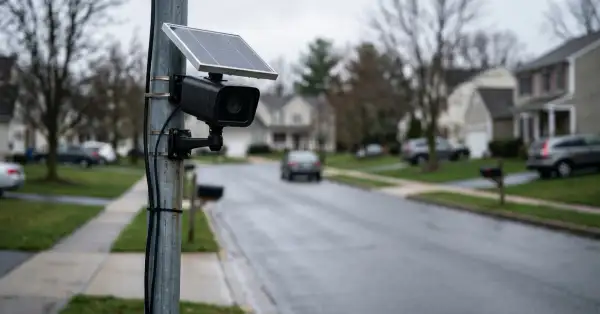
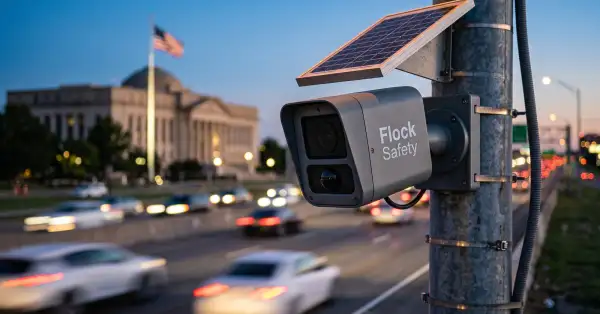
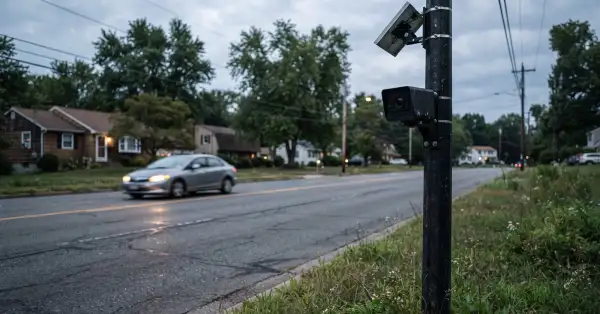
Flock's cameras record the plate, colour, make and model of every passing car and log when and where it was seen. Police customers can search that log without a warrant, including far outside their own area: about 80,000 cameras are linked into a national network that officers anywhere in the US can query if other departments share their data.
That network has produced the cases behind the backlash. 404 Media reported last year that local police were running searches for Immigration and Customs Enforcement, and that a Texas officer searched cameras nationwide for a woman who had self-administered an abortion. NPR has reported officers using the system to stalk former partners. In October a US judge ruled that one warrantless Flock search was unconstitutional.
The opposition is visible offline too. According to 404 Media, dozens of cities have cancelled their Flock contracts in the last 18 months. DeFlock puts the number of cities that switched cameras off or dropped Flock at more than 100. An NPR review found Flock cameras vandalized in at least 36 states, and DeFlock said more than 25,000 people signed up for its national week of action in August. Several members of Congress have proposed bills to ban or restrict the technology.
Flock expects the debate to pass
Langley told the chiefs that the company is close to the low point. "Whenever this industry finds a highly effective tool, it has to go through this period of intense debate," he said. "I think right now we're not at the bottom, but we're real, dang, near close to it and about to come back up on the other side."
In August, Flock said it had changed some features to prevent abuse, including cutting off officers who appear to misuse the tool. Langley told NPR then that people with concerns should take them to their city council. DeFlock's map shows whether there are Flock cameras on your own street.