US Treasury drops plans to track crypto mixers and self-custody wallets
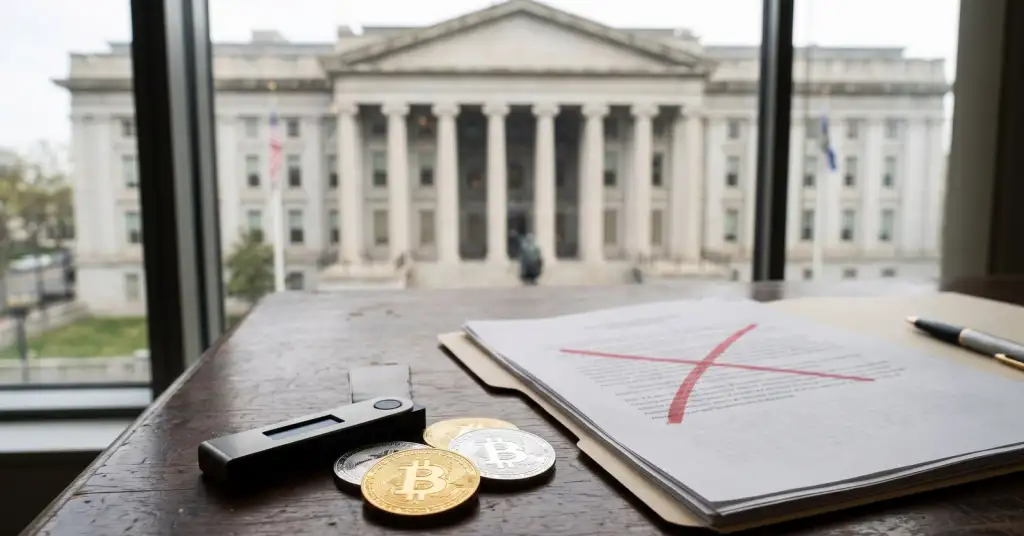
The US Treasury's Financial Crimes Enforcement Network (FinCEN) has dropped two proposed rules that would have tracked crypto users who send money through mixers or keep coins in their own wallets. Both withdrawals were published in the Federal Register on October 6 and took effect the same day. One rule dated back to December 2020, the other to October 2023. Neither had been finalized.
The two rules
The 2020 proposal covered "unhosted" wallets, meaning wallets the user controls without a bank or exchange in between. Banks and money services businesses would have had to keep records and verify the customer's identity for any transfer above $3,000 to or from such a wallet, and report transfers above $10,000 to FinCEN, including several transfers that add up to more than $10,000 within 24 hours. The same rules would have applied to wallets at foreign providers in jurisdictions FinCEN named.
The 2023 proposal went further. Under section 311 of the USA PATRIOT Act, FinCEN found that international crypto mixing was "a class of transactions of primary money laundering concern". Banks and crypto businesses would have had to report any transaction they suspected involved mixing, with the amount, wallet addresses, transaction hashes and the customer's IP address, and keep records of the customer's name, date of birth, address and email. The definition of mixing was wide: it covered pooling coins from several users, splitting a transfer into many smaller ones, using single-use addresses, swapping one coin for another and even user-chosen delays in sending.
Why FinCEN backed down
FinCEN says it still believes "illicit actors continue to use mixers" to hinder investigations. But it withdrew the 2023 rule because commenters warned that "the expansive definition of CVC mixing in the proposed rule could have a chilling effect on legitimate activity and place a large reporting burden on covered financial institutions." The notice cites a July 2025 White House report on digital assets, which said "the Trump Administration supports the ability of lawful users of digital assets to privately transact on a public blockchain" and acknowledged that lawful users "may leverage mixers to enable financial privacy".
The unhosted wallet rule was withdrawn "as part of the Trump Administration's ongoing efforts to ensure digital asset regulations are fit-for-purpose", and FinCEN says it "will take no further action" on it. The mixer notice is less final: FinCEN "will continue to monitor activity involving CVC mixers" and "may take appropriate steps in the future".
What changes for users
For now, a transfer from a US exchange to your own wallet will not trigger a separate identity check or a report to FinCEN under these proposals, and using a mixer will not automatically put a transaction on a reporting list. The usual anti-money-laundering rules stay in place: exchanges still verify customers when they open accounts and still file suspicious activity reports.
Crypto policy group Coin Center, which had opposed both proposals for years, welcomed the move but warned that "the underlying statutory authority to create new, similar bad rules remains." The law that made these rules possible has not changed, and a future administration could write them again.
• Proposal of Special Measure Regarding Convertible Virtual Currency Mixing; Withdrawal - Federal Register
• Requirements for Certain Transactions Involving Convertible Virtual Currency or Digital Assets; Withdrawal - Federal Register
• Treasury Kills Crypto 'Unhosted Wallet' and Mixer Surveillance Rules - Decrypt