Canada's Blocking Order Now Covers Pirate Sites That Do Not Exist Yet
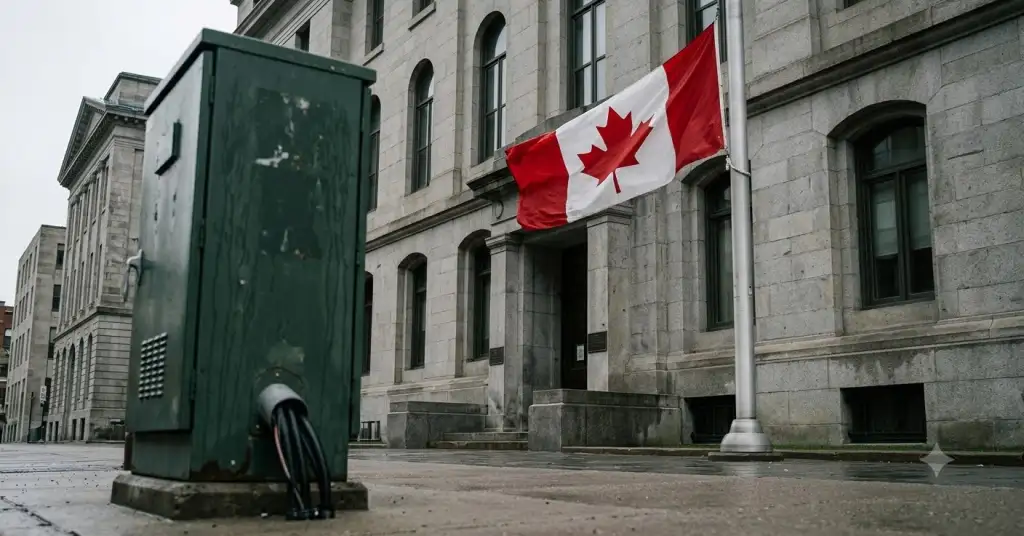
Canada has crossed a line that most site-blocking regimes only circled. On July 3, 2026, Federal Court Justice Southcott signed an order (docket T-1127-26) that forces the country's largest internet providers to block 13 piracy brands, including 123Movies and FMovies. The novelty is not the blocklist itself. It is the clause that lets rights holders keep adding new domains for the next two years without ever going back to a judge.
Who applied, and which Canadian ISPs must block
The application came from a coalition of Canadian broadcasters and Hollywood studios: Rogers, TVA, Netflix, Disney and Warner Bros. The order lands on Bell, Rogers, Telus and TekSavvy, which must filter the listed targets for their subscribers. The starting blocklist is modest by international standards, 13 domains plus five subdomains, and it covers two very different worlds of piracy.
- IPTV services: Apollo Group TV, Diablo IPTV, GLO TV, IPGuys, Jio TV and Smart4K/Platinum.
- Streaming sites: 123Movies, Cineby, FMovies, HydraHD, Putlocker, TheTVApp and WatchSeries.
- Duration: two years, with the list open to updates every 10 business days.
What "Expanded Scope" actually means
The phrase sounds procedural, and that is exactly why it matters. Under the expanded scope clause, rights holders can extend the block to "similarly infringing platforms operating under other brands" that were never argued in court. To add a target they file an affidavit confirming four things: that unauthorized distribution is its sole or predominant purpose, that it operates like the named services, that it is reachable from Canada, and that its operator received seven days notice. If no internet provider objects within five business days, the updated blocklist takes effect automatically. There is no hearing and no judicial sign-off.
From GoldTV to automatic piracy blocking
Canada's first blocking order, the 2019 GoldTV case, named specific domains and nothing more. Every time an operator moved to a fresh domain, the rights holders had to return to court. Later orders against Soap2Day and stream-ripping services allowed the list to be refreshed, but a judge still had to approve each round. This order is the first in Canada to take the court out of the loop entirely, which is precisely what the applicants wanted: pirate operators routinely rebuild under a new name within hours of being disrupted, and litigation moves in months.
The same logic produced a similar shift elsewhere. British courts went down this road first, when a UK judge granted Hollywood studios an unprecedented omnibus blocking order covering targets that had not yet been identified. Canada has now imported the model, with a lighter touch on judicial review than the British version.
Blocking keeps widening, and courts keep disagreeing
Two things are happening at once. Orders are climbing the internet stack, and they are being challenged at every step. In Europe, a Belgian court recently pulled infrastructure giants into the machine when it ordered Cloudflare and Google to block pirate IPTV while sparing their public DNS. France went further up the chain, where a Paris court told five major VPN providers to block pirate streams. Yet the direction is not one-way: Bulgaria's top court ruled that broad pirate-site blocking is legally impossible under its national rules.
The Canadian order does carry limits. It is tied to the applicants' own catalogue rather than to any copyright they may buy later, and operators must be notified before their domain is filtered. TekSavvy, the smallest provider on the list, did not formally oppose the application but has been blunt about the principle, calling blocking orders "a grave violation of network neutrality and a fundamental change to what we do as an ISP."
Why Canadian VPN users should read the fine print
Blocking is delivered by DNS and IP filtering, and both are crude instruments. When a domain is filtered at the resolver level, everything sharing that name goes dark, including subdomains and services that have nothing to do with the dispute. Add a list that can now grow on a 10-business-day cycle with no judge reviewing the evidence, and the room for quiet mistakes grows with it. The objection window belongs to internet providers, not to the users or the sites affected, and providers have little commercial reason to fight each individual entry.
This also arrives in a country already tightening the screws elsewhere. Ottawa spent the spring pushing encryption access, and Bill C-26 pushed Signal and several VPN services out of the Canadian market. A state that is simultaneously widening automatic blocking and narrowing encrypted tools is telling users something about the next few years.
For a regular subscriber, the practical question is not piracy but control over your own connection. Filtering applied by an access provider works on the traffic it can see, which is why encrypted tunnels and independent DNS keep coming up in these cases, and why enforcement has started aiming at those layers too. If you use peer-to-peer software for entirely legal file transfers, the same enforcement wave is a good reason to understand how P2P traffic and privacy actually interact before your provider's blocklist gets its next automatic update.
Related: a French court kept 197,000 euros frozen over posts explaining a DNS workaround.
Follow-up: MPA wants US site blocking after a record raid failed to move the numbers.