Motorola Solutions Secretly Shared License Plate Data With ICE: Class Action Filed in Illinois

Motorola Solutions is facing a proposed class-action lawsuit in Illinois after two Merced, California residents alleged that the company's automated license plate reader (ALPR) cameras collected their daily movements and secretly shared that data with ICE - U.S. Immigration and Customs Enforcement - and other federal agencies, in direct violation of California privacy law.
What Are ALPR Cameras and How Does Motorola Operate Them
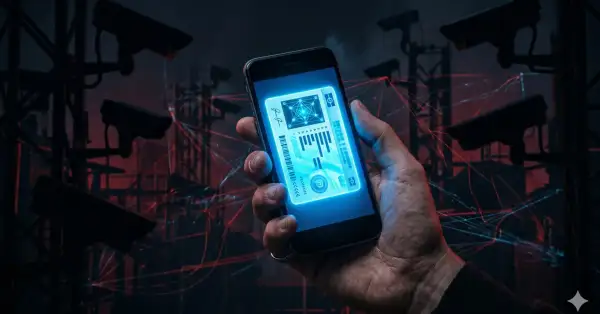
Automated license plate readers (ALPR) are high-speed cameras mounted on poles, bridges, and patrol vehicles that capture the license plate numbers of passing vehicles along with the exact time, date, and GPS coordinates of each scan. Motorola Solutions - headquartered in Chicago, Illinois - is one of the largest ALPR providers in the United States, supplying these systems to local police departments across the country.
According to the lawsuit, Motorola's ALPR devices were installed near the entrance to the University of California, Merced campus. The plaintiffs - Michelle Rojas and Marissa Barriga, both Merced residents - allege that their vehicle movements were captured and logged daily throughout 2025 and into 2026, creating a detailed record of where they went, how often, and when.
A January 2025 report cited in the lawsuit revealed that real-time footage and data from Motorola's ALPR cameras could be accessed online "without any sort of login" - meaning that sensitive location data on thousands of drivers was potentially accessible to anyone who knew where to look.
Data Secretly Shared With ICE and Other Federal Agencies
The lawsuit's central allegation is that Motorola shared ALPR data gathered in California with federal law enforcement agencies - most critically, with immigration enforcement. An April 2026 investigative report found that the Merced Police Department was sharing its ALPR data "with numerous federal and non-California agencies," including the United States Marshals Service and the Bureau of Indian Affairs.
California state law places strict limits on ALPR data sharing. Under California's ALPR statute, agencies that collect plate reader data must post a publicly available usage and privacy policy, must not share data with entities that do not have their own compliant policy, and must not retain data longer than permitted. The lawsuit argues that Motorola - by building and operating a data-sharing infrastructure that enabled this cross-agency flow - violated these requirements and failed to maintain "reasonable security procedures and practices" as required by law.
The Class Action Lawsuit: Claims and Damages
The lawsuit was filed in Cook County, Illinois - Motorola's home jurisdiction - and seeks to represent all California residents whose license plate data was collected and shared by Motorola Solutions without authorization. The plaintiffs are seeking $2,500 in actual damages per class member, plus unspecified punitive damages. They are also asking the court to issue an injunction that would block Motorola from continuing these data-sharing practices.
The legal theory rests on California's Vehicle Code Section 1798.90.5, which governs how ALPR data may be collected, used, and shared. The plaintiffs argue that Motorola, as the operator of the underlying data infrastructure, bears direct responsibility for enabling the unlawful sharing - not just the individual police departments that subscribed to its platform.
- Plaintiffs: Michelle Rojas and Marissa Barriga, Merced, California residents.
- Defendant: Motorola Solutions Inc. (headquartered in Chicago, Illinois).
- Agencies implicated: ICE (Immigration and Customs Enforcement), U.S. Marshals Service, Bureau of Indian Affairs.
- Law allegedly violated: California ALPR privacy statute (Vehicle Code 1798.90.5).
- Damages sought: $2,500 per class member plus punitive damages and injunctive relief.
The Broader Pattern: ALPR Networks and Federal Access
The Motorola case is part of a broader national pattern in which private ALPR vendors have become the infrastructure layer through which federal agencies gain access to location data that state and local laws would otherwise restrict. Because the data flows through a private company's platform rather than directly between a police department and a federal agency, it can fall into legal gray zones that bypass state sanctuary policies and data-retention limits.
ALPR networks like Motorola's can contain hundreds of millions of plate scans, enabling investigators to reconstruct a person's movement history over weeks or months. Unlike traditional surveillance, ALPR data is collected passively on everyone who drives past a camera - not just people under investigation. This bulk, non-consensual collection is exactly what California's ALPR statute was designed to regulate.
Cases like this highlight why privacy advocates argue that the location trail your vehicle leaves every day - at campus gates, grocery stores, and highway on-ramps - represents a comprehensive surveillance record that deserves the same legal protections as your phone or your home. As ALPR networks expand and data-sharing agreements multiply, users increasingly rely on VPNs and other privacy tools to limit at least the digital portion of that footprint.