Judge orders Meta to pay New Mexico $25 billion for misleading Facebook users on privacy
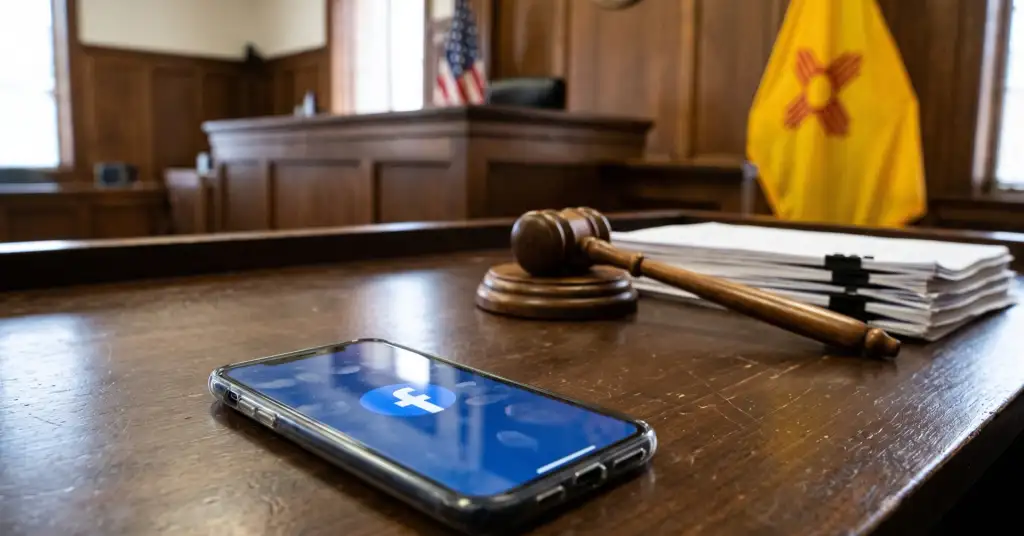
A New Mexico judge has ordered Meta to pay the state 25 billion dollars for misleading Facebook users about their privacy, the largest penalty ever imposed on the company. District Court Judge Francis Mathew issued the judgment on 21 October in the state's Cambridge Analytica case, a month after a Santa Fe jury found that Facebook had broken New Mexico's Unfair Practices Act more than 43 million times. Meta will also owe 15% annual interest until the sum is paid in full, The Record reports.
"Facebook promised users that they (the users) controlled their data. This was false," Mathew wrote, according to the Associated Press.
The figure sits between the two sides' demands. At the statutory maximum of 5,000 dollars for each of the 43,899,720 violations on the jury's verdict form, the ceiling was about 219.5 billion dollars. The state asked for 35 to 40 billion. Meta argued that anything above roughly 3.4 billion would be unconstitutional, and its lawyer called a 40 billion award "shocking to the conscience". The final amount works out to about 570 dollars per violation, roughly a ninth of the maximum. At 15%, interest alone adds 3.75 billion dollars a year.
The judge found the deception came from the top
Mathew listed the scale, duration, repetition, breadth and willfulness of the violations as "substantial aggravating circumstances", The Record reports. He found that senior leadership, including Mark Zuckerberg and then chief operating officer Sheryl Sandberg, pursued a calculated strategy to mislead consumers, down to an internal "song sheet" that kept public messaging consistent.
According to the judgment, Facebook kept promising users control over their data, protection from misuse by third parties and strict enforcement after its own staff had concluded it could not deliver any of that. The "comprehensive" investigation of app developers promised after the 2018 scandal was, in Mathew's words, "willfully ineffective": the company lacked the records to trace where data had gone and could not force developers to delete it. Cambridge Analytica obtained data on up to 87 million profiles through a personality quiz app and used it to build voter profiles for the 2016 US presidential election.
The jury did not accept every claim. It rejected the state's allegations that Facebook falsely said it removed harmful content, including COVID-19 misinformation.
The money is years away
Meta will appeal. "We are confident we will prevail on appeal," chief legal officer C.J. Mahoney said, adding that the ruling and the attorney general's approach make it "all but impossible to do business in the state of New Mexico" and that the lawsuit "seeks to impose a tax on speech". An appeal could reduce the number of violations and with it the penalty. The state is also asking for an injunction to stop similar practices.
Under the New Mexico Constitution, consumer protection penalties go to education. Attorney General Raúl Torrez called the judgment "an unambiguous message, to Silicon Valley" and said the state "may have paid for the construction of schools for the next 100 years", while acknowledging that the money will be tied up during the appeal.
For comparison, the US Federal Trade Commission fined Facebook 5 billion dollars over the same scandal in 2019, and Meta settled a related class action for 725 million dollars in 2022. In August, Meta reached a settlement with nearly all other states over child safety, which ended the trial in Oakland. The AP puts that deal at 18 billion dollars, and The Record reports that it included a 459 million dollar penalty tied to Cambridge Analytica. New Mexico and Florida did not sign. In March, a separate New Mexico case over children's safety ended in 375 million dollars in penalties.