EU Council Revives Chat Control via Written Procedure, Bypassing Parliament

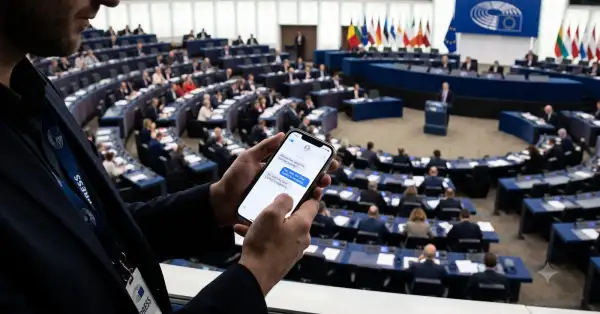
The Council of the European Union used a written procedure on July 2, 2026 to revive Chat Control, the voluntary message-scanning regime that legally expired in April, by dressing it up as a fresh piece of legislation rather than an extension the European Parliament had already refused.
A Fast-Track Around an Expired Law
Parliament rejected a second extension of the interim ePrivacy derogation on March 25, 2026, letting the voluntary scanning regime expire on April 4. Since an expired rule cannot simply be "extended" without Parliament's consent, EU ambassadors took a different route: they rewrote the same text as a formally new regulation and adopted a Council position on it through written procedure - a fast, low-visibility process among member state representatives that skips open debate entirely.
Timed to Catch Parliament Empty-Handed
The Council's text is scheduled to reach the European Parliament's agenda as early as this Tuesday, under an urgent procedure, with a floor vote pushed toward the last session before the summer recess - a day by which many MEPs have historically already left Brussels. Because the file has already reached second reading, blocking the Council's position requires an absolute majority of all MEPs, not just those present, a bar Chat Control critics call "almost insurmountable" against a thinned-out chamber.
What the Expired Regime Actually Allowed
The lapsed rule is a narrow but consequential one: an e-Privacy derogation, first introduced in 2021, that lets messaging and email providers like Meta and Google voluntarily scan private communications for known child sexual abuse material without breaching EU confidentiality-of-communications law. Parliament's March 25 vote deliberately let that legal cover lapse rather than renew it a second time, arguing it amounted to surveillance without judicial oversight. The Council's written procedure this week tries to hand providers that legal cover back, just wrapped in a new bill number.
Why Encryption Is Still on the Line
The Electronic Frontier Foundation warned back in April that Parliament's rejection would not be the end of the story, describing the scanning proposal as a "zombie" that keeps coming back in new forms. This week's written procedure is exactly that pattern playing out: the mandatory scanning fight over Chat Control 2.0 continues in trilogue talks, while the Council uses procedural shortcuts to keep the voluntary scanning regime alive in the meantime. Both tracks lean on the same platforms - Meta, Google, and other messenger providers - that would need to scan private chats to comply.
Every version of this fight has the same practical takeaway for ordinary users: the more platforms are pressured to scan or weaken encryption on their end, the more privacy-conscious Europeans lean on tools like a VPN to keep their traffic and metadata out of reach of both scanners and network-level surveillance.
Conclusion
• Chat Control 1.0: EU Council forces messenger scans via fast-track - heise online
• EU Parliament Blocks Mass-Scanning of Our Chats - What's Next? - EFF