Poland publishes bill barring under-15s from social media from September 2027
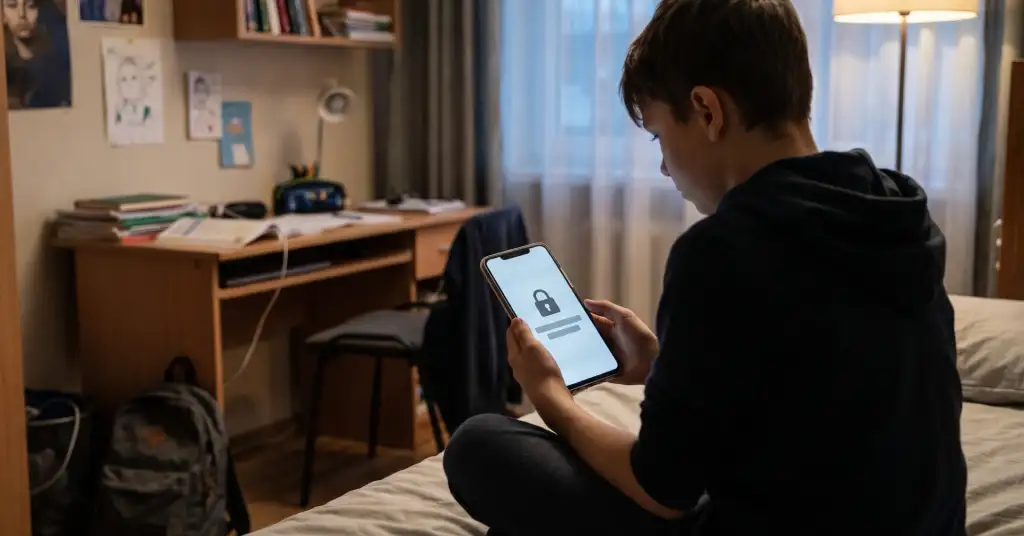
Poland's Ministry of Digital Affairs and Ministry of National Education have published a draft law that would bar children under 15 from social media. The bill on the minimum age for access to online social networks (UD492) was posted on the government legislation portal on 20 November and sent to public consultation. If parliament passes it in this form, it takes effect on 1 September 2027, the start of the 2027/2028 school year. Platforms, not parents, would have to check users' ages, and fines could reach 6% of global annual turnover.
Which services are covered
The bill takes its definition of a social network from the EU Digital Markets Act. A platform must block under-15s from creating or using an account if it meets at least one of four risk criteria: it lets users share content in real time with an unlimited audience, it lets them contact strangers, it recommends content based on profiling, or it uses features designed to keep people scrolling.
Messaging apps are excluded, because they fall under a separate EU category of interpersonal communication services. According to CyberDefence24, the explanatory memorandum also leaves out online encyclopedias, code repositories, open-source platforms and educational and research systems.
How age would be checked
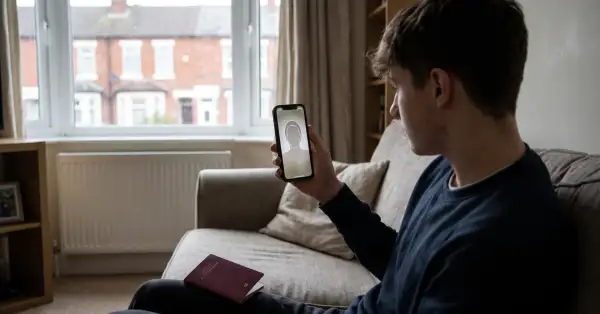
The draft lists three tools: an age attribute from the European Digital Identity Wallet, a new age service in the state mObywatel app, and third-party solutions that the digital affairs minister adds to an official list. To get on that list, a tool has to let the user pass on only the age fact (a birth date, being over a certain age or falling within an age range) while keeping the tool under their sole control. A platform that has already fully identified a user, with name and age, does not need a separate check.
If a platform later has reasonable doubts about a user's age, for example because of a credible report or how the account is used, it must ask again. Fourteen days after that, access is locked until the age is confirmed. Deputy digital affairs minister Dariusz Standerski said earlier this month that accounts would not be deleted: they would stay frozen until the owner turns 15, Rzeczpospolita reported, citing PAP.
Deadlines and fines
Existing accounts get a transition period. For accounts created by 1 September 2026, platforms have 18 months after the law takes effect to run the first check. For newer accounts the deadline is six months, which the memorandum puts before 1 March 2028. The check can be skipped when a platform can show with high certainty that the user is over 15, in particular for accounts opened at least ten years before the law takes effect, that is before September 2017.
The president of the electronic communications office UKE would enforce the law. Fines of up to 6% of a provider's global annual turnover would apply only to platforms, never to children or parents.
Poland and the EU
Poland is going further than Brussels. The European Commission's EU Kids Act, proposed in September, bars under-13s and lets 13- to 15-year-olds use only limited accounts supervised by a parent. Deputy education minister Katarzyna Lubnauer compared that transition period to letting a child drink alcohol, only in smaller amounts, Rzeczpospolita reported. Greece has already passed its own ban for under-15s, and other countries' rules are tracked in our list of social media age limits.
The text is not final. Ministries and other stakeholders are now sending comments, and Gazeta Prawna reports that the government plans to adopt the bill in the first quarter of 2027. After that it goes to the Sejm.
• Projekt ustawy o minimalnym wieku dostępu do internetowych serwisów społecznościowych (UD492) - Rządowe Centrum Legislacji
• Weryfikacja wieku w sieci. Ruszyły konsultacje rządowej ustawy - CyberDefence24
• Uczniowie do 15 lat nie będą mieć dostępu do mediów społecznościowych - Rzeczpospolita
• Media społecznościowe od 15 lat. Jest projekt ustawy - Gazeta Prawna