US judge keeps $42 million judgment against 'DMCA Ignored' host VSYS
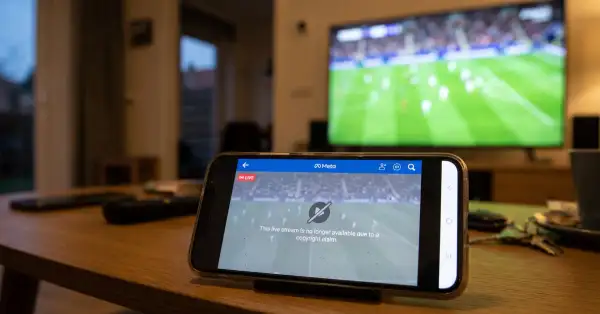
A federal judge in Seattle has refused to cancel a $41.85 million judgment that DISH Network won against Virtual Systems, a Ukrainian hosting company known as VSYS Host, and its owner Vyacheslav Smyrnov. The host advertised servers in Ukraine as "DMCA Ignored" and, according to DISH, left more than 500 takedown notices unanswered while pirate IPTV services streamed DISH channels from its network. In an order dated November 18, Judge Barbara Jacobs Rothstein rejected the company's attempt to use the Supreme Court's ruling in the Cox case to escape the judgment.
How VSYS ended up owing $41.85 million
DISH sued in October 2024, accusing Virtual Systems and Smyrnov of contributory, induced and vicarious copyright infringement. According to the court, DISH sent the company at least 512 infringement notices by mail and email and got no reply. The defendants were served under the Hague Convention but did not appear in court, and in November 2025 the judge granted a default judgment: the statutory maximum of $150,000 for each of 279 works, plus a permanent injunction that bars VSYS from providing servers for the infringing streams.
Smyrnov filed an appeal at the end of December, and the Ninth Circuit dismissed it as untimely in January 2026. In April the defendants hired a Seattle law firm and asked the court to reopen the case.
Why the Cox ruling did not help
In March 2026 the Supreme Court threw out the $1 billion verdict that record labels had won against the internet provider Cox and narrowed when a provider is liable for its customers' piracy. VSYS argued that this undermined the case against it. The judge disagreed. Her original judgment also rested on inducement, which Cox reaffirmed: a provider is liable if it "actively encourages infringement through specific acts". It also rested on vicarious liability, which Cox did not touch. "Because Cox did not review or alter vicarious liability, the default judgment remains independently supported on that ground regardless of how Cox narrowed contributory infringement," she wrote.
The court also found the motion came too late, more than five months after the judgment, with no explanation for the delay. VSYS claimed that no allegedly infringing material was ever stored in the United States and that DISH had wrongly placed it on servers in Washington state to establish jurisdiction. The judge replied that a defendant who skipped the case cannot reopen it just to dispute allegations it could have challenged in time. Quoting the Supreme Court, she wrote: "There must be an end to litigation someday, and free, calculated, deliberate choices are not to be relieved from."
What this means for offshore hosting
VSYS admitted in court papers that its marketing used the phrase "DMCA-Ignored" for servers in Ukraine, but denies having such a policy and argues that US takedown rules do not automatically apply abroad. TorrentFreak reports that its website still tells IPTV services that Ukraine is "much more tolerant to copyright breaches". In an April letter, DISH listed at least 176 cases over roughly three months in which VSYS servers streamed its programming in breach of the injunction. VSYS says the injunction cost it its space at the Sabey data center in Seattle, and that Russian missile strikes on September 23 knocked out both of its Kyiv data centers.
The case shows that a foreign address does not shield a host from a US judgment if it has servers, customers or other business in the United States. DISH is using the same approach against pirate services themselves: earlier this month it asked a US court for $21 million from IPTV operators who ignored its lawsuit. Rights holders are also pushing to make intermediaries such as VPN services and DNS resolvers block pirate sites, which an industry coalition warned against in a report this year.