Finland Cuts a Fibre Link to Russia, and the 70 Percent Headline Gets It Wrong
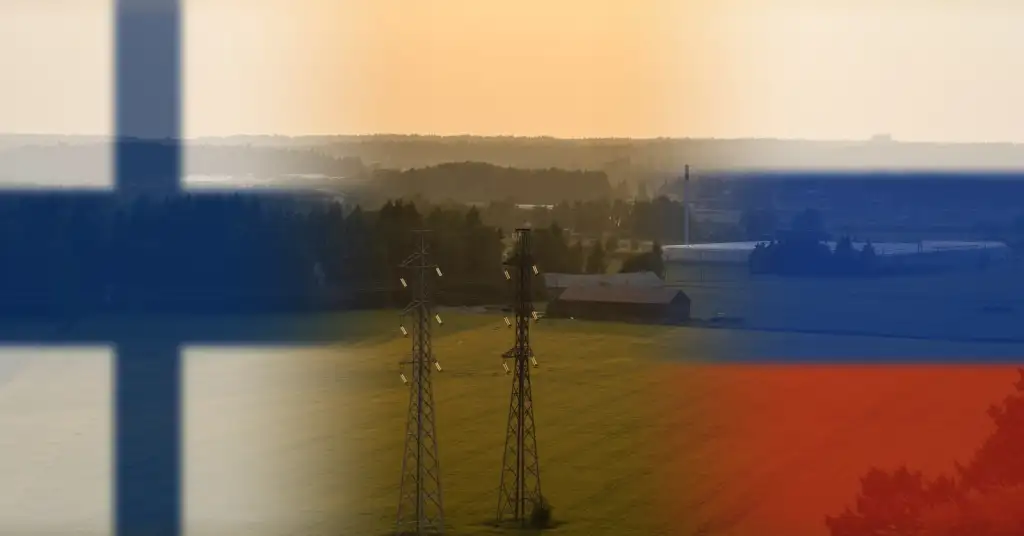
Finland is switching off a fibre optic line that runs into Russia. Fingrid, the Finnish state grid operator, will not renew the lease on the cable when it expires at the end of 2026, and from 2027 it stops maintaining the cross-border transmission pylons the fibre is strung along. The Finland Russia fibre link has survived four years longer than the electricity trade it was built to serve, and its removal has been reported in Russia as the moment Europe cuts the country off. The numbers say something narrower.
What Fingrid actually told Russian operators
The story broke on 29 July 2026, when Kommersant, citing sources in the Russian telecom market, reported that Fingrid had notified operators it would stop servicing the power line pylons from 2027. According to that account the plan is blunt: the cable is cut and the pylons are taken apart. Fingrid's own explanation is economic rather than political. Russia stopped supplying electricity to Finland in 2022, the lines have carried nothing since, and keeping steel towers standing purely so somebody else's fibre has a place to hang stopped making sense.
Rosseti, the Russian grid operator on the other side, confirmed the underlying situation: the 400 kV line between Vyborg and Finland has run in limited mode for years and is no longer used to move electricity. Before the halt, Fingrid ran five cross-border lines, three at 400 kV and two at 110 kV, which carried 9.1 terawatt hours into Finland in 2021 alone. That trade is gone. The fibre was the last live thing on the route.
The Finland Russia fibre link and the 70 percent claim
Two separate numbers got welded together in the coverage. The first: up to 30 percent of all communication lines between Russia and Finland run along those power pylons. The second: since 2022, roughly 60 to 70 percent of Russia's foreign internet traffic transits Finland in total, across every route, not only the pylon-mounted ones. Headlines that merged the two into "Finland cuts 60-70 percent of Russia's internet" describe something that is not happening.
Fingrid's own account is narrower still. Speaking to Finnish broadcaster Yle, the company said a single leased fibre line is affected, not the bundle described in the Russian press, and that ending it is unlikely to have a significant effect on telecommunications between the two countries. The Record quoted the same position: the impact on connectivity, in Fingrid's words, is very limited.
Where the traffic goes instead
Russian operators told Kommersant they are already negotiating alternative routes and hold reserve capacity on other paths: through Belarus, through the Baltic states, and over submarine cable systems in the Baltic Sea. Industry experts quoted in the same report do not expect a serious hit to ordinary subscribers. The caveat is regional. If the lost capacity is not fully replaced, users in Russia's north-west and European parts could see higher latency and degraded access to European resources, which is exactly the population that routes its traffic through European endpoints when domestic blocks make direct access unreliable.
Why the internet was hanging on a power line
Fibre strung along high voltage pylons is standard infrastructure, not an improvisation. Grid operators build optical cable into their own transmission lines to monitor the network, then lease the spare fibres to telecom companies, which get a ready-made corridor across difficult terrain without digging a trench or laying a border crossing of their own. The arrangement is cheap and invisible until the host line dies. When the electricity stops flowing, the towers become a cost with no revenue, and the data riding on them loses its landlord.
A border that keeps getting thinner
The cable sits inside a wider hardening of the frontier. Finland joined NATO after the 2022 invasion, its security service has since described Russia as hostile, and the Baltic Sea has seen a run of damage to subsea cables and pipelines. Meanwhile Russia has spent years narrowing its own connection from the inside: deep packet inspection boxes deployed nationwide, throttled services, and blocks that made circumvention tools a mass-market product, as we reported when Moscow spent millions on new filtering hardware and VPN downloads jumped fourteenfold. Days before the fibre story, the state put the Telegram founder on its terrorist register. External capacity shrinking while internal filtering grows is the same squeeze arriving from two directions.