Russia Spends $14.5M on TSPU Servers as VPN Downloads Surge 14x
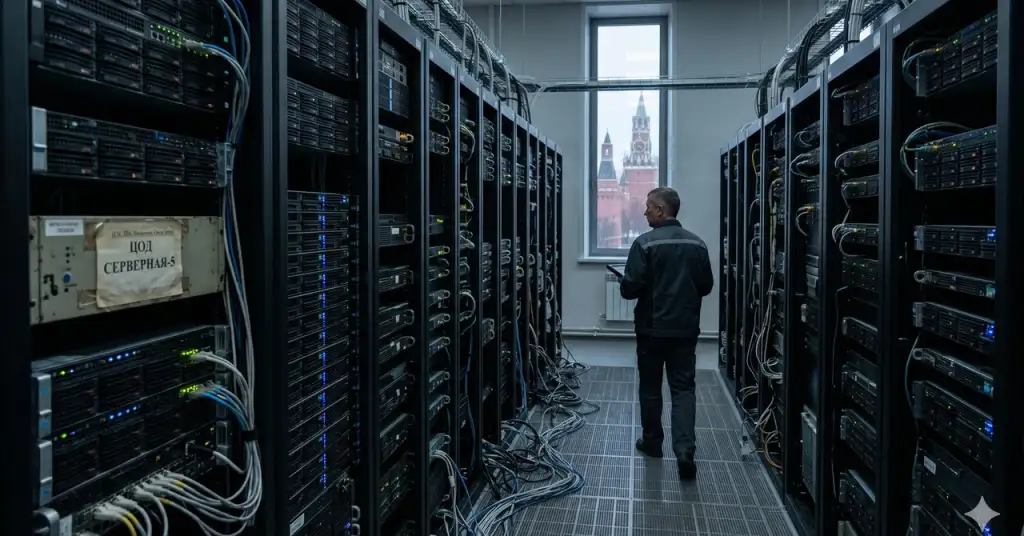
Russia is pouring 1.31 billion rubles ($14.5 million) into upgrading its internet filtering infrastructure, with state-linked company DTSOA purchasing at least 154 high-performance servers designed to power the country's TSPU deep packet inspection system - the backbone of the Kremlin's campaign to block VPNs and restrict access to the open internet.
What Is DTSOA and the TSPU System?
DTSOA (Data - Processing and Automation Center) is a subsidiary of Rostelecom, Russia's largest state-controlled telecommunications company. The firm serves as the primary technical integrator for Russia's internet filtering apparatus, responsible for deploying and maintaining TSPU hardware - "Technical Means for Countering Threats" - across the networks of Russian internet service providers.
TSPU units are deep packet inspection (DPI) appliances that sit between ISPs and their subscribers. They give the Federal Service for Supervision of Communications (Roskomnadzor) real-time control over internet traffic: blocking websites, throttling services, and identifying encrypted protocols. The system operates largely invisibly to ordinary users and has been in mandatory deployment on Russian ISP networks since 2019 under the Sovereign Internet Law.
The 1.31 Billion Ruble Hardware Purchase
According to procurement documents, DTSOA issued a tender worth 1.31 billion rubles for a minimum of 154 servers. Key specifications include:
- Processors: Dual Intel Xeon Gold 6530 (Emerald Rapids architecture)
- Memory: 1 TB DDR5 RAM per server
- Storage: One 960 GB NVMe SSD plus two 7.68 TB data SSDs
- Origin requirement: Servers must be assembled in Russia and listed in the Ministry of Industry and Trade registry
- Timeline: Bidding closes June 15, 2026; delivery required by August 14, 2026
The combination of high-core-count processors, terabyte-scale RAM, and fast NVMe storage is characteristic of high-throughput DPI workloads, which must inspect and classify packet flows from millions of users simultaneously without introducing perceptible latency.
Why Now? The VPN Surge and the March 2026 Incident
The timing of this procurement is directly linked to two developments that exposed the limits of Russia's current filtering capacity.
First, Russian VPN usage has exploded. Downloads of VPN applications grew 14 times year-over-year, reaching 9.2 million installs. Russians increasingly turn to VPNs to access blocked social media platforms, news sites, and services unavailable under censorship rules - making the traffic volumes TSPU systems must process far larger than originally designed for.
Second, in March 2026, multiple previously blocked websites suddenly became accessible again across various Russian ISPs. The cause: TSPU systems were overloaded and unable to handle peak traffic loads. Rather than blocking content, some ISPs quietly disabled or bypassed their TSPU units to maintain acceptable connection quality for customers - a move Roskomnadzor responded to with fines and increased oversight.
The March 2026 failure was an embarrassment for authorities and a clear signal that the existing filtering infrastructure needed a major capacity upgrade.
Long-Term Ambitions: 954 Tbit/s by 2030
This server purchase is part of a much larger strategic investment. Russia has allocated approximately 84 billion rubles for the development and expansion of its internet filtering infrastructure over the coming years. The long-term target is for the Automated System of Blocking Infrastructure (ASBI) to reach a throughput capacity of 954 Tbit/s by 2030.
For context, 954 Tbit/s would give Russian authorities the ability to inspect and filter essentially all internet traffic crossing Russia's national networks in real time - including encrypted protocols, VPN tunnels, and emerging obfuscation technologies. Current TSPU capacity falls well short of this target, which is why rapid hardware expansion is underway.
In 2022, DTSOA reported revenue of 12.4 billion rubles and net profit of 1.7 billion rubles, underscoring how lucrative the state censorship business has become for Rostelecom's filtering arm.
What This Means for Russian Internet Users
The new servers represent a direct escalation in Russia's technical capability to identify and block VPN traffic. Modern DPI at this hardware scale can analyze encrypted traffic patterns, detect VPN protocol signatures, and apply throttling or blocking to specific connection types - including protocols commonly used by privacy tools to disguise their traffic.
Roskomnadzor has previously announced intentions to block all VPN services that do not connect to the state's registry and agree to block content as directed. With upgraded TSPU capacity, enforcement of these rules will become significantly more effective.
As Russia's filtering capabilities grow more robust, citizens who depend on circumvention tools to access independent information and blocked services have increasingly turned to VPNs as a basic layer of online protection - a trend the Kremlin's new hardware investment is explicitly designed to counter.