VPN usage by country in 2026: top countries, demand spikes and bans
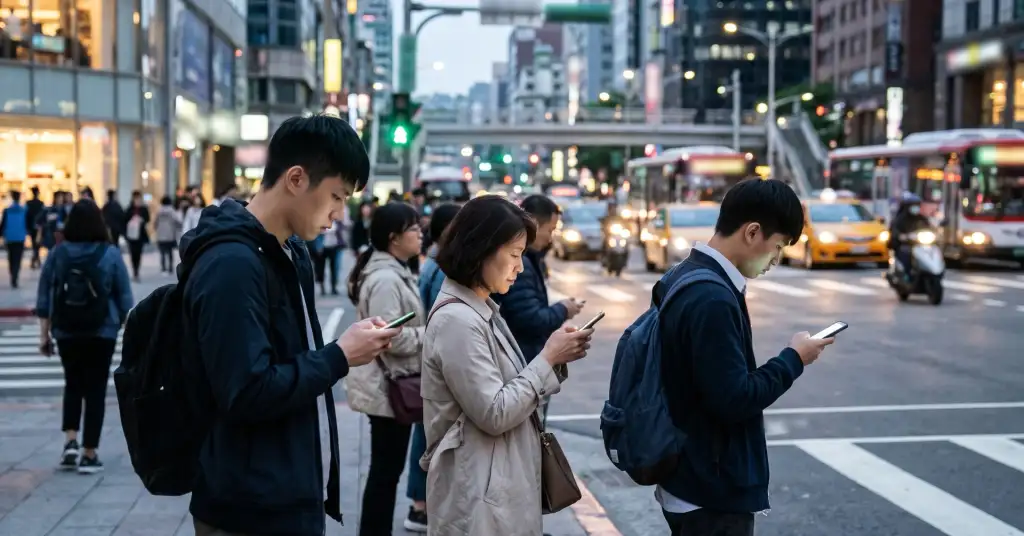
About a quarter of the world's internet users connect through a VPN. In the first quarter of 2025, 23.1% of internet users said they had used one, according to the GWI survey published by We Are Social. Surfshark estimates that more than 1.75 billion people use VPNs (figures as of May 2025). Who tops the ranking depends on how you count: by survey answers, VPN app downloads per head of population or sudden jumps in demand. Below is the 2026 picture of VPN usage by country in all three views, plus the 2025-2026 demand spikes and the countries where VPNs are banned or restricted.
VPN usage by country: top 10 by share of users
The most widely cited ranking comes from GWI, which surveys internet users aged 16 and over and asks whether they used a VPN. In the first quarter of 2025 Russia came first by a wide margin, followed by the UAE and Turkey.
| Country | VPN users |
|---|---|
| Russia | 47.7% |
| UAE | 38.0% |
| Turkey | 34.3% |
| Indonesia | 30.2% |
| Vietnam | 29.6% |
| Saudi Arabia | 29.5% |
| Malaysia | 28.7% |
| Hong Kong | 27.4% |
| Canada | 26.6% |
| Ireland | 26.4% |
Russia's lead follows years of blocking. By February 2026 the authorities had blocked at least 469 VPN services, VPN advertising is banned, and regional mobile internet shutdowns have become routine. The ranking has changed a lot since earlier surveys. In a 2020 Top10VPN and GWI study, Indonesia was first with 61% and India second with 45%. In 2025 Indonesia is at 30.2% and India is not in the top 10. Older figures that still circulate online, such as "Indonesia 55%" or "India 43%", come from GWI surveys of 2018-2020.
Use in the United States is rising too. In an August 2026 survey of 1,008 adults by Security.org, 42% said they use a VPN, up from 32% a year earlier.
The ranking by VPN app downloads
Cybernews counts downloads of the 50 most popular VPN apps on Google Play and the App Store in 126 countries and divides them by population. By this measure the Gulf states lead. In 2025 the UAE reached 85.5%, followed by Qatar (58.5%), Oman (54.1%) and Singapore (48.1%). Among large Western countries, the UK (27.5%), the Netherlands (26.1%) and France (20.7%) stand out. China is last. A download is not the same as a user, and visitors and expats count too, which is why the UAE figure looks so high. Worldwide, downloads fell from 464 million in 2024 to 412.5 million in 2025. The US has the most in absolute terms, with 54.1 million in 2025, ahead of the UK (18.3 million) and France (13.1 million), according to the Cybernews report.
The biggest VPN demand spikes of 2025-2026
Even where everyday VPN use is low, demand jumps within hours of a block or a new age check. Two trackers record these jumps and measure different things. Top10VPN compares daily search demand for VPNs with the previous 30 days. The Proton VPN Observatory counts sign-ups to Proton's own service, so its percentages are much larger. In 2025 Proton recorded spikes in 62 countries.
| Country | Trigger | Increase | Date | Tracker |
|---|---|---|---|---|
| Iran | Internet briefly back after a blackout | +400,000% | Jan 2026 | Proton |
| Gabon | Social media suspended | +60,000% | Feb 2026 | Proton |
| Azerbaijan | Instagram and TikTok disrupted during protests | +43,000% | Oct 2026 | Proton |
| Afghanistan | Social media restrictions | +35,000% | Oct 2025 | Proton |
| Togo | Protests over constitutional changes | +12,000% | Jun 2025 | Proton |
| Nepal | Ban on 26 social platforms | +2,892% | Sep 2025 | Top10VPN |
| Uganda | Social media still blocked after internet restored | +2,557% | Jan 2026 | Top10VPN |
| UK | Online Safety Act age checks | +1,987% | Jul 2025 | Top10VPN |
| Russia | New VPN crackdown announced | +700% | Apr 2026 | Proton |
| Australia | Age checks for adult sites | +330% | Mar 2026 | Top10VPN |
The same event can look very different in the two trackers. For the social media ban in Nepal, Top10VPN recorded +2,892% in search demand and Proton +8,000% in sign-ups. For the UK age checks the figures are +1,987% and +1,200%.
Where VPNs are banned or restricted
According to the Top10VPN legal guide, VPNs are illegal in Belarus, Iraq, North Korea and Turkmenistan. In China, Iran, Russia and Oman only state-approved services are allowed. In China the fine is up to 15,000 yuan, and in Iran the penalty is up to a year in prison. Myanmar's 2025 cybersecurity law allows up to six months in prison. In the UAE VPNs are legal, but using one to commit a crime carries a fine of 500,000 to 2 million dirhams. Pakistan blocks unregistered VPNs, and Turkey restricts them.
- Illegal: Belarus, Iraq, North Korea, Turkmenistan
- Restricted: China, Iran, Russia, Oman, Myanmar, UAE, Pakistan, Turkey
A ban on VPNs is not the only way to cut access. Many of the same countries block websites by administrative order, without a court. See our country-by-country guide to blocking without a judge.
Why VPN demand keeps growing
- Blocking and shutdowns: the biggest spikes follow social media bans and internet blackouts, as in Iran, Nepal and Afghanistan.
- Age checks: since 2025 the UK, France, Italy, Australia and several US states have required ID or face checks for adult sites or social media. Each new rule brings a jump in demand.
- Privacy: people use VPNs to hide their traffic on public Wi-Fi and from their internet provider.
- Content from other countries: streaming catalogues, games and services that are not available locally.
Which country uses VPNs the most?
How many people use a VPN?
Are VPNs legal?
Why do VPN numbers differ so much between studies?
• Indonesia Ranks Among Countries with the Most VPN Users Worldwide (GWI / We Are Social data) - Databoks
• How many people use VPNs? - Surfshark
• VPN adoption rates by country (Cybernews VPN Adoption Report) - Digital Information World
• VPN Consumer Report 2026 - Security.org
• VPN Demand Statistics - Top10VPN
• Internet Censorship Observatory - Proton VPN
• 2025 end-of-year report - Proton VPN
• Are VPNs Legal? - Top10VPN
• Global VPN Usage Statistics (2020) - Top10VPN
• Russia's internet crackdown in 2026 - Proton VPN