EU Council weighs bypassing Parliament's negotiators on Chat Control
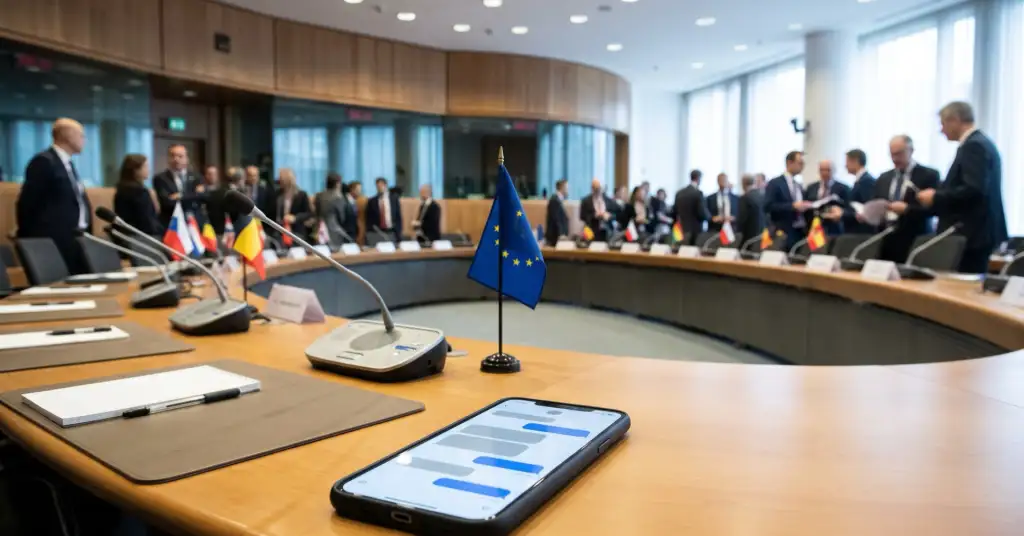
The Irish presidency of the EU Council is considering going over the heads of the European Parliament's negotiators to push through the Chat Control regulation, according to a leaked diplomatic cable. The idea is to settle the file with the leaders of Parliament's political groups instead of the shadow rapporteurs, who are holding to Parliament's position against mass scanning of private messages. The cable, sent by Germany's Permanent Representation to the EU on 18 November, was published by Contexte and reported by heise on 25 November.
What the leaked Chat Control cable says
The cable describes a 13 November meeting of justice and home affairs officials. It calls the position of Parliament's negotiators "unsparing". The European Commission backed the Council at the meeting, saying the shadow rapporteurs' demands now called for "unusually 'robust' measures and positions" from member states.
According to Contexte, no meeting with group leaders has taken place yet, and Dublin denied holding any such contacts. The timetable is short: the Committee of Permanent Representatives (Coreper) is due to agree the Council's mandate on 2 December, ahead of a trilogue on 8 December that the Council hopes will close the file.
EU states split over voluntary message scanning
Parliament's cross-party mandate rejects indiscriminate scanning. It allows only targeted searches, approved by a judge and limited to abuse material that is already known. The Council has reached some compromises with Parliament's lead negotiator, the conservative MEP Javier Zarzalejos, but the shadow rapporteurs from the other groups do not support them.
The main dispute is over "voluntary" scanning. Today some providers scan users' messages under a temporary EU exemption, often called Chat Control 1.0. Several governments want the permanent law to keep that practice at full scope, including searches for previously unknown images and for grooming in conversations. Member states are split:
| Position | Countries |
|---|---|
| Full scope of voluntary scanning, including unknown material and grooming | Germany, France, Spain, Denmark, Sweden |
| Dropping grooming scans is a "red line" | France, Hungary |
| Limit scanning to known material | Italy, Latvia, Netherlands, Poland, Slovakia |
| Rejects voluntary scanning outright | Poland |
Germany is ready to give ground on mandatory search orders only if the full voluntary scope is written into the law. Estonia questioned whether talks with Parliament should continue at all. In September, heise reported that the Council's own Legal Service had warned that scanning an entire service is highly likely to breach EU law.
Reaction
Konstantin Macher of the German digital rights group Digitale Gesellschaft called the plan to bypass the negotiators "scandalous". The group pointed to a pledge by German Justice Minister Stefanie Hubig (SPD) that there would be no indiscriminate chat control, and to the gap between that promise and Berlin's stance in the cable.
What Chat Control means for EU users and encryption
If the Council's version wins, providers could keep scanning the content of private chats and emails across the EU without a specific suspicion, and the practice would become permanent law rather than a temporary exemption. End-to-end encrypted messengers have long warned that scanning private messages cannot be done without weakening encryption, even if the rules start out as voluntary. Our Chat Control explainer covers how the proposal would work. The next dates to watch are 2 and 8 December.