Windows 11 Will Tell Apps Your Age Bracket
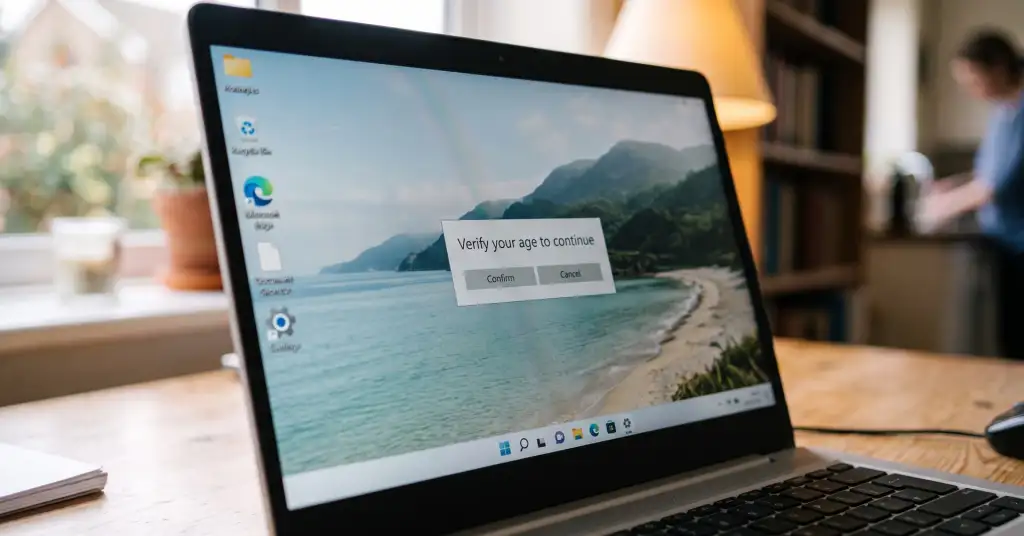
Microsoft has published the developer documentation for Windows Age APIs, and it describes something the web has been arguing about for two years: an age verification signal built into the operating system itself. An app will be able to ask Windows which age bracket the signed-in user falls into, and whether that age has been independently verified. Microsoft Teams Free is the first product lined up to use it. The APIs are documented but not switched on yet, with activation planned for a Windows release later this year.
What an app actually gets
Two calls do the work. GetUserAgeRangeAsync returns a bracket rather than a birthday: under 10, 10 to 12, 13 to 15, 16 to 17, or 18 and above. If Windows does not know, it returns nothing and the app is told to fall back to its own age gate. GetAgeVerificationStatusAsync returns one of five values: verified, unverified, opted out, temporarily unavailable, or not applicable.
Microsoft is explicit that the date of birth never leaves the system, and that no family relationship details are exposed either. Windows also checks the identity of the app doing the asking, so a random program cannot query the signal of another. Requirements are modest and specific: Windows 11, a Win32 COM interface, a session with a Microsoft account signed in, and an app registered with what Microsoft calls the Digital Safety platform.
Teams Free goes first, and the price of refusing is visible
Microsoft's support page for Teams Free spells out what an unverified user loses in the regions where this switches on: recording meetings and calls, Copilot and other AI features, and access to community features. The page says not every user will be asked, calls it coming soon in some countries and regions, and notes that verification can take up to 24 hours to show up on the account.
That is the shape of the thing. Nobody is locked out of the product. The account simply becomes a lesser version of itself until it proves something about the person behind it.
Why an OS-level gate is different from a website one
On the privacy side this design is genuinely better than what the last two years produced. A bracket beats handing a passport scan to every site that wants one, and it beats the alternative we keep reporting on, where verification vendors accumulate document scans and then get breached. One check, at the level of the account, instead of dozens of copies of your ID scattered across services.
The other half is that the check moves somewhere you cannot route around. A website gate keyed to your location can be met with a different exit point. A signal that comes from the operating system, tied to the account you signed in with, is not a network question at all. There is no address to change. And once the plumbing exists, the decision about which apps must consult it stops being technical and becomes political.
This was ordered, not invented
Microsoft did not arrive at this alone. Legislators have been moving the responsibility down the stack for a while, and Illinois signed a law putting the age check on the operating system rather than on individual websites. An OS-level API is exactly the shape a company builds when that is the direction of the law, and it is a shape that travels: build it once for one state, and it is available everywhere the same demand appears next. The running list of countries gating social media by age shows how many places that is.