Take-Two's GTA 6 Leak Sweep Locked a Journalist Out of X
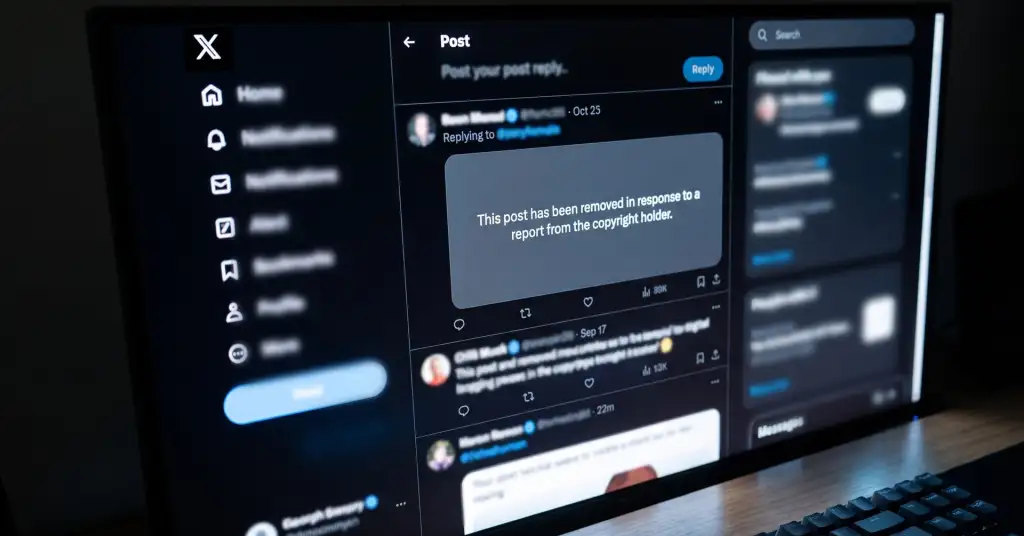
On 21 August the journalist Stephen Totilo posted a short report on X about the hunt for the people behind the GTA 6 leaks, with three screenshots attached: two court orders from New York judges, and a public tweet by an Xbox executive. Five days later his account was frozen over a DMCA notice filed on Take-Two's behalf. He could not post and could not read. The complaint was withdrawn two days after that, once he made enough noise about it, and the whole episode is a clean demonstration of how a copyright complaint works as a censorship tool.
What was in the post
Court orders. The documents showed that judges had cleared Take-Two to subpoena Microsoft and Discord in its search for the leaker, which is exactly the kind of filing a reporter covering the story is supposed to publish. The third screenshot was a tweet from Xbox's chief technology officer saying the company was working closely with Take-Two and Rockstar. Public documents, a public statement, no game footage, no leaked material.
A trademark claim wearing a copyright form
The notice came from Ebrand, a Poland-based brand-protection firm acting as Take-Two's agent. Its argument was that the post infringed the Grand Theft Auto trademark, registered under WIPO number 4510940, because the name was used, in its words, "without any authorization of our client", creating "a likelihood of confusion".
That is not what a copyright takedown is for, and the difference is not academic. Copyright notices are processed fast and largely automatically, because the law rewards platforms for acting quickly. Trademark disputes are slower and require someone to weigh whether anyone could actually be confused. Filing a trademark grievance on a copyright form skips the part where a human asks that question, and the result was a reporter locked out of his account for quoting a court.
Three hundred posts in one filing
Totilo's post was not singled out. It was one of about 300 targeted in the same bulk filing, and the list is instructive: accounts that really were sharing leaked footage, a gaming outlet whose offence was using a promotional screenshot that Rockstar publishes in its own press gallery, and, at the far end of the absurd, X's own AI assistant Grok.
That is what enforcement at scale looks like. A vendor sweeps for a string, files in bulk, and the platform acts on the volume rather than on the merits. Nobody at any point had to argue that a court order infringes a video game trademark, because nobody was asked.
Why this keeps working
The asymmetry is the whole mechanism. Filing costs nothing and takes minutes. The removal is immediate. Getting back what was removed takes days, requires you to know the process, and in this case worked because a well-known reporter could make it a story. Somebody with the same complaint and no audience simply stays removed.
We keep meeting the same shape in different jurisdictions: a fast lever built for one purpose, then used to make something inconvenient disappear. It is there when a government has critics' accounts closed on a platform, and it is there when copyright enforcement sets a numeric threshold for switching a website off. The paperwork differs. The property is the same: someone else's speech goes away before anyone examines the claim.