FISA Section 702 Enters Legal Gray Zone After Congress Fails to Renew
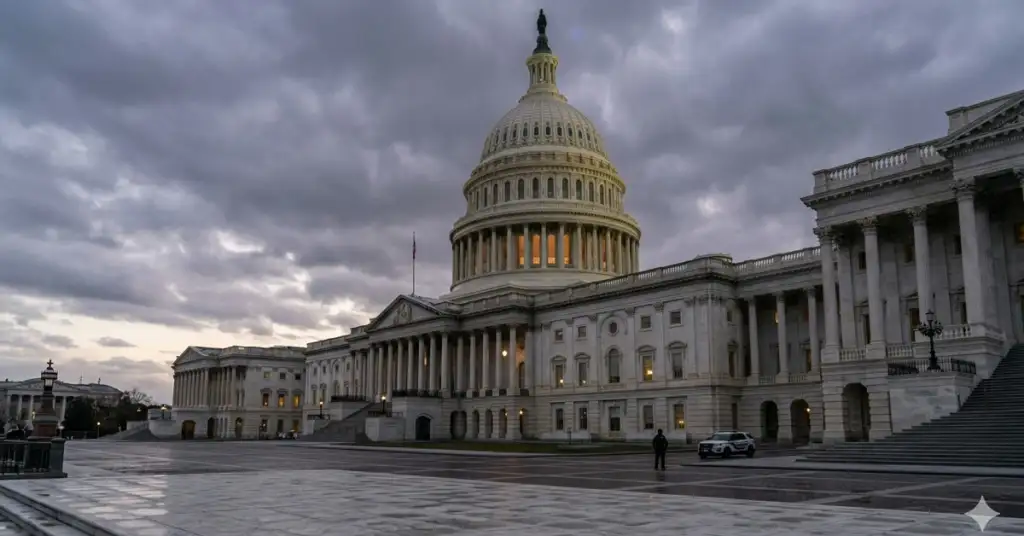
FISA Section 702 - the legal foundation of NSA warrantless surveillance of foreign targets - officially expired on June 12, 2026, after Congress failed to renew it for the first time since the law was enacted in 2008. The House rejected a three-week extension 198-218, and three separate procedural votes in the Senate also collapsed, sending lawmakers home and leaving America's foreign surveillance apparatus in legal limbo.
What FISA Section 702 Actually Does
Enacted in 2008, Section 702 of the Foreign Intelligence Surveillance Act authorizes the NSA to collect phone logs, emails, text messages, and other communications data from foreign targets without obtaining a warrant. The collected data is used across the NSA, CIA, and FBI to counter terrorism plots, track foreign adversary operations, and support other national security objectives.
The program has a significant domestic dimension: when Americans communicate with foreign-targeted accounts, their communications are swept up as "incidental collection" and can be searched by law enforcement agencies. Civil liberties advocates, including the Electronic Privacy Information Center (EPIC), have long argued that this practice amounts to warrantless surveillance of US citizens in violation of the Fourth Amendment.
Why Congress Could Not Agree
The House vote failed 198-218 after Republicans pushed a short three-week extension that contained no new safeguards. Democrats refused to vote for any renewal while objecting to President Trump's appointment of Bill Pulte - a federal housing finance regulator with no intelligence experience - as acting Director of National Intelligence. A minority of Republican lawmakers joined Democrats in blocking the extension on civil liberties grounds.
In the Senate, Republicans attempted three separate procedural votes to advance the bill, all of which fell short of the 60-vote threshold needed to overcome a filibuster. With Congress then leaving Washington, the June 12 expiration deadline passed without any legislative action - a first in the law's 18-year history.
The Legal Gray Zone That Follows
The expiration does not instantly halt NSA operations. Intelligence agencies may continue relying on collection orders authorized before the deadline, transition to narrower legal authorities, or seek emergency judicial relief. However, any new collection initiated after June 12 without statutory authority faces serious legal challenges, and evidence derived from post-expiration surveillance could be challenged in federal prosecutions.
How FISA Section 702 Affects VPN Users
Section 702 has been a persistent concern for anyone who uses VPNs or privacy tools in the United States. The program's collection authority extends to foreign servers and endpoints - exactly the infrastructure that VPN traffic routes through. As we detailed in our earlier analysis, using a VPN could paradoxically place US users deeper inside Section 702's collection scope by routing their traffic through foreign servers classified as legitimate surveillance targets.
The mechanism works like this: when a user in the US connects to a VPN server located in Germany, the Netherlands, or any other country, their internet traffic crosses an international boundary. From the perspective of NSA collection systems, that foreign VPN server becomes a potential surveillance target. If the server operator or the backbone carrier falls within the technical or legal reach of US intelligence agencies, the traffic transiting that server can be collected under FISA Section 702 - not because the American user is the intended target, but because the foreign infrastructure is. This is what civil liberties groups mean when they describe VPN users as "incidentally collected."
The expiration creates a genuine legislative opportunity. If Congress uses this moment to pass a reformed bill with mandatory warrant requirements for searches of Americans' incidentally collected data, the privacy implications for VPN users would shift significantly. Reform advocates at EPIC are calling for exactly that - comprehensive reform rather than a clean, unchanged reauthorization.
What Happens Next
Both parties have indicated they expect to resume negotiations quickly. Key disputes center on whether investigators must obtain a warrant before querying communications that involve US persons, data retention limits, and the scope of who can be designated as a "foreign intelligence target." The timeline for a replacement bill is uncertain - previous reauthorization debates have dragged on for months.
Until new legislation is enacted, tens of millions of Americans whose communications have been swept up in Section 702 collection over nearly two decades remain in an undefined legal space. Whether this becomes a landmark privacy reform moment or a brief interruption in surveillance-as-usual depends entirely on the political negotiations now beginning in Washington.