Turkey Bans Social Media for Children Under 15: Will VPN Help Bypass the Block?
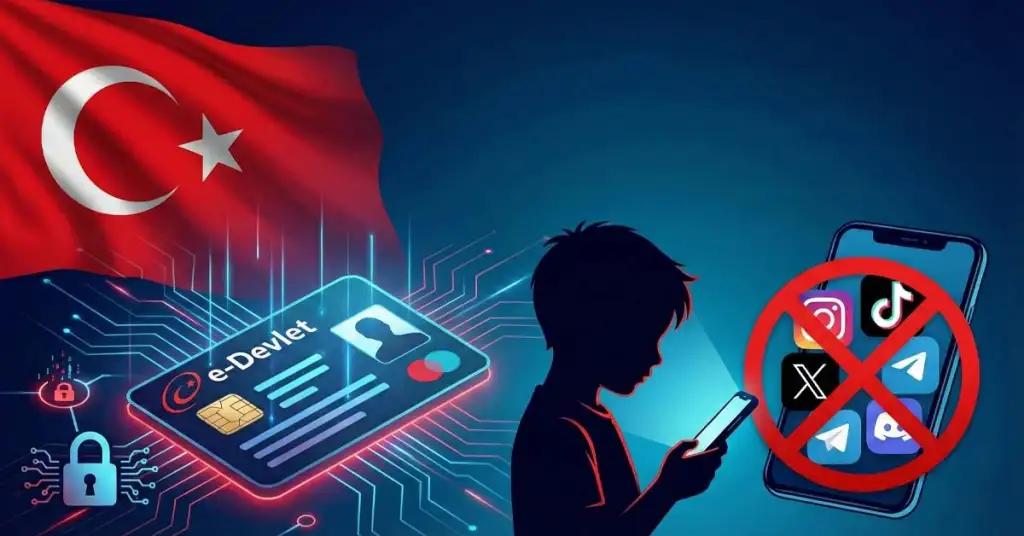
January 2026 has become a turning point for the Turkish internet. Minister of Family and Social Services Mahinur Özdemir Göktaş announced a bill that effectively introduces a “digital passport” for access to social networks. If the law is passed at the end of the month, Turkey will become one of the first countries to completely ban social media for children under 15 at the level of state infrastructure.
Below, we analyze how the authorities plan to implement this, why your data may already be at risk, and whether a VPN will save the situation.
1. Blocking Mechanism: Goodbye, Anonymity
The main difference between this ban and previous ones is the shift of responsibility. Authorities are not just blocking sites; they are requiring platforms (Instagram, TikTok, X) to implement strict verification. To screen out children under 15, a simple “I am 18” checkbox will no longer work.
The most likely scenario is integration with the state system e-Devlet or a requirement to enter an identification number (TC Kimlik No) upon registration. This means de-anonymization: every account will be strictly linked to the citizen's real identity. If the system knows the ID holder is under 15, registration will be technically impossible.
2. Data Leakage: Why Verification is Dangerous
The implementation of passport verification comes amidst a catastrophic cybersecurity crisis. In September 2024, Turkey experienced its largest data breach: hackers leaked information on 108 million citizens. The following became publicly available:
- Identity card numbers (TC Kimlik).
- Full home addresses.
- Mobile phone numbers.
- Family relationship data.
This creates a security paradox: to “protect” children, the state requires them (and adults) to use data that has already been compromised. This opens the floodgates for fraudsters who can use stolen IDs to create fake accounts, bypassing any bans.
3. Will a VPN Help Bypass the Ban?
This is the most popular question, and the answer is: “Yes, but with serious caveats”.
- Where VPN helps: If the block is implemented by IP address (geo-blocking), a VPN will allow you to virtually “move” to another country and use social networks. This will work for viewing content.
- Where VPN is powerless: If platforms, under threat of giant fines, introduce mandatory identity verification (KYC) for Turkish users, a VPN will not help. Changing your IP won't change your age on your passport. You would either have to find foreign documents for registration (which is illegal) or buy “gray” accounts on the black market.
4. Risks of “Digital Migration”
Experts warn that the ban won't make teenagers give up the internet but will push them into a “gray zone.” Instead of moderated Instagram or YouTube, communication will move to closed Discord chats, Telegram, or game lobbies where there is no parental control and the risk of encountering crime or bullying is much higher. An increase in the black market for verified accounts registered to strawmen is also expected.