Missouri Age Verification Law Takes Effect - VPN Demand Surges
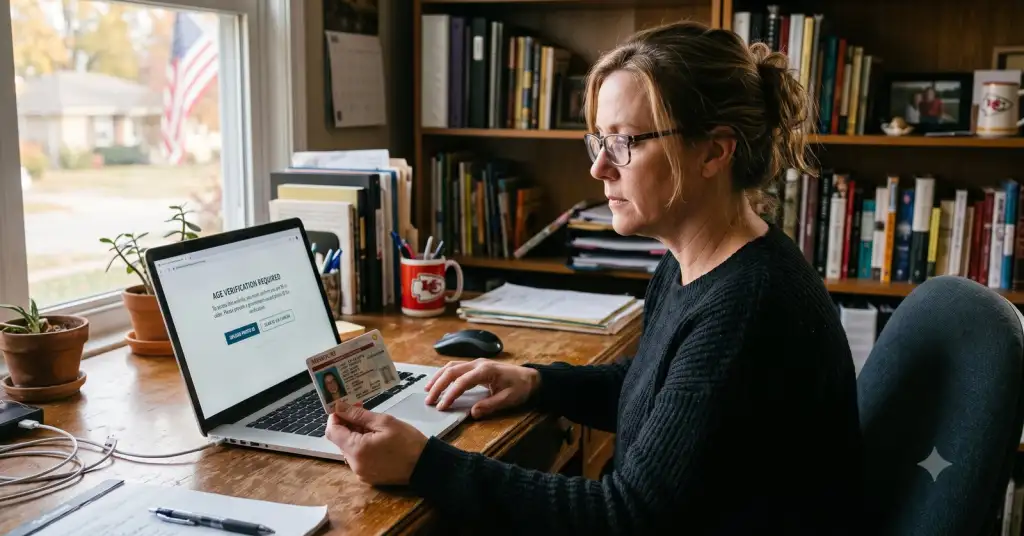
Missouri has become the latest US state to require age verification for adult websites, and residents are already reaching for VPNs in record numbers. Governor Mike Kehoe signed the measure into law in early July 2026, forcing pornographic sites - and social media platforms where a large share of content is deemed harmful to minors - to confirm that every visitor is at least 18 before granting access. The rules take effect on August 28, 2026, and privacy advocates warn they will hand a trove of sensitive identity data to third parties.
What the Missouri law actually requires
The statute targets any commercial website or app where more than one-third of the content qualifies as "material harmful to minors." Covered platforms must run a "reasonable" age check through an independent third-party service before showing a single page.
Operators can satisfy the requirement in one of three ways:
- Government ID: A user uploads a state-issued identity document such as a driver's license or passport.
- Digital identification: A verified digital ID tied to the user's real identity.
- Transactional data: A "commercially reasonable" system that confirms age through public or private records - mortgage, education, or employment data among them.
In every case, the practical effect is the same: to watch legal adult content, a Missouri resident must first prove who they are to a company they have never dealt with.
Steep fines drive the enforcement
Enforcement falls to Missouri Attorney General Catherine Hanaway, who can sue non-compliant businesses for up to $10,000 per day. If a minor actually accesses restricted material, penalties can climb toward $250,000 per violation. Those numbers are large enough that some operators would rather leave the state than take the risk.
That is exactly what has happened elsewhere. Aylo, the parent company behind many of the largest adult platforms, has responded to similar laws by blocking access for entire states rather than collect and store user IDs. Missouri users can expect the same patchwork of hard blocks and identity walls once the deadline arrives.
Why VPN demand is skyrocketing
The reaction from residents has been immediate. Google Trends data shows VPN-related searches from Missouri jumping roughly fourfold, with a sharp doubling in the days around the law's signing. The driver is not a desire to break the law - it is discomfort with handing a government ID to an adult website that could be breached, leaked, or subpoenaed later.
That fear is not hypothetical. Age-verification vendors sit on exactly the kind of data that attackers prize: a name, a face, a document number, and a record of which sites a person visited. A single breach could expose all of it at once.
Part of a nationwide pattern
Missouri is not acting alone. By July 2026, age-verification mandates are on the books in more than two dozen US states, from Utah and Texas to Nebraska and Illinois. Courts have blocked some of these laws and upheld others, and the Supreme Court's willingness to let Texas enforce its version has emboldened more legislatures to follow. The result is a fragmented map where a resident's digital privacy depends heavily on which side of a state line they live on.
This is where privacy-minded users lean on encryption. A VPN routes traffic through an encrypted tunnel and masks the user's real location, which is why interest spikes whenever a new ID-check law lands. It does not exempt anyone from the law, but it does keep an internet provider - and anyone watching the network - from logging which sites a person opens.
Related: the EU has charged TikTok under the DSA over minors' accounts.