Massive Protests in Lithuania: The Public Against Political Control Over Media
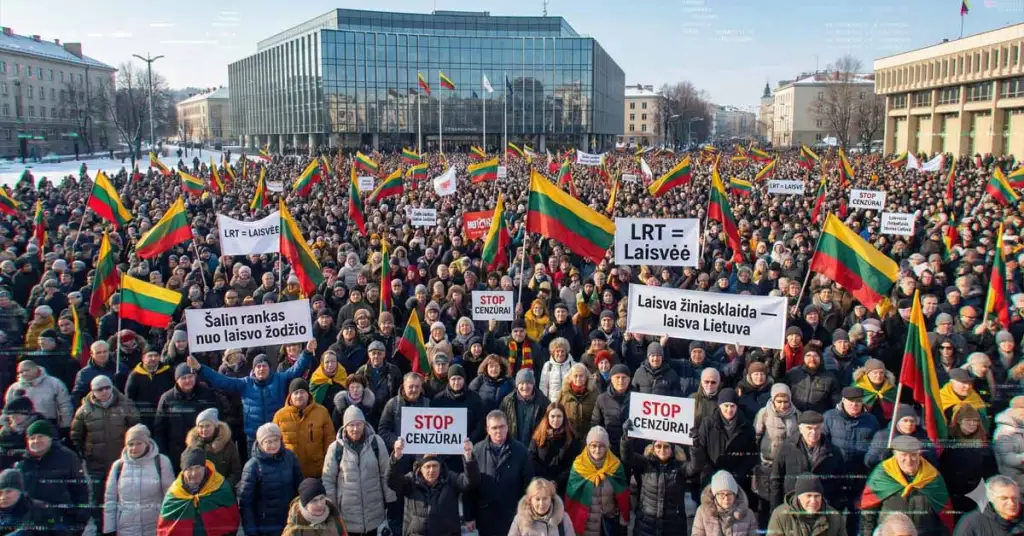
In December 2025, the Seimas of Lithuania urgently began considering amendments to the Law on National Radio and Television (LRT). The initiative by the ruling coalition sparked the largest protests in recent years and drew harsh criticism from international organizations, which viewed it as an attempt to establish political control over the public broadcaster.
Below is an analysis of the key points of the conflict, the substance of the proposed changes, and the current status of the bill.
1. Status and Initiators
- Status: Consideration of the bill has been postponed until January 2026 following mass protests and public pressure.
- Initiators: The ruling coalition, consisting of the Social Democrats (LSDP), the "Dawn of Nemunas" party ("Nemuno aušra"), and the Union of Peasants and Greens (LVŽS).
- Context: The conflict intensified following LRT investigations into the leader of "Dawn of Nemunas," Remigijus Žemaitaitis. Critics and the opposition call the reform political revenge for investigative journalism.
2. Substance of the Proposed Changes
The bill aims to shift the balance of power in the broadcaster's management. Key points include:
- Easier Dismissal of the Director: It is proposed to lower the number of LRT Council votes required to fire the Director General from 8 to 7 (out of 12 members).
- Secret Ballot: A secret balloting procedure is introduced for the Council on personnel matters (previously open), which reduces decision-making transparency and member accountability.
- Vague Grounds: New subjective grounds for dismissal appear, such as "improper performance of functions" or the failure to approve the annual report.
3. Protests and Incidents
- Scale of Actions: Demonstrations under the slogan "Hands off the Free Word" (Šalin rankas nuo laisvo žodžio) gathered up to 10,000 people at the Seimas. Protesters lit bonfires, a direct reference to the events of 1991.
- Media Solidarity: Major commercial portals (Delfi, 15min) stood in a united front with LRT. Editors of competing media outlets stated that weakening the public broadcaster threatens the entire media market.
- The "Nuodėgulis the Cat" Case: During a chaotic night session, majority deputies accidentally voted for an ironic opposition amendment. According to it, the LRT Director General can only be fired if "MP Agnė Širinskienė's cat named Nuodėgulis expresses no confidence in him." This incident became a symbol of the haste and absurdity of the process.
Conclusion: The attempt at a "blitzkrieg" to change the law failed due to the powerful reaction of civil society and warnings from the European Broadcasting Union (EBU). Currently, the process is frozen. The Prime Minister suggested the LRT Council resign in its entirety (in corpore) to "reset" the situation, but the final decision has been moved to January.
Sources:
• 15min.lt - Third protest rally with the scent of victory (18.12.2025)
• LRT.lt - Editors of Delfi and 15min: Politicians do not want strong media
• Bernardinai.lt - Amendments passed the second reading, including the point about Nuodėgulis the cat
• Alfa.lt - Thousands gathered for the final protest of the week
• 15min.lt - Third protest rally with the scent of victory (18.12.2025)
• LRT.lt - Editors of Delfi and 15min: Politicians do not want strong media
• Bernardinai.lt - Amendments passed the second reading, including the point about Nuodėgulis the cat
• Alfa.lt - Thousands gathered for the final protest of the week