Google blocks the account of GFCN, a Moscow-backed fact-checking network
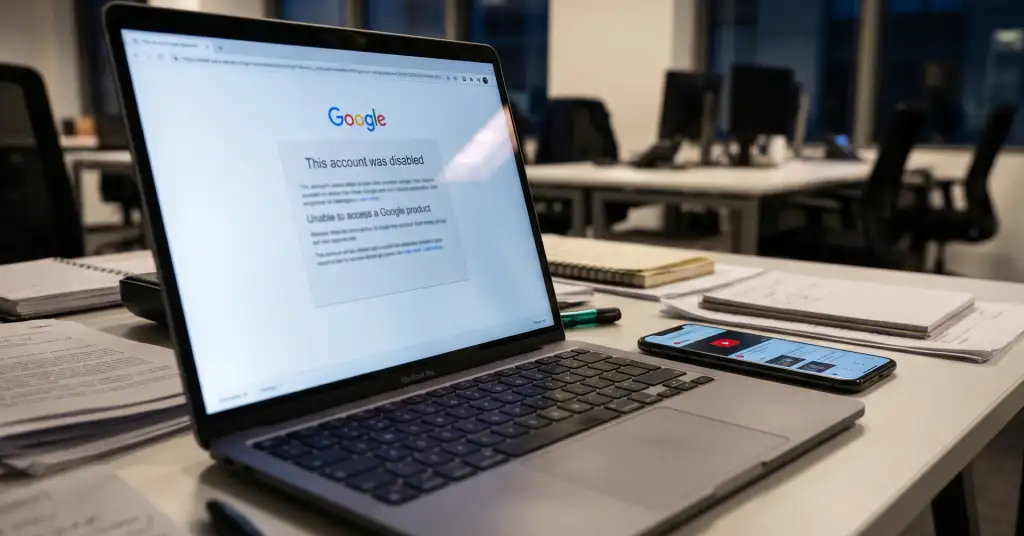
Google has blocked the account of the Global Fact-Checking Network (GFCN), a Moscow-backed group that calls itself an international fact-checking association, and the Russian Embassy in Washington has called the move censorship. According to a GFCN statement cited by KP.RU, the account was closed on November 19 with no way to restore it, and Google cited "export restrictions and the application of sanctions". Google has not commented publicly.
GFCN and the Russian Embassy accuse Google of censorship
GFCN told Russian media that it used the account to coordinate journalists, debunking experts and fact-checking groups in many countries, and to run its YouTube channel, which it can no longer access. The group says it is not under any sanctions and follows all international rules. Its vice president, Daniil Bisslinger, told Lenta.ru that such measures should be "transparent and justified". GFCN says it will keep publishing on other platforms.
On November 21 the Russian Embassy in the United States wrote on Telegram that this was "a clear act of arbitrary censorship by the tech company with a thinly veiled political motive", as TASS reported. The embassy says GFCN has more than 130 experts from 55 countries and that TASS is one of its founders. It suggested the block might be linked to a GFCN piece published in October that disputes the victim list on a memorial to those killed in Bucha, the Kyiv suburb where hundreds of civilians died during the Russian occupation in 2022. The embassy gave no evidence for that link.
Who is behind GFCN
GFCN was presented at a forum in Moscow in November 2024 and began publishing in April 2025. Its founders include the state news agency TASS and ANO Dialog, a nonprofit set up by the Moscow city government. Euronews described the site as a fact-checking facade that hides a Kremlin-backed disinformation tool, and noted that its name closely resembles the established International Fact-Checking Network (IFCN), which it called "unlikely to be a coincidence and more likely an effort to feign credibility".
The sanctions question points to the founders. In September 2024 the US Treasury sanctioned ANO Dialog and its subsidiary Dialog Regions, saying ANO Dialog "leverages AI technology in online Russian disinformation for use against election campaigns" and worked on the Doppelgänger campaign of fake news sites. GFCN itself is not on the US sanctions list, according to the group and the embassy, and Google has not said whether its decision was based on the founders' status.
How sanctions rules lead to platform bans
US companies may not provide services to sanctioned entities or to companies they own by 50% or more, and Google has previously closed YouTube channels and ad accounts linked to sanctioned Russian media. That is why a block like this can come without a detailed explanation or an appeal, which GFCN calls unlawful. The embassy has called on US companies to "uphold the principle of freedom of speech in deeds, not words".
The dispute has two sides that are hard to separate. Platforms that remove accounts on vague grounds and without an appeal do leave users with no recourse, whatever the content. At the same time, GFCN is backed by Russian state-linked organizations, including a co-founder that the US and EU have sanctioned for disinformation campaigns, and its October piece on Bucha repeats the Russian government's version of the war in Ukraine.
• GFCN заявила о блокировке аккаунта в Google - Lenta.ru
• GFCN: Google незаконно заблокировал аккаунт ассоциации по фактчекингу - KP.RU
• Заявление посольства России в США - Telegram
• Russian embassy slams blocking of GFCN Google account as censorship - TASS
• Treasury Takes Action as Part of a U.S. Government Response to Russia's Foreign Malign Influence Operations - U.S. Department of the Treasury
• Russia launches fact-checking website which conceals pro-Kremlin narratives - Euronews