Australia doubles the fine for under-16 accounts on social media to A$99 million
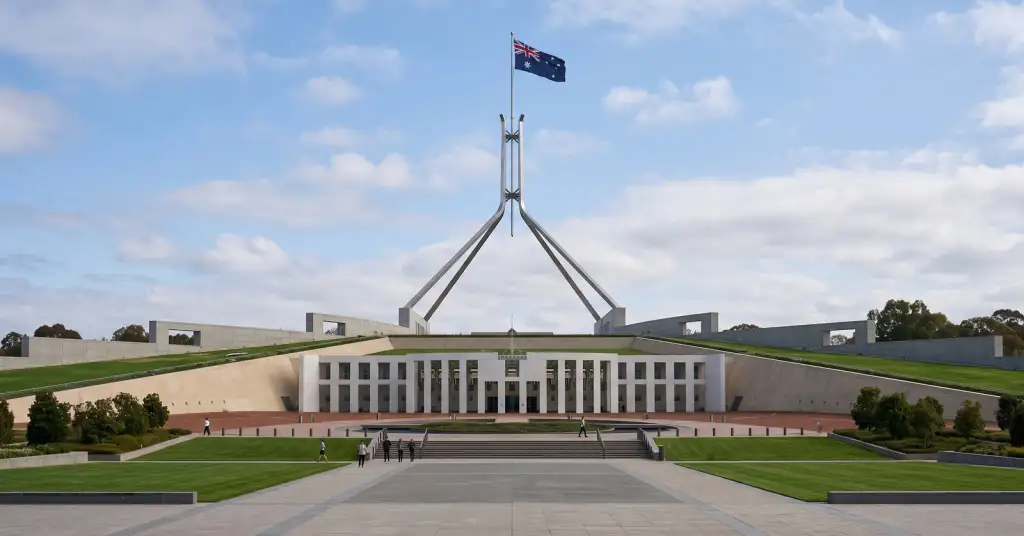
Australia's under-16 social media ban has been law since December. On 11 September the enforcement half arrived: an amendment that doubles the maximum penalty to A$99 million and gives the regulator the power to demand documents, not just from the platforms but from app stores and age-verification companies. It became Act No. 83 of 2026 the day after parliament passed it.
In short
- The maximum penalty for systematic breaches of the minimum-age law rises from A$49.5 million to A$99 million, matching Australian competition and consumer law.
- The eSafety Commissioner can now compel information and documents to test what a platform claims it has done.
- Those powers reach third parties, specifically naming age assurance providers and app stores.
- Five platforms are already under investigation for possible non-compliance: Facebook, Instagram, Snapchat, TikTok and YouTube.
What changed on paper
The original law set the rule: no accounts for under-16s, with the obligation on platforms to take reasonable steps. What it did not give the regulator was a reliable way to check. Compliance was largely assessed on what companies chose to report about themselves, which works only as long as everybody is candid.
- Parliament passed the amendment on 10 September 2026; it received assent on 11 September as Act No. 83.
- The maximum penalty for systematic breaches doubles to A$99 million, and the penalty for ignoring an information notice doubles with it.
- The Commissioner gains power to demand information and documents showing what a platform actually did to keep under-16s off.
- The same power extends to third parties that can validate or test those claims, with age assurance providers and app stores named explicitly.
Why the government says it was needed
The official framing is unusually blunt. The communications minister said she was not satisfied that companies were doing everything they could, and described platforms as adopting tricks from the big tech playbook and doing the bare minimum to get by. The prime minister's line was that big tech is not doing enough and there are still too many children on social media.
The counter-evidence the government points to is its own: more than five million under-16 accounts removed, deactivated or restricted since 10 December. That number can be read two ways, and both are in the release. It shows the law is having an effect at scale, and it shows how many accounts existed to be removed.
The gap between the two readings is what the amendment is really about. We covered the three-month assessment when eSafety's own report found most teenagers were still on social media, and this is the response: rather than raise the requirement, the government raised the cost of failing it and the regulator's ability to prove failure.
The part that reaches beyond platforms
The detail worth reading twice is the third-party power. A platform that says it verified a user's age is making a claim that the platform alone cannot be made to prove. The company that ran the age check can, and so can the app store that supplied the signal. By reaching those parties, the regulator can cross-examine a claim rather than accept it.
That matters beyond enforcement because it accelerates a shift already under way. Age assurance is moving out of individual websites and into the operating system and the app store, which is the architecture Australia itself adopted when it moved the age check into the store, and which California has just written into its own law. Once the regulator can subpoena the store and the assurance vendor, that layer becomes the record of who was checked and how.
What it means for adults
This is the recurring consequence of every minimum-age law, and it is not a side effect but the mechanism. To keep under-16s out with a penalty of A$99 million hanging over the decision, a platform has to establish who is over 16, and it has to be able to show its work to a regulator afterwards. Both requirements push towards checking everyone and keeping records of the check.
The honest note on VPNs belongs here and stops at one paragraph. Where an age gate keys on your apparent country, changing it changes the outcome, which is why searches for VPNs spiked in Australia after December and in Britain after its age checks began. Where the signal comes from an app store account or a verified device, as Australia and California are both building, a different exit address does not change what the store reports about you. The same word covers two very different situations, and the difference is which layer holds the answer.
Where this lands internationally
Australia went first and is now the case study everyone else cites, which cuts both ways: it is also the first place where the difficulty of enforcing such a law is documented rather than predicted. The countries drafting their own versions are watching a jurisdiction that had to double its penalties nine months in. We keep a running list of which countries restrict social media for minors and from what age, and Australia's row is the one with the most history behind it.