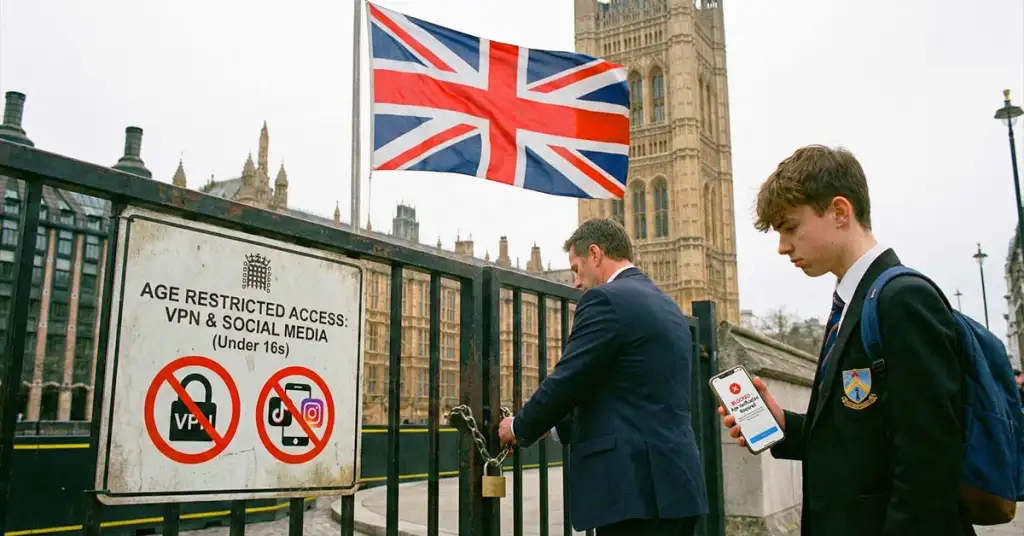
January 2026 marked a turning point for the internet in the UK. The House of Lords voted to introduce radical amendments to the Children’s Wellbeing and Schools Bill, effectively approving a ban on VPN usage for those under 18 and social media for children under 16. These measures, adopted against the government's position, aim to block teenagers' access to mechanisms for circumventing content restrictions.
1. Amendment 92: A "Digital Border" for VPNs
The key change was Amendment 92, adopted on January 21, 2026 (207 votes "for", 159 "against"). It requires VPN service providers to implement strict age-gating to ensure children do not use their services. Lawmakers argue that VPNs have become a "digital lockpick" allowing teenagers to bypass age restrictions introduced by the Online Safety Act.
This means that any commercial VPN service available in the UK will have to verify the identity of every user to screen out minors. Experts warn this could lead to the de-anonymization of all VPN users in the country.
2. Amendment 94A: Social Media Only from Age 16
Even more resonant was Amendment 94A, banning the creation of social media accounts for persons under 16. The initiative, supported by a parents' movement (including the mother of the late Brianna Ghey), aims to combat algorithmic addiction and harmful content. The vote showed overwhelming support in the Upper House: 261 votes "for" against 150.
- Scope of the ban: Applies to all major platforms (TikTok, Instagram, Snapchat).
- Liability: Platforms are required to implement "highly effective" age verification methods.
- Consultations: The government tried to delay the decision by launching consultations on this issue on January 20, but the Lords decided to act immediately.
3. Industry Reaction and Technical Issues
The tech community met the news with criticism. Windscribe CEO Yegor Sak called the attempt to ban VPNs the "dumbest possible fix," noting that teenagers will easily find alternatives, for example, by renting their own VPS servers, which do not fall under the definition of a "consumer VPN."
The Open Rights Group warns that the ID requirement for logging into social networks and VPNs will create huge databases of citizens' personal information, which will become targets for hackers. Furthermore, it will hit the privacy of vulnerable groups for whom anonymity is critically important.