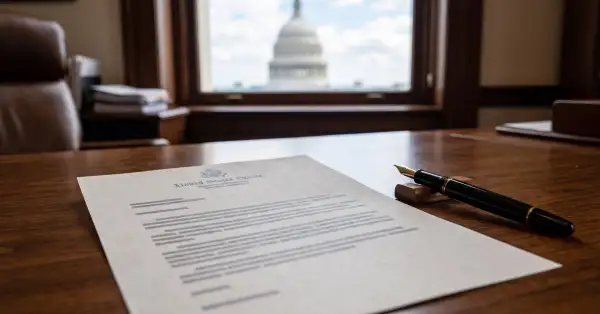
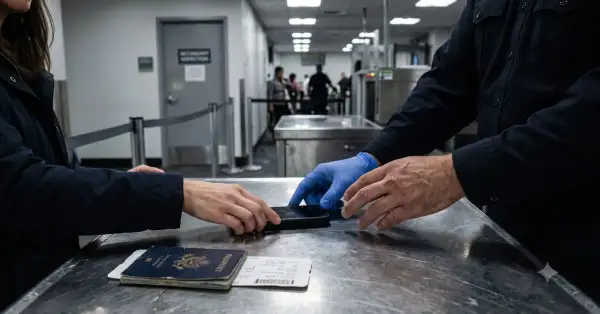
Section 702 Surveillance Cutoff Averted Within Hours: How Close We Came to a Mass-Collection Blackout and What It Means for VPN Users
For a few hours late on April 19, 2026, the United States came closer than the public realized to a hard stop on one of its largest warrantless-surveillance programs. A handful of the communications carriers that help the government run Section 702 of the Foreign Intelligence Surveillance Act had privately warned the White House that they would stop collecting data on April 20 - the day the program was originally set to sunset - unless Congress acted. Then, in the early hours of April 17, the House passed a bare-bones 10-day extension; the Senate cleared it hours later; and President Donald Trump signed the bill on Saturday, April 19. The cutoff was averted. But the brinkmanship exposed something the government prefers not to talk about: the daily operation of Section 702 depends on private telecom companies remaining willing to cooperate, and that willingness has a legal limit.
What Was About to Happen
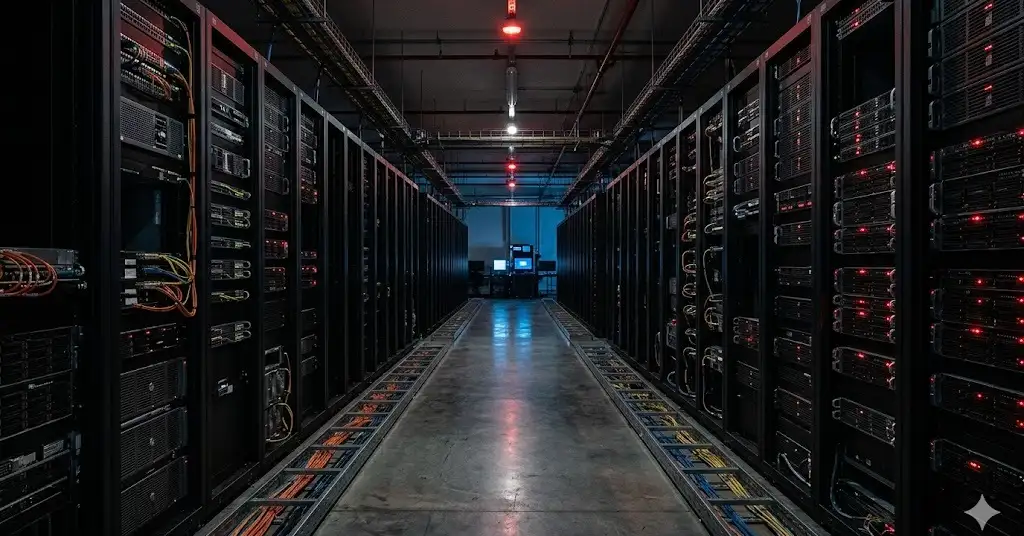
Section 702, the 2008 amendment to FISA that lets the NSA, CIA, and FBI collect the communications of non-US targets located abroad without a warrant, runs on data that private telecoms and cloud providers deliver to the government under legal directives. Those directives are only enforceable while the statute is in effect. If the law lapses, the carriers are exposed: continuing to hand over user communications could arguably be an invasion of privacy under state law, a violation of their own terms of service, or grounds for civil suits.
According to a report in The Wall Street Journal, major US carriers including AT&T and Verizon privately told the Trump administration that, without a valid statutory basis, they would stop handing over data at midnight on April 20. The concern they named was the Fourth Amendment: with the law lapsed, continuing bulk collection of content tied to Americans' communications risked exposing the carriers to civil suits - potentially class actions - for unconstitutional search. Senior intelligence leaders took the threat seriously enough that they told Congress a lapse would create real operational gaps during a period of elevated tension with Iran.
The 10-Day Escape Hatch
Trump had initially pushed for a clean 18-month reauthorization with no new reforms. That proposal collapsed on the House floor at around 2 a.m. ET on Friday, April 17, losing 197-228 when a coalition of libertarian Republicans and privacy-focused Democrats refused to vote it through. A separate five-year pitch also failed. The only bill that could pass was H.R. 8322, a 10-day patch - enough to stop the April 20 cliff, not enough to settle anything. The House cleared it by unanimous consent in the same overnight session, the Senate approved it hours later, and Trump signed it on Saturday evening. The new deadline is April 30.
The reform coalition that stopped the clean extension is unusually cross-partisan: Senator Ron Wyden (D-OR), Senator Rand Paul (R-KY), Senator Mike Lee (R-UT) and Senator Dick Durbin (D-IL) all demanded the same thing in different words - a probable-cause warrant requirement before the FBI can query Section 702 data for US-person communications. Civil liberties groups read the coalition's success as a real shot at reform rather than another delay.
What That Means for the Next Ten Days
Three outcomes are on the table. The first is a long-term reauthorization with real reforms attached - most prominently a requirement that the FBI obtain a probable-cause warrant before searching Section 702's database for a US person's communications. The EFF, EPIC, and ACLU have spent weeks pushing for exactly that reform, arguing that any clean extension is a wasted opportunity. The second is another clean patch that kicks the fight into the summer. The third, still technically possible, is a lapse after April 30 - at which point the carriers will almost certainly stop again, and the government will have to decide whether to rely on emergency powers, other statutes, or simply accept the gap.
What the Near-Miss Revealed
Mass surveillance in the United States is often discussed as if it were a permanent, autonomous apparatus. It is not. It is a partnership between the government and a handful of telecom and cloud companies, and that partnership has contract terms. When the legal basis disappears, the contract disappears. The system is not bulletproof - it is, in fact, only as stable as the willingness of private firms to keep carrying a legal risk on the government's behalf.
For users, this week is a reminder that the data pipeline they worry about is plumbed through companies they already have a customer relationship with. The carrier that provides your phone and internet service is the same entity that, under the right legal directive, hands your cross-border messages to the NSA.
What This Means for VPNs and Ordinary Users
A VPN does not remove your communications from Section 702 collection if a person you are talking to is legitimately targeted - that kind of targeting happens on the far end of the pipe, not at your ISP. What a VPN does is change what your domestic carrier sees. Instead of a DNS query to a news site, a request to a European political forum, or a chat session to a Telegram contact, your ISP sees only encrypted traffic going to a VPN provider's server. That single transformation blocks the most common kind of data a telecom might be legally asked to hand over: the list of domains, services, and contacts tied to your IP address.
Paired with end-to-end encrypted messaging, a DNS resolver outside your ISP, and a no-logs VPN policy, the practical surface area available for any dragnet - Section 702 or otherwise - shrinks sharply. Not to zero, but to something far less passive and far less automatic.
What Happens Next
Congress has until April 30 to settle the shape of Section 702 for the medium term. Privacy advocates see the narrow window as their best shot at a warrant requirement since 2024. National security hawks see it as a deadline to preserve an intelligence tool they consider irreplaceable. Telecoms are watching both. And users, for the first time in a while, have a concrete reason to pay attention: the infrastructure of mass collection nearly switched itself off this week.
Related Coverage on vpnlab.io
Three prior pieces set the stage for today's story:
- US Senators Warn VPN Users May Lose Constitutional Protections Under FISA - the March 2026 letter that framed the current reform debate.
- FISA Section 702 and VPN: How Your Privacy Tool Could Strip You of Legal Protection - the deeper dive on the constitutional paradox that kicks in whenever an American is on the far end of a 702 conversation.
- US DOJ Refuses to Help France Investigate Elon Musk's X - a parallel fight over whether platforms can be regulated through prosecution, and why VPN and encrypted-messenger layers now matter jurisdictionally as well as domestically.
Conclusion
• US intel officials scramble to keep surveillance law running amid Iran war tensions - CNN
• Three things to know about FISA Section 702: short-term extension - CNBC
• Congress extends controversial surveillance powers for 10 days - NPR
• Why Congress is fighting over a central tool of American surveillance - NPR
• Keep Pushing: 10 More Days to Reform Section 702 - EFF
• Section 702 of FISA: 2026 Resource Page - Brennan Center for Justice
• House passes 10-day FISA extension after long-term deal collapses - Nextgov/FCW