Manitoba Bans Social Media and AI Chatbots for Youth: Canada's Privacy Wake-Up Call
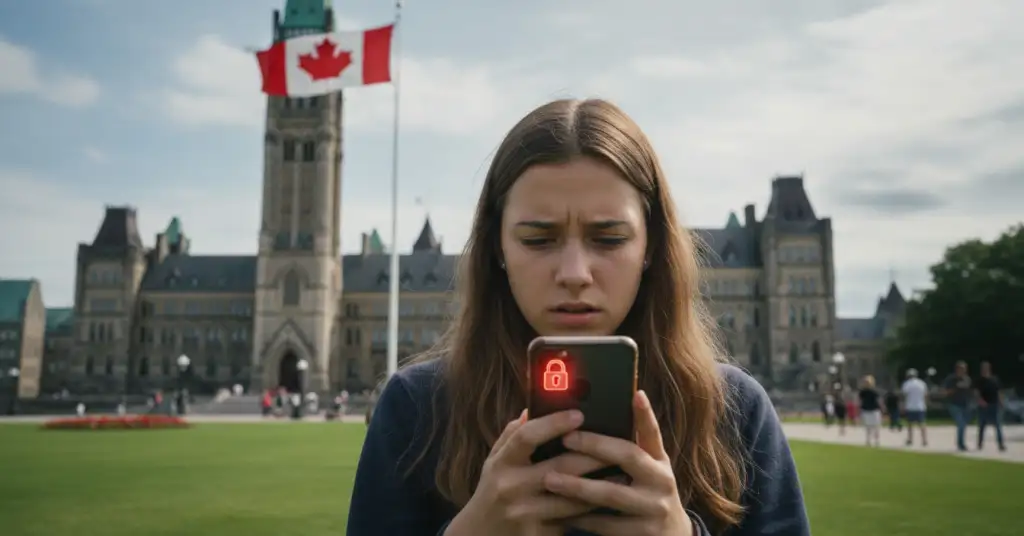
Manitoba has announced plans to become the first Canadian province to ban social media platforms and AI chatbots for users under 16 - a move that mirrors Australia's landmark legislation and raises serious questions about age verification, identity data collection, and digital privacy for millions of Canadians.
What Manitoba's Proposed Ban Covers
Premier Wab Kinew announced the planned legislation on April 26, 2026, describing it as a necessary step to protect young people from platforms designed to maximize engagement and expose children to harmful content. The ban would target both social media networks and AI chatbot services for anyone aged 16 and under. Manitoba would be the first province in Canada to introduce such a law, following the precedent set by Australia in December 2024, where platforms face fines of up to CA$45.5 million for failing to prevent minors from holding accounts.
Other Canadian provinces are watching closely. Nova Scotia, Quebec, and Saskatchewan are all considering similar measures, and federal Liberal members recently passed a non-binding resolution supporting age restrictions on social media and AI services. The political momentum suggests Manitoba's move could trigger a national wave of youth online safety legislation.
The Age Verification Problem: Why Privacy Experts Are Alarmed
The practical enforcement of any social media age ban requires one thing above all else: proof of age. That means age verification - and age verification means collecting identity documents from users. No matter how the system is designed, platforms must receive some form of identifying information to confirm that a user is above the legal threshold.
Privacy advocates have raised consistent objections to this approach:
- Centralized identity databases: Age verification systems create databases of user identities held by private companies - exactly the type of high-value target that attracts data breaches and state surveillance.
- Adults verified too: To confirm some users are over 16, platforms must effectively verify everyone. This means adults lose anonymity as a side effect of protecting children.
- Third-party exposure: Many age verification providers are obscure intermediaries with weak security track records, meaning your passport or ID could end up in multiple corporate databases.
- No sunset provisions: Once collected, identity data rarely disappears. Legal mandates to retain verification records can persist for years after a user closes their account.
The Australian Blueprint - and What Came Next
Manitoba explicitly modeled its announcement on Australia's Online Safety Amendment (Social Media Minimum Age) Act, which passed in November 2024 and took effect for enforcement in 2025. Under Australian law, platforms like TikTok, Instagram, Snapchat, and X must take "reasonable steps" to prevent under-16s from creating accounts or face penalties reaching AU$50 million.
Australia's experience offers a preview of what Canada may face. Within weeks of the law passing, research groups documented a surge in VPN usage among Australian teenagers, who used location-spoofing to appear as users in jurisdictions without the ban. Platforms struggled to implement age checks without collecting invasive amounts of personal data. Civil liberties organizations challenged the law's compatibility with privacy rights. The age verification ecosystem - already a patchwork of competing technical standards - suddenly became the subject of intense lobbying from identity verification companies eager to profit from mandatory compliance.
Why VPN Users Should Pay Close Attention
For the VPN community, Manitoba's announcement is significant for reasons that go beyond protecting children online. Age verification mandates consistently produce one of two outcomes: either they fail (users bypass them with VPNs or false information), or they succeed by requiring invasive surveillance of all users. There is no middle ground that preserves both effective enforcement and meaningful privacy.
When age verification is tied to government-issued ID, VPNs become a natural countermeasure - masking the user's location to avoid jurisdiction-specific restrictions. But VPNs do not solve the underlying identity problem: if a platform demands you upload a passport before creating an account, a VPN alone cannot substitute for the missing document. The real privacy threat from age verification laws is not access restriction - it is forced de-anonymization at scale.
What Happens Next
Premier Kinew has not specified a timeline for tabling the legislation. The Manitoba legislature is scheduled to sit for four more weeks before a summer recess, with sessions resuming at the end of September 2026. Whether the bill moves quickly or stalls, the political signal is clear: child online safety is becoming a legislative priority across Canada, and age verification requirements are the likely enforcement mechanism. Privacy advocates, civil liberties groups, and the technology industry will all have a role to play in shaping what that legislation ultimately looks like.
Conclusion
• Manitoba to ban social media, AI chatbots for youth - a first in Canada - CBC News
• Manitoba Plans Ban on Social Media, AI Chatbots for Youth - Bloomberg
• Social media ban for children to roll out, Manitoba premier says - CTV News
• Manitoba Premier says social media ban coming for kids - The Globe and Mail