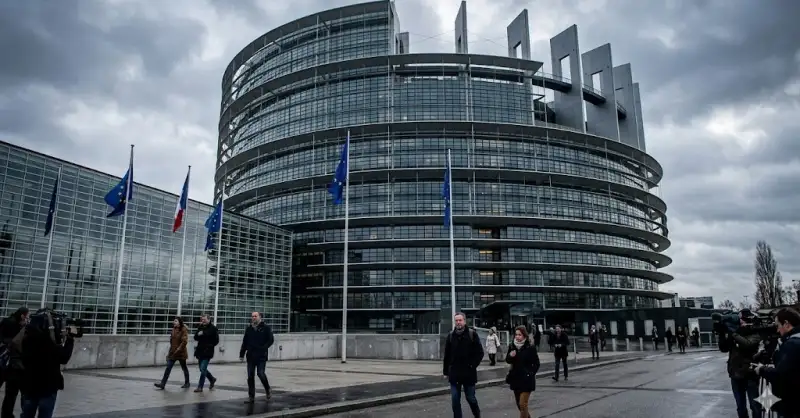
The European Parliament's own research service has called virtual private networks a "loophole in legislation that needs to be closed" - marking the first time an official EU institution has framed VPNs as a policy problem rather than a privacy tool. The briefing, published in May 2026 by the European Parliamentary Research Service (EPRS), focuses on VPNs and child protection online, but its implications stretch far beyond parental controls and minor-protection laws.
What the EPRS Briefing Actually Says
The EPRS document, titled "Virtual private networks and the protection of children online," was prepared for Members of the European Parliament as age verification legislation sweeps across Europe. Its core finding: current age assurance measures - including verification, estimation and self-declaration - are "relatively easy for minors to bypass" using VPNs. The briefing does not present binding policy recommendations, but it outlines options including restricting VPN access to users who can prove they are over 18.
That framing is significant. Proposing identity verification as a precondition for VPN use would effectively require every VPN user - adult or not, privacy-conscious or not, journalist or not - to hand over government-issued ID before they can encrypt their own internet traffic. The EPRS frames this as a child protection measure. Privacy advocates call it a surveillance infrastructure dressed in child-safety language.
Virkkunen: VPNs "Should Not Be Allowed to Bypass the System"
The EPRS briefing did not appear in a vacuum. European Commission Executive Vice-President Henna Virkkunen, speaking at the launch of an EU-wide age verification application on May 1, 2026, acknowledged directly that VPNs undermine the system. "VPNs should not be allowed to bypass the system," she said, adding that addressing this would be among the "next steps" policymakers would need to consider.
French politicians have been more explicit. Following France's law banning social media for minors under 15, several legislators publicly stated that "VPNs are next on the list" - meaning direct restrictions on circumvention tools, not just on platforms.
The UK Precedent: What Actually Happened After the Online Safety Act
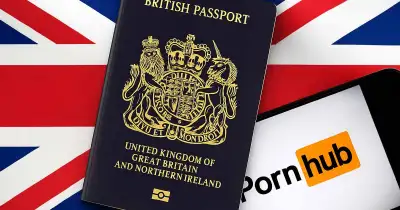
The EU's concern is not hypothetical. When the UK's Online Safety Act came into force in July 2025, VPN app downloads exploded. One VPN developer reported a 1,800% increase in daily registrations within the first month of the law taking effect. VPN apps briefly occupied half the slots in the UK App Store's top-10 free downloads. Regulators had imposed age gates on adult content sites; users responded by installing privacy tools that rendered those gates ineffective.
The UK experience is now being cited across Europe as evidence that age verification without VPN controls is unenforceable. The logic runs: if you build a wall but leave a door open, the wall is decorative. The EPRS briefing uses similar reasoning - calling VPN circumvention a "growing challenge" for any age verification framework.
Who Uses VPNs - and What Restrictions Would Actually Hit
The framing of VPN users as primarily minors bypassing age checks ignores the actual user base. VPNs are used by journalists protecting sources, by remote workers securing corporate connections, by dissidents in authoritarian states, by ordinary citizens in countries with heavy internet filtering, and by millions of adults who simply prefer not to have their browsing habits logged by their ISP or sold to advertisers.
Requiring identity verification before VPN access would expose this entire population to the same data-collection risks that VPNs are designed to prevent. The authentication database itself becomes a high-value surveillance target. If a government or a compromised vendor knows who is using a VPN - and when - the VPN's core function is already broken.
Privacy organizations including EFF and Access Now have been consistent: any system that requires identity checks for VPN use creates the infrastructure for mass surveillance of encrypted communications, regardless of the stated justification at the time of its creation.
What the Regulatory Timeline Looks Like
No EU legislation targeting VPNs has been formally proposed yet. The EPRS briefing is an analytical document, not a draft directive. Virkkunen's statement signals political intent without committing to specific measures. The timeline for any actual VPN-restricting law would run through the European Parliament and Council, likely taking two to four years to reach implementation.
But the direction matters. Three years ago, the EU's debate was about whether to mandate encryption backdoors. Today, it is debating whether to require identity verification before users can access encryption tools at all. The scope of the proposed intervention has expanded significantly.
The UK Online Safety Act showed that age verification laws drive VPN adoption. The EU's proposed response - restricting VPN access itself - would represent a fundamental shift in how European governments treat the basic tools of internet privacy. That shift is now documented in an official EU parliamentary briefing, cited by a sitting European Commissioner, and endorsed by national politicians in multiple member states.