Police Seize "First VPN" Used in Ransomware Attacks: 506 Users Deanonymized
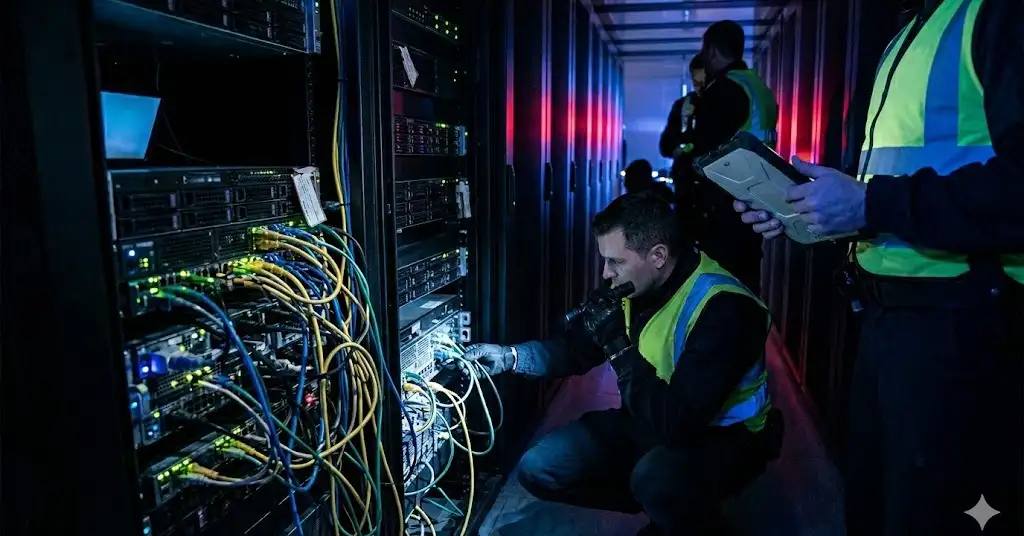
European law enforcement has dismantled "First VPN" - a service so deeply embedded in the criminal underground that it appeared in nearly every major Europol cybercrime investigation. Operation Saffron, coordinated across 18 countries, shut down 33 servers and arrested the service's administrator in Ukraine. In its aftermath, 506 users were deanonymized - a stark reminder that "no-logs" claims are marketing, not architecture.
Operation Saffron: Scale and Coordination
The operation, announced on May 21, 2026, was the result of sustained multi-agency coordination. Eighteen countries participated, investigators seized 33 servers distributed across multiple jurisdictions, and law enforcement in Ukraine arrested the service's administrator. Europol described First VPN as having been "deeply embedded in the ecosystem of cybercriminals" and confirmed the service had featured in almost every significant investigation the agency had conducted.
First VPN was not an obscure fringe service - it was a workhorse of the criminal underground. Ransomware operators, data theft groups, and fraud networks all relied on its infrastructure to mask their activities. By the time law enforcement acted, the service had accumulated enough operational history to make it a prime target for a coordinated international takedown.
506 Users Deanonymized - The No-Logs Reality
The most significant detail emerging from Operation Saffron is not the server count or the arrest - it is the 506 users who were successfully deanonymized. These were individuals who used First VPN under the assumption that their identities were protected. Law enforcement proved otherwise.
This outcome illustrates the gap between privacy marketing and technical reality. A "no-logs" policy is a written commitment, not a cryptographic guarantee. It relies on:
- Honesty of the provider: No external party can verify in real time whether logs are actually being kept. Audits provide a point-in-time snapshot, not continuous assurance.
- Resistance to legal compulsion: A provider that receives a court order in its jurisdiction must comply or face consequences. Whether logs technically exist matters less if other data - payment records, account creation metadata, email addresses - can be used to re-identify users.
- Security of the provider itself: If the administrator is arrested and devices seized, anything stored on those devices - regardless of what the privacy policy stated - becomes available to investigators.
- Operational security of the infrastructure: Metadata about connection timing and server loads can sometimes be used to infer user behavior even without traditional logs.
Why First VPN Was a Target
Europol committed significant resources to Operation Saffron because First VPN kept appearing in criminal investigations. The service attracted law enforcement attention precisely because of who used it and what they did. This is a key distinction for ordinary privacy-conscious users: the investigative resources devoted to First VPN reflected the criminal scale of its user base, not a general campaign against VPN technology.
However, the technical lessons apply universally. The factors that allowed 506 First VPN users to be identified are not specific to criminal services. They are inherent to any VPN that lacks genuine technical protections - regardless of whether the users are ransomware operators or journalists working in restrictive countries.
What Genuine Privacy Requires
After Operation Saffron, the question for anyone who relies on a VPN for serious privacy needs is: what actually protects you when law enforcement comes knocking? The answer lies in verifiable technical architecture, not policy documents:
- Jurisdiction matters: A provider incorporated in a country with no mandatory data retention requirements and limited law enforcement cooperation presents a different risk profile than one operating under intrusive data laws.
- RAM-only servers: Diskless servers that store nothing between reboots cannot produce records that do not exist. This is an architectural protection, not a policy promise.
- Verified no-logs claims: Independent security audits that specifically test logging behavior - not just review the privacy policy - provide a higher degree of assurance.
- Track record under pressure: A provider that has received real legal demands and demonstrably had nothing to provide offers more credibility than one whose claims have never been tested.
Choosing a VPN provider with verified technical protections, a favorable jurisdiction, and a documented track record under legal pressure remains the most reliable approach for users who need genuine privacy guarantees - not just a marketing promise.