FBI and Europol Took Down First VPN Used by Ransomware Groups
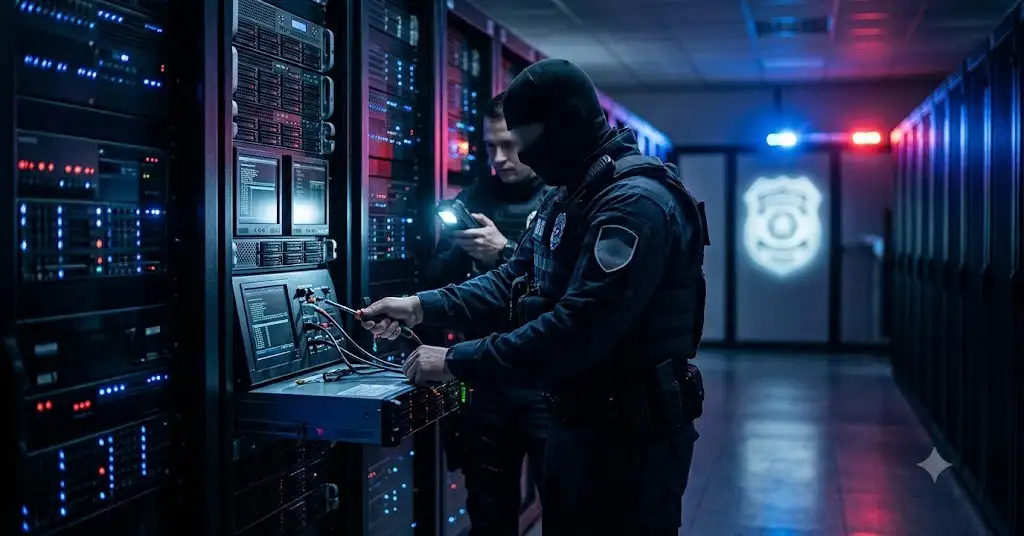
FBI Boston, Europol, and law enforcement agencies from eight countries have dismantled First VPN, a bulletproof VPN service that operated exclusively as infrastructure for ransomware gangs and cybercriminals. The takedown, executed on May 19-20, 2026, resulted in 33 servers seized across multiple jurisdictions and 83 intelligence packages sent to 16 countries covering more than 500 identified cybercriminals. For regular VPN users, the question is simple: should you be worried? The short answer is no - and the reasons why reveal something important about how law enforcement actually approaches privacy tools.
What First VPN Was - and Who It Served
First VPN launched in 2014 on the domains 1vpns.com, 1vpns.net, 1vpns.org, and a hidden Tor address. It never ran advertising on mainstream platforms. There were no blog reviews, no comparison site listings, no coupon codes. Its entire marketing operation consisted of posts on closed criminal forums - including Russian-language marketplaces like Exploit, where stolen database credentials and corporate network access are routinely sold.
The service offered technical capabilities designed specifically for attack operations. Users could chain up to four separate servers to obscure their digital trail. It supported OpenConnect, WireGuard, and a protocol called VLESS TCP Reality - the last of which allowed malicious VPN traffic to disguise itself as standard HTTPS requests, enabling attackers to slip through corporate firewalls without triggering security alerts. Payment was accepted only in cryptocurrency. Support ran through an anonymous Jabber server and Telegram.
According to Europol, the service appeared "in almost every major cybercrime investigation" of recent years. FBI documentation names the Avaddon ransomware group as a primary user. In total, investigators attributed use of First VPN infrastructure to at least 25 distinct ransomware operations - groups that deployed it for network reconnaissance, botnet coordination, DDoS attacks, and ransomware delivery.
How the Investigation Unfolded
The investigation began in December 2021 - more than four years before the public takedown. That timeline reflects how long it takes to map criminal infrastructure without alerting its operators. The active shutdown phase on May 19-20, 2026 was a coordinated simultaneous strike across multiple countries to prevent server migrations before authorities could seize physical hardware.
The operation was led by France's BL2C (Brigade de Lutte Contre la Cybercriminalite) and the Netherlands' NHTC (National High Tech Crime Unit). Support came from FBI Boston's cyber division, Europol, Eurojust, and law enforcement in Ukraine, the United Kingdom, Switzerland, and Luxembourg. Cybersecurity firm Bitdefender provided technical assistance.
The result: 33 servers seized across multiple countries, all clearnet and Tor domains taken over and replaced with law enforcement seizure notices, and a Ukrainian national identified as a service administrator - searched and questioned by authorities. More consequentially, investigators obtained the service's user database. Europol sent warning notices to identified users, and the data generated 83 intelligence packages now being used in active investigations across 16 countries.
What Makes a VPN "Bulletproof"
The term "bulletproof" in cybercrime refers to hosting or network infrastructure explicitly designed to ignore abuse complaints. When a legitimate business receives a report that one of its IP addresses is being used to attack hospitals or deploy ransomware, it investigates and terminates the account. Bulletproof providers receive the same complaints and do nothing - that non-response is the core product being sold.
First VPN was not a privacy tool that happened to be misused. It was engineered from the start for criminal use. The multi-hop chain up to four nodes, the VLESS Reality protocol for firewall evasion, the cryptocurrency-only payment, the forum-only marketing, the Jabber-based support - none of these are features you find in consumer privacy services. They are operational security features for attackers who need to stay invisible while compromising corporate networks.
Legitimate VPN providers operate differently at every level. They publish terms of service that prohibit illegal activity. They respond to valid legal requests. They maintain public legal entities and pay taxes. They advertise openly. When an account is used for attacks, their fraud detection systems flag it and the account is suspended. The technical capability to route traffic is the same; the business model, the governance, and the customer base are entirely different.
The Scale of What Was Uncovered
The user database seizure is the aspect of this operation with the longest tail. Investigators now have records connecting specific IP addresses and session data to specific attack campaigns. For the 500+ individuals now under investigation across 16 countries, the loss of First VPN is not the primary problem - it is that their operational security for years of criminal activity has been retroactively compromised. The data does not expire.
This is the consistent pattern in bulletproof infrastructure takedowns. Criminals choose these services believing the provider will never cooperate with authorities. What they do not account for is that a seizure of the provider's servers gives authorities everything the provider would have refused to hand over voluntarily - logs, payment records, user identifiers, and traffic metadata going back years.
What This Means for Privacy-Conscious Users
The FBI was direct about the scope of this operation. Official documentation states explicitly that the action "pertains solely to the First VPN service and does not extend to other VPN providers with similar names." The investigation targeted a specific criminal enterprise, not a technology category.
Using a reputable VPN for privacy - to protect data on public Wi-Fi, access content in countries with restrictive filtering, or reduce tracking by advertisers - remains legally unambiguous in most jurisdictions and entirely unaffected by this operation. The infrastructure that was seized served ransomware gangs. The infrastructure you use to protect your connection to your bank does not.
The meaningful lesson for privacy-focused users is about provider selection, not VPN use in general. Services that advertise on criminal forums, accept only cryptocurrency, offer no terms of service, and market multi-hop chains designed for firewall evasion are not privacy tools. They are operational infrastructure for attack campaigns. The difference is visible before you sign up - if you know what to look for.